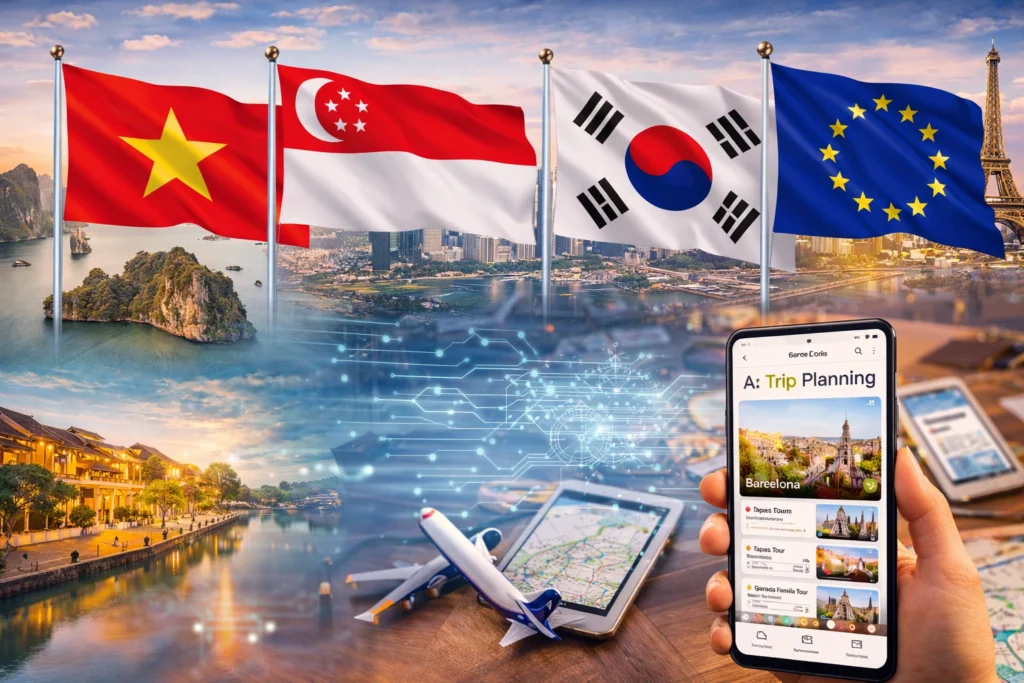
Vietnam is rapidly joining Singapore, South Korea and leading European destinations in the global shift toward AI-powered tourism, signaling a new phase of travel innovation driven by data, personalization and sustainability. As competition intensifies across the international travel market, destinations are no longer judged only by beaches, heritage or scenery. They are increasingly measured by how intelligently they manage growth, improve visitor experiences and protect local resources. Vietnam’s latest push into digital tourism reflects that new reality.
Data Becomes the New Driver of Travel Growth
Tourism boards and travel businesses worldwide now treat data as a strategic asset. Integrated digital platforms can reveal how travelers search, book, move and spend, helping destinations respond faster to demand.
Singapore and South Korea have already developed smart systems that connect public agencies, airports, hotels and attractions. Several European markets have also expanded destination data platforms to improve visitor management and marketing efficiency.
Vietnam is now moving in the same direction. By building stronger digital ecosystems, the country aims to compete more effectively while delivering smoother travel experiences.
Why AI Matters for Travelers
Artificial intelligence can simplify many parts of the travel journey. Instead of generic suggestions, travelers receive recommendations tailored to their interests, budgets and timing.
A visitor focused on food may receive culinary routes and local dining ideas. A family may see child-friendly hotels and attractions. A nature traveler may get low-crowd alternatives and weather-aware planning tips.
This level of personalization can save time while making trips feel more relevant and enjoyable.
For travelers considering Vietnam, smarter digital tools may soon become part of the experience from the moment they begin planning.
Tourism Growth Brings New Pressure
Vietnam’s tourism recovery has been strong, with rising international arrivals and robust domestic travel demand. That growth supports jobs, investment and regional development, yet it also creates pressure on infrastructure, transport networks and popular attractions.
Destinations such as Ha Long Bay, Hoi An and major urban centers can face congestion during peak periods. Hotels, roads and local services must adapt quickly when demand surges.
AI can help manage these challenges more efficiently than traditional planning methods alone.
Smarter Growth Supports Sustainability
One of the biggest opportunities in AI tourism is sustainable destination management. Intelligent systems can forecast visitor flows, reduce overcrowding and guide travelers toward lesser-known areas.
Hotels can also use automation to optimize energy use, while transport operators can improve route planning and capacity management. Predictive analytics may help reduce waste and improve resource allocation across tourism zones.
For Vietnam, this balance is essential. Strong visitor growth must not come at the expense of natural heritage or community quality of life.
By combining technology with sustainability goals, the country can strengthen long-term tourism resilience.
Businesses Gain Efficiency Too
The benefits of AI extend beyond travelers and tourism boards. Travel companies can use automation to improve operations, customer service and revenue strategies.
Chatbots can answer common questions around the clock. Dynamic pricing tools can respond to demand patterns. Content systems can speed up marketing and itinerary creation.
For smaller businesses, these tools may help them compete with larger brands by improving responsiveness and reducing manual workloads.
That said, access to technology remains uneven, especially among small and medium-sized enterprises.
Challenges Still Need Solving
Vietnam’s digital transformation is promising, but obstacles remain. Fragmented data systems can limit coordination between sectors. Some businesses may lack funding for advanced tools or struggle to recruit skilled digital talent.
Without broader access, the benefits of innovation may concentrate among larger operators while smaller firms fall behind.
Closing that gap will require investment, training and stronger cooperation between public and private stakeholders.
The pace of progress may depend as much on human capability as on software itself.
Global Partnerships Can Accelerate Progress
No destination transforms in isolation. Successful smart tourism strategies often rely on partnerships between governments, airlines, technology providers, universities and local communities.
Vietnam has opportunities to learn from established models in Singapore, South Korea and Europe while adapting solutions to its own market needs.
Knowledge sharing can speed up implementation, reduce costly mistakes and help align tourism growth with international best practices.
For global travelers, that means faster improvements and a more connected visitor experience.
Human Skills Still Matter Most
Although AI is reshaping tourism, people remain central to hospitality. Great travel experiences still depend on guides, hotel teams, restaurant staff and local communities who create warmth and authenticity.
Technology can remove friction, but human service builds memories.
That is why training in digital literacy, data use and customer experience will remain essential as Vietnam modernizes its tourism sector.
What Travelers Should Watch Next
Travelers planning future trips to Vietnam may soon notice smarter booking tools, better crowd management, more personalized suggestions and stronger sustainability initiatives.
These changes could make visits easier, more efficient and more rewarding.
A Defining Moment for Vietnam Tourism
Vietnam’s embrace of AI tourism marks more than a technology trend. It represents a strategic shift in how the country plans to compete globally.
By blending innovation with sustainability and human hospitality, Vietnam is positioning itself as one of Asia’s most forward-looking travel destinations in the years ahead.
For more travel news like this, keep reading Global Travel Wire