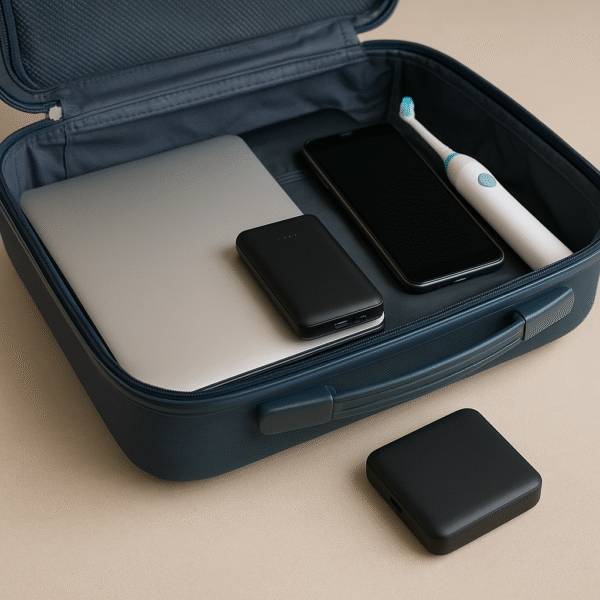
Travelers across the United States are facing new hurdles at airports as the Transportation Security Administration (TSA) enforces updated regulations on what can and cannot be packed in checked luggage. The most significant change centers on lithium and lithium-ion batteries, which power everything from smartphones and laptops to electric toothbrushes and power banks.
As of this year, passengers are no longer allowed to place these batteries or devices containing them in checked baggage. Instead, they must be carried in hand luggage. While this policy may seem like an inconvenience, it comes with the clear goal of preventing potential fire hazards during flights.
Why Lithium Batteries Are Now a Major Focus
Lithium batteries have long been a concern for airlines due to their potential to overheat, catch fire, or even explode under certain conditions. The Federal Aviation Administration (FAA) has highlighted the phenomenon of “thermal runaway,” where a damaged or unstable battery generates heat uncontrollably. This can quickly escalate into flames or smoke, posing a serious risk when stored in the cargo hold where crew members cannot intervene immediately.
By requiring these batteries to be kept in the cabin, the TSA ensures that if an incident occurs, it can be swiftly managed by flight attendants using onboard fire suppression tools. This precaution is not only about protecting passengers and crew but also about safeguarding aircraft and reducing delays caused by emergencies.
Everyday Items Impacted by the New Rule
For many travelers, the rule is straightforward when it comes to obvious devices like laptops, tablets, and smartphones. However, the list of affected items is broader than most realize.
- Electric toothbrushes: With more than 40% of Americans using rechargeable toothbrushes daily, many travelers may forget these contain lithium batteries. They must now be placed in carry-on bags.
- Power banks and spare batteries: These are strictly prohibited in checked luggage and must remain with the traveler.
- Portable gaming devices, cameras, and drones: All fall under the same restriction if powered by lithium-ion batteries.
Failing to comply may result in baggage delays at security checkpoints or even confiscation of items.
What Travelers Should Do Before Packing
To avoid last-minute issues at the airport, travelers are advised to check whether their devices or personal gadgets contain lithium batteries. This information can usually be found in product manuals or marked on the device itself.
The TSA also recommends taking these precautions:
- Keep spare batteries in their original packaging or cover the terminals to prevent short circuits.
- Store devices in carry-on luggage in a way that prevents accidental activation.
- Remove spare batteries from checked luggage at the gate if bags are required to be checked at planeside.
By following these steps, passengers can make the security process smoother and avoid unnecessary stress.
Other TSA Policy Changes Travelers Should Know
The lithium battery restriction is not the only new measure travelers must adjust to. The TSA has rolled out several initiatives aimed at improving both safety and efficiency.
- REAL ID Requirement: Starting soon, travelers must carry a REAL ID-compliant identification card for domestic flights.
- Families on the Fly: A new program designed to ease the security process for families with small children.
- Touchless PreCheck: TSA PreCheck has introduced a touchless ID system, allowing eligible passengers to enjoy a faster, more seamless screening experience.
These changes reflect a broader effort to modernize airport security while balancing passenger convenience and safety.
Impact on the Travel Industry
The updated battery rule comes at a time when tourism in the U.S. is rebounding after years of disruptions. With millions of Americans planning vacations, business trips, and international travel, understanding these regulations is more important than ever.
Airlines are already adjusting procedures, ensuring passengers are reminded of the new rules during booking and check-in. Travel advisors and tourism boards are also working to inform customers to prevent unnecessary delays at airports.
While the changes may feel inconvenient at first, they ultimately contribute to safer skies. For frequent flyers, adapting quickly to these rules will become second nature, much like other long-standing regulations such as the liquids rule for carry-ons.
A Safer and Smarter Way to Travel
Travel is often stressful enough without the added worry of security restrictions. However, the new TSA battery rules emphasize the importance of being proactive. Travelers who take time to understand the guidelines and prepare accordingly will likely experience a smoother airport journey.
In the bigger picture, these updates serve as a reminder that aviation safety is an evolving field, shaped by new technologies and potential risks. By complying with the TSA’s updated rules, passengers play a role in ensuring safer flights for everyone onboard.
So before you zip up your suitcase for your next trip, take a few extra minutes to double-check what’s inside. Your electric toothbrush, power bank, or spare batteries might just need a spot in your carry-on. With awareness and preparation, travelers can avoid disruptions and enjoy their journey with peace of mind.
For more travel news like this, keep reading Global Travel Wire