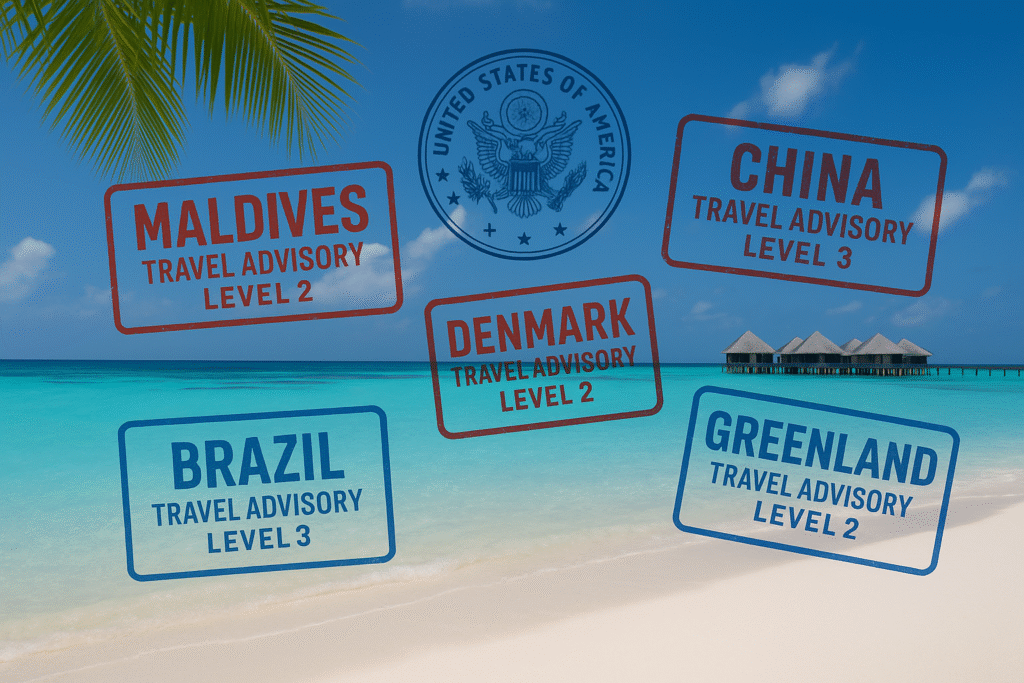
This autumn, the U.S. State Department stepped up its travel warnings for several top tourist destinations—among them the Maldives, France, China, Denmark, Brazil, and Greenland—citing worsening security conditions and tighter visa controls. The renewed alerts urge American travelers to remain vigilant and reevaluate their plans as regional risks escalate.
Maldives: Paradise Under Watch
The Maldives, famed for its azure waters and luxury resorts, now carries a U.S. Level 2: Exercise Increased Caution advisory. The warning flags possible terrorist threats targeting tourist venues, transportation nodes, shopping centers, and government buildings. Remote islands may be especially vulnerable, with slower emergency response times.
Travelers should note visa and entry changes. The Maldives issues a 30-day tourist visa on arrival, but recent scrutiny and procedural delays have increased. Ensure your passport is valid for six months beyond your departure date. Due to limited consular presence, U.S. citizens in the Maldives are served by the embassy in Colombo, Sri Lanka, which may delay assistance.
Safety guidelines include avoiding protests and crowd gatherings, registering with U.S. travel programs, and staying attuned to local news. Resorts often lie far from urban centers, making travel logistics and emergency response more complex.
France & Europe: Persistent Unrest and Theft
France remains under Level 2 advisory thanks to ongoing terrorism risks and periodic mass protests. Tourist hubs such as Paris, Lyon, and Marseille see regular marches and strikes. Though most remain peaceful, some turn disruptive, affecting public transit. Threat actors may also target public spaces and crowded landmarks.
Pickpocketing and bag theft are common in tourist-heavy areas—especially in metro stations, cafés, and markets. Visitors are advised to secure belongings and avoid displaying valuables. U.S. travelers don’t need a visa for short visits, but should anticipate stricter screening entry checks.
China: Legal Hazards and Visa Scrutiny
Mainland China faces a Level 3 advisory: “Reconsider travel.” The warning emphasizes risks tied to ambiguous law enforcement and political sensitivities. Foreign nationals may face arbitrary exit bans or detention, sometimes with limited transparency or consular access.
Visa protocols have grown more stringent, particularly for those in sensitive fields such as journalism or academia. Travelers should pursue comprehensive legal advice, contact U.S. embassies, and prepare full documentation before departure.
Denmark: Heightened Alert in a Safe Haven
Denmark and cities like Copenhagen now carry a Level 2 warning, despite a reputation for safety. Possible terrorist threats to public transit, cultural sites, and religious places prompt the alert. As a Schengen country, Denmark’s border inspections may intensify, so travelers should confirm their travel credentials.
Although civil unrest is rare, caution is advised in public spaces. Use well-known transit lines and avoid large gatherings when possible.
Brazil: Crime and Kidnap Risks
Brazil continues under Level 3 caution due to elevated crime and kidnapping in certain districts. Urban centers like Rio de Janeiro and border zones demand extra caution. Gunpoint robberies and street crimes are not uncommon. Tourists should steer clear of high-risk neighborhoods, especially after dark.
While U.S. citizens enjoy visa-free stays up to 90 days, expect rigorous screening at airports and checkpoints. Use security services for transfers, avoid solo travel at night, and never flash valuables.
Greenland: Nature’s Extremes, Sparse Support
Greenland carries a Level 2 warning tied to environmental hazards and limited rescue resources. Storms, freezing winds, and unpredictable terrain pose real danger in remote areas. Emergency services may take days to reach isolated locations.
Visitors must plan meticulously, carry survival gear, and finalize evacuation or insurance coverage ahead of travel. During points travel, always check weather alerts and abide by local guidance.
Advice for Travelers This Season
- Enroll in U.S. travel programs to receive timely alerts and assistance.
- Buy robust travel insurance that includes evacuation, medical emergencies, and trip cancellation.
- Scan entry rules and visa updates for all destinations. Changes may come rapidly.
- Avoid protests and public demonstrations—these can turn volatile without warning.
- Maintain situational awareness in crowded areas and restrict valuables on display.
- Stay connected with your tour operator, local authorities, and embassy contacts.
As the autumn wave of advisories spreads, travelers must balance wanderlust with caution. Whether you’re drawn to the idyllic Maldives or cosmopolitan Europe, staying informed is your best protection. Weather shifts, security landscapes, and visa policies evolve fast—so pack adaptively and think ahead for safer journeys abroad.
For more travel news like this, keep reading Global Travel Wire