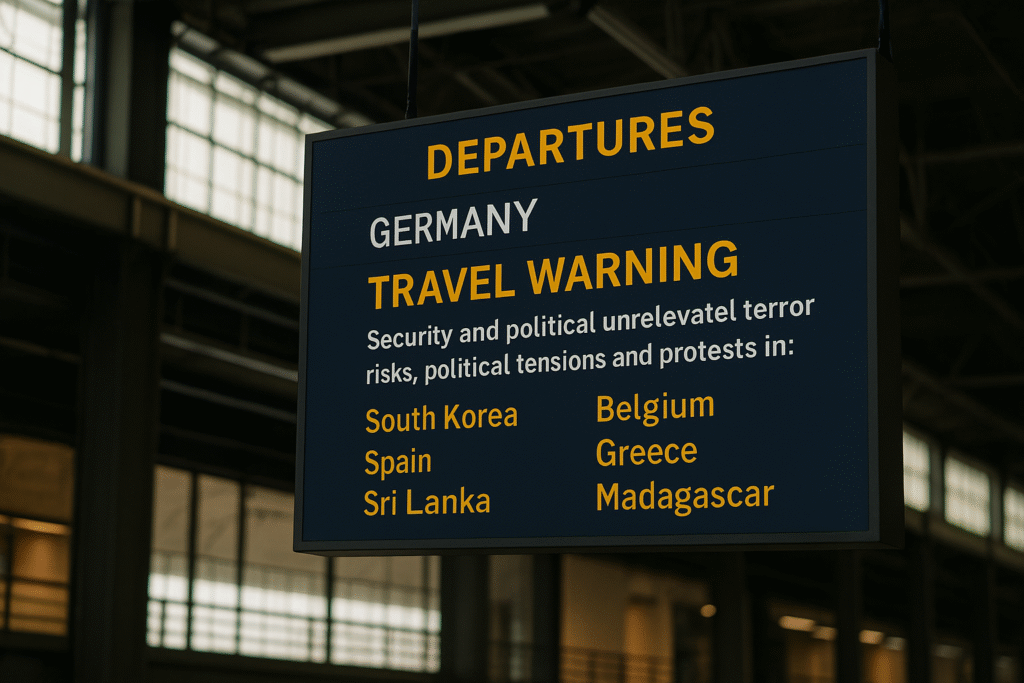
Germany has broadened its 2025 urgent travel advisory to now include South Korea, adding to the list of nations under caution such as Spain, Belgium, Greece, Sri Lanka and Madagascar. Rising political unrest, regional tensions and enhanced security measures have prompted authorities to flag these destinations as potentially risky for travelers.
This new advisory signals the gravity of several overlapping threats—from mass protests to natural disasters and violent crime. Tourists planning trips this autumn or beyond should watch developments closely and adapt itineraries accordingly.
South Korea: Tensions, Protests and Precaution
South Korea, normally viewed as a safe and modern destination, now faces elevated risks. Tensions with North Korea persist, and sudden escalations along the Demilitarized Zone (DMZ) remain a concern. The government holds regular emergency drills involving sirens, public alerts and transit suspensions, which could disrupt travel with little notice.
On the domestic front, protests in major cities like Seoul and Busan are increasing. While most demonstrations remain peaceful, clashes with authorities have occurred. Tourists are urged to steer clear of protest zones, stay in secure lodging, and avoid large crowds.
Security-minded travelers should install local alert apps that deliver real-time warnings, and always carry identification. In crowded markets or metro stations, keep valuables safe and stay aware of your surroundings.
Spain: Protest Risk, Theft Hotspots, Wildfires & Floods
Spain continues to attract travelers with its sun-drenched coasts, historic architecture and vibrant culture. But rising political unrest and crime raise red flags. Catalonia, in particular, remains a focal point of secessionist tensions. Spontaneous protests, strikes, and civil actions may trigger transport disruption or business closures.
Major tourist areas suffer heavy rates of pickpocketing, especially in cities like Barcelona, Madrid and Seville. Famous zones such as La Rambla, Plaza Mayor and metro hubs are prime targets for petty thieves. Violent crime is less common, but visitors in nightlife districts should stay alert.
Natural hazards also pose danger. Wildfires flare during dry spells in regions such as Costa Brava and the Balearics. In autumn, heavy rains can cause flooding and landslides, undermining safety and access. Travelers should monitor weather bulletins and local alerts.
Tips: Avoid poorly lit areas at night. Use secure parking and rest stops when driving. Follow local advice regarding wildfire zones and storm paths.
Belgium: Elevated Security, Terror Warnings, Civil Unrest
Belgium’s central location in Europe comes with risks. Its significance in politics and transit makes it susceptible to threats. Authorities maintain a heightened terror alert level, especially around Brussels, Antwerp and Ghent. Travelers should expect strict security checks and delays at transport hubs.
Political protest activity in Brussels has at times led to unrest. Even peaceful demonstrations can escalate, disrupt transit and pose risks near crowd centers. Petty crime such as pickpocketing is common in tourist areas like Grand Place, train stations and markets.
Carry identification at all times and use digital payments when possible. Keep a low profile, especially in crowds or major transport zones.
Greece: Fires, Quakes, Protests & Weather Risks
Greece remains a draw thanks to its islands, ruins and warm climate. But this popularity comes with several cautions. Frequent protests over labor and governance — especially in Athens — can shut down streets and block access to key landmarks. Tourists should steer clear of any demonstrations.
Greece’s dry summer and early autumn months are wildfire-prone, particularly in Crete and the Peloponnese. Earthquakes and volcanic activity, especially in the Aegean, add to the risks. Sudden tremors are possible. Additionally, heavy rains can cause flash floods along coastal zones.
Stay tuned to emergency alerts, avoid hiking in fire-prone regions, and learn basic earthquake safety. Keep valuables secured, especially at well-visited sites like the Acropolis.
Sri Lanka: Protests, Crime & Natural Hazards
Sri Lanka is grappling with an ongoing economic recovery and sporadic protests tied to government policies. Some gatherings turn violent and prompt curfews or transport shutdowns. Travelers should avoid participating or being near large crowds and follow official advice.
In tourist hotspots like Colombo and Kandy, reports of theft, assault, and fraud are rising. Solo travelers, particularly women, should exercise caution in lower-end lodgings or late-night settings. Markets and souvenir shops may overcharge or peddle counterfeit goods.
Sri Lanka’s monsoon cycles bring heavy rain, flooding and landslides. Storms can cut off access to parts of the country. The threat of earthquakes and tsunamis remains low but present. Stay properly vaccinated, drink safe water, and carry essential medicines in case supply chains get strained.
Madagascar: Civil Unrest, Crime and Cyclone Season
Madagascar is under a fragile military-led transition. Protests and clashes between citizens and security forces are common. Curfews in major cities like Antananarivo may be imposed with little warning. Tourists should keep to safe zones and obey local regulations.
Robbery and armed theft occur in tourist and coastal areas. Walking alone after dark is not advised. Maritime travel around the island carries piracy risk, so sailors must monitor marine alerts.
From December to April, Madagascar endures cyclone season. Storms can trigger flooding, landslides and travel disruption. Infrastructure in remote areas may collapse quickly. Outside this window, conditions improve significantly—but caution remains warranted at all times.
Travel Smart: Tips & Strategy
Germany’s expanded travel warnings underline that no destination is entirely free of risk. These alerts serve as a reminder to plan wisely, stay aware and remain flexible. Here are practical steps to ensure safer travel:
- Monitor local media and overseas missions’ updates for any sudden developments.
- Enroll in government registration programs that send security alerts to tourists.
- Diversify your itinerary: avoid areas known for demonstrations or unrest.
- Travel with a contingency plan—know evacuation routes, safe zones, and alternate transport options.
- Carry minimal cash and rely on secure payment methods.
- Use accommodations with proper security protocols.
- Download safety apps that send real-time alerts and emergency contacts.
- Stay away from protests or gatherings, even benign ones, as they may escalate.
- Keep your embassy or consulate contacts handy.
- Obey curfews, local instructions, and border rules without question.
As international travel rebounds, risks persist across many countries. That makes vigilance more critical than ever. By staying alert, traveling responsibly and heeding advisories, you can reduce your exposure to danger—while still experiencing the rich cultures, natural wonders and historic sites that draw visitors around the world.
For more travel news like this, keep reading Global Travel Wire