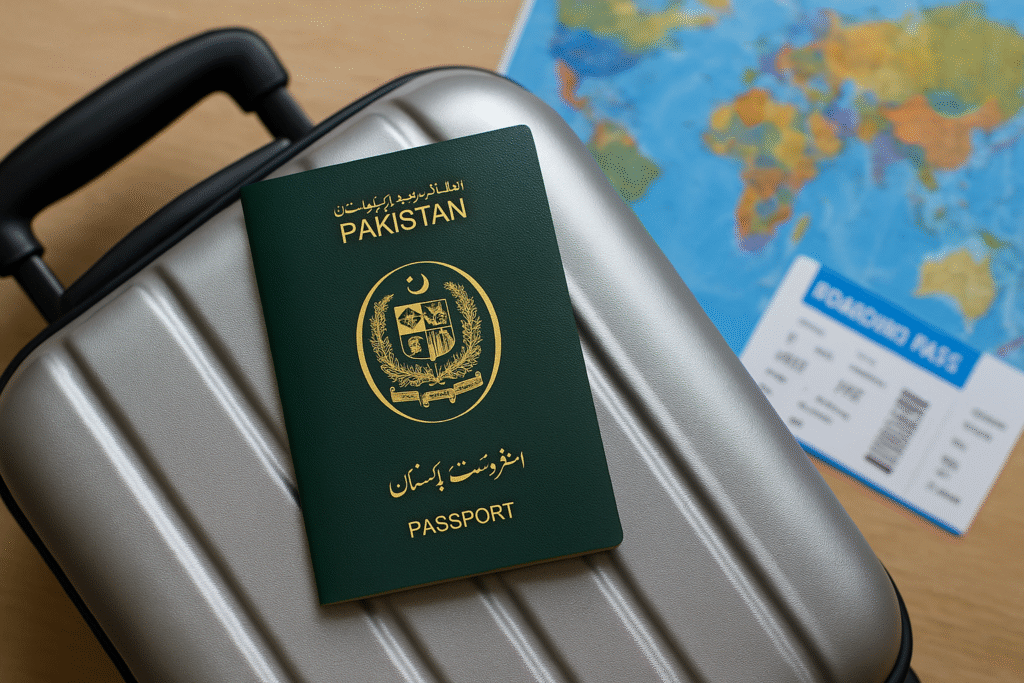
In 2025, Pakistan’s passport remains one of the weakest globally. It holds the fourth-weakest rank for the fifth year running. Its holders can access only 32 destinations visa-free or via visa on arrival.
This grim standing underscores the severe travel limitations faced by many Pakistani citizens. Such constraints restrict opportunities for tourism, business, education, and global partnerships.
Why Pakistan’s Passport Remains Weak
The Henley Passport Index bases its rankings on how many countries a passport holder can enter without a prior visa. Pakistan’s low score reflects decades of limited diplomatic outreach and visa reciprocity challenges.
In the 2025 index, Pakistan is ranked 96th, placing it just above conflict-ridden nations like Syria, Iraq, and Afghanistan.
Its minor improvement—from previously sharing its rank with Yemen—offers little relief.
Pakistan’s access of 32 destinations is a small gain over earlier years, but still far behind global standards.
Passport Power in the Region: A Stark Contrast
When compared with Pakistan’s neighbors, the mobility gap is glaring:
- India (ranked 85th) enables visa-free or visa-on-arrival access to 57 countries.
- China (ranked 64th) permits access to 82 destinations without prior visa.
- Iran (85th) allows entry to 41 countries without needing a visa.
These neighboring countries leverage stronger diplomatic ties and better visa policies to expand their citizens’ global reach. Meanwhile, Pakistan’s restrictions isolate it further from global flows of tourism and commerce.
Top Passports: The Other End of the Spectrum
While Pakistan struggles, other nations enjoy sweeping mobility:
- Singapore holds the top position with access to 193 destinations.
- South Korea and Japan follow closely, with 190 and 189 destinations respectively.
- A cluster of European nations—Germany, Italy, Spain, Switzerland, and more—share strong ranks, offering their citizens access to nearly 188 nations.
Strong passports allow citizens to travel freely, boost cross-border business, and enhance cultural exchange. Weak passports do the opposite—they constrict opportunity and hamper economic growth.
How Passport Weakness Impacts Pakistan
1. Tourism & Travel Decline
Many Pakistani travelers must navigate cumbersome visa regimes for basic travel, discouraging them from exploring global destinations. This low mobility also makes Pakistani tourism less visible abroad.
2. Economic Limitations
Exporters, businesspeople, and professionals often miss out on global markets if they cannot attend trade fairs or meetings freely. Limited access restrains trade growth and foreign investment.
3. Educational Barriers
Students seeking foreign universities face additional visa hurdles. Delayed approvals, rejections, and limited mobility make international education harder to access.
4. Diplomatic & Soft Power Setback
A weak passport signals limited reciprocity in international relations. It hints at diplomatic gaps and less influence in global policy circles.
Is There Hope for Change?
Yes—but it requires strategic action:
- Bilateral visa agreements: Signing visa waiver deals with more nations could improve access.
- Diplomatic engagement: Active foreign policy can create pathways for travel freedom.
- E-Visa expansion: Simplifying entry through electronic visas will ease barriers.
- Global image boost: Strengthening security, stability, and rule of law may enhance international trust and reciprocity.
Pakistan has taken small steps—such as recent visa exemptions for diplomatic passports—but broader reforms are necessary to shift its global mobility ranking.
The Growing Global Mobility Divide
The 2025 passport rankings reflect a widening divide. Citizens of nations with weak passports are increasingly cut off from the benefits of global mobility. Those from countries with strong passports enjoy commercial, educational, and cultural access that others can only envy.
Pakistan’s continued presence near the bottom of the global mobility chart illustrates how travel restrictions translate into economic and social isolation. To bridge this divide, Pakistan must elevate its diplomacy, push visa reforms, and pursue a future where its citizens can move freely in the global community.
For more travel news like this, keep reading Global Travel Wire