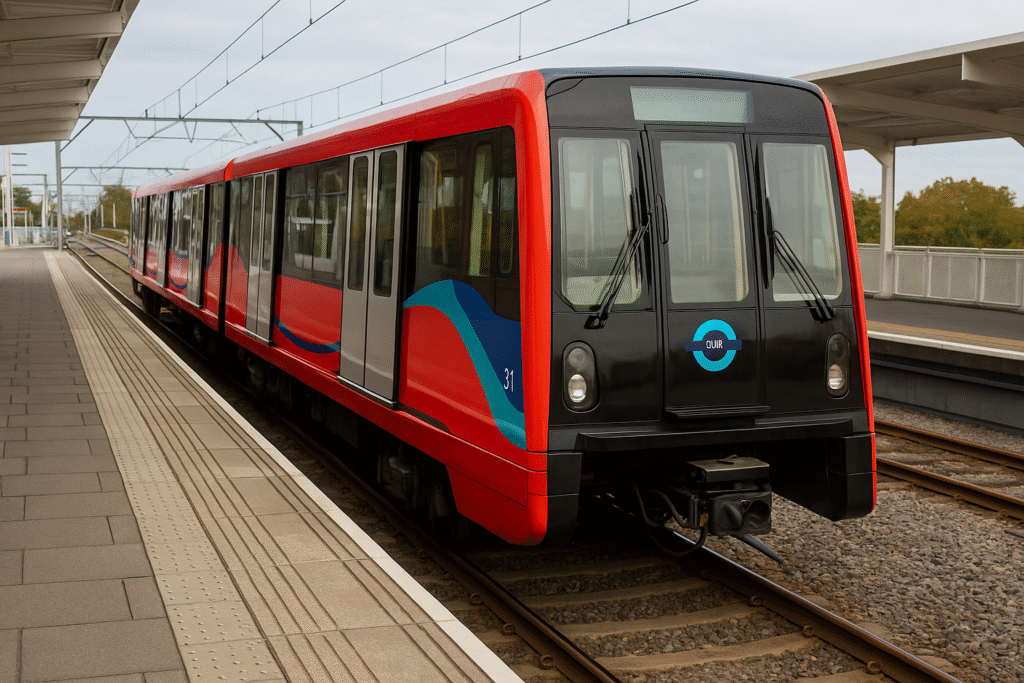
London’s Docklands Light Railway (DLR) is at the cusp of a transformation that will benefit commuters, tourists, and the city’s sustainability targets alike. With the introduction of 54 new trains equipped with Hitachi Rail’s advanced communications-based train control (CBTC) signalling, the DLR is evolving into a more efficient, resilient, and greener transit system. The upgrade signals a major commitment to modern urban mobility and enhances the visitor experience across London’s Docklands corridor.
A Leap Forward: Hitachi Rail and the DLR Upgrade
The new fleet of 54 trains marks a bold new chapter for the DLR. Each train is equipped with Hitachi Rail’s state-of-the-art CBTC system, a digital signalling technology that enables continuous, real-time communication between trains and control centres. This capability allows for tighter train spacing, smoother operation, and more responsive scheduling. In effect, it transforms the DLR into a more dynamic, higher-capacity system.
Passengers will see fewer delays, better punctuality, and more consistent headways as the system can adjust train movements with greater precision. The new trains are being gradually phased into service across the DLR’s network of 45 stations, serving nearly 100 million journeys per year.
The trains themselves have been designed to improve capacity by around 10 percent over the earlier models. Interior layouts dedicate space for wheelchairs, pushchairs, and bicycles—making them more accessible and inclusive. These design choices reflect London’s broader aim to promote equity and inclusivity in its public transport network.
The system upgrade is being delivered under the oversight of Transport for London (TfL) in partnership with KeolisAmey, which operates the DLR. The overarching project is expected to boost network capacity by as much as 60 percent by the time rollout completes in 2026.
Service Impact: What Commuters and Tourists Will Experience
For Londoners and visitors alike, the enhanced DLR will deliver faster, more reliable journeys across key destinations. Tourists heading to Canary Wharf, Greenwich, or The O2 Arena—destinations linked via the DLR—will benefit from smoother interchanges and reduced wait times. For business travellers, improved service consistency means fewer surprises in their itineraries.
The upgraded line will also relieve pressure on central London’s transport network by shifting more trips onto the DLR, thereby reducing congestion in core underground and rail lines. That ripple effect will make overall travel across London smoother—especially during peak hours.
Accessibility enhancements will also make it easier for passengers with mobility aids or luggage to board and travel comfortably. The greater capacity ensures less crowding, which is a boon for visitors who may be unfamiliar with London’s transit rhythms.
Sustainability & Smart City Ambitions
A key driver behind this upgrade is sustainability. By leveraging digital signalling and energy-efficient train systems, the DLR aims to reduce its carbon footprint and support London’s broader climate goals. Smart signalling helps optimise traction and braking cycles, cutting energy waste. In addition, the new trains will be able to dwell at stations more precisely—minimising idling time and unnecessary power usage.
The adoption of Hitachi’s CBTC system positions the DLR as part of London’s movement toward a smarter, data-driven transport network. It also aligns with the city’s vision of integrating technology, resilience, and sustainability into its infrastructure.
Technical Backbone: CBTC and SelTrac
The upgrade hinges on communication-based train control, which allows for real-time monitoring and adaptive control of train movements. This is a step beyond traditional fixed-block signalling, enabling trains to operate with shorter safe separation and higher throughput.
An essential component is Hitachi’s ownership of the SelTrac signalling technology (following its acquisition of Thales’ signalling division). SelTrac is a mature, proven digital signalling suite deployed in urban rail systems globally. Its integration into the DLR allows operators to manage traffic flexibly and safely, even under heavy demand.
The use of SelTrac also ensures that future expansions and further automation upgrades become more feasible. Its compatibility with modern signalling protocols and ability to scale makes it a future-proof backbone for the DLR.
Preparing for the New Normal: Implementation & Phasing
The transition to the new trains and signalling is being handled in phases, to maintain continuous service across the network. As new units become operational, they will displace older models gradually. Behind the scenes, staff training, signalling integration, and system testing are ongoing to ensure safe and seamless adoption.
Complementary infrastructure upgrades—such as depot expansions, platform modifications, and communications enhancements—are also part of the full programme. These improvements ensure that the network will fully support the higher throughput and modern systems.
The upgrade’s completion is slated for 2026, by which point the entire DLR network will operate under the new regime.
Tourist Tips: Maximising Your DLR Experience
- Travel smart: Use contactless payment methods or Oyster cards for seamless boarding across DLR and other TfL services.
- Time your journey: With the upgrade, off-peak travel can offer more comfortable carriage conditions—try scheduling your DLR trips outside rush hour.
- Plan stops: Use the DLR to reach attractions like Greenwich, The O2, and riverside walkways, making scenic connections with minimal fuss.
- Stay informed: Keep an eye on service updates from TfL, especially during the transition phase when some adjustments or temporary disruptions may occur.
Conclusion: A Smarter, Greener Future for London Transit
The DLR’s upgrade under Hitachi Rail’s leadership marks a transformative moment for London’s transport ecosystem. By combining higher capacity, greater accessibility, and smarter signalling, the DLR is shaping up as a modern, responsive backbone of London’s public transit. Commuters and tourists alike will reap the rewards: fewer delays, smoother rides, and an expanded capacity to connect across the city.
As London claims ever more vitality as a global destination and a hub of innovation, its transport infrastructure must keep pace. The DLR’s evolution signals that ambition realized—and sets a benchmark for modern, sustainable urban mobility in the years ahead.
For more travel news like this, keep reading Global Travel Wire