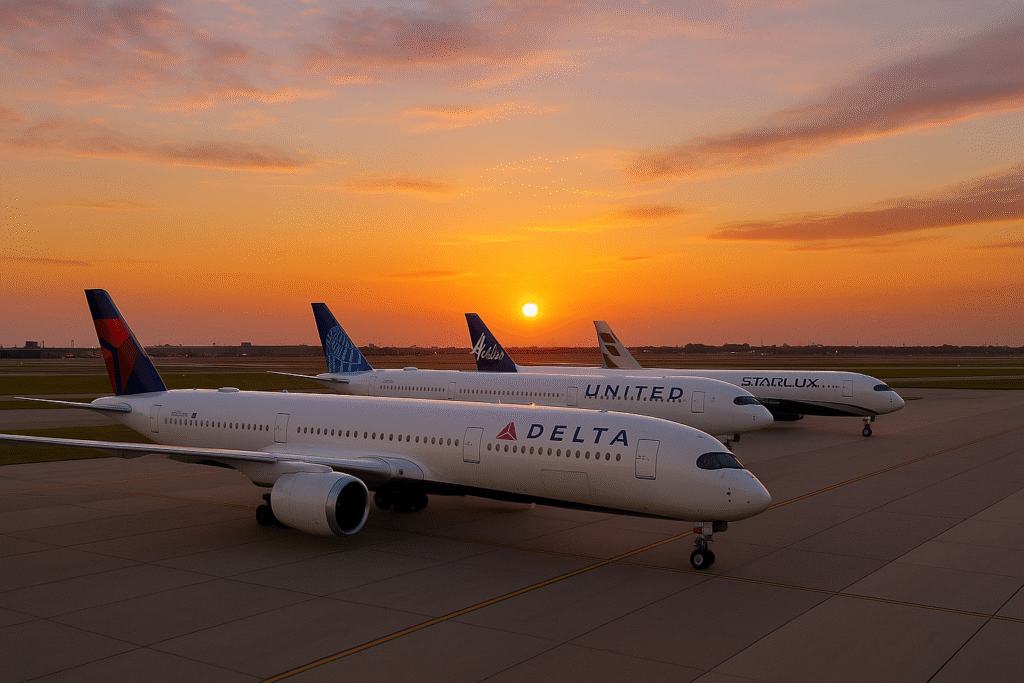
Several major U.S. carriers are gearing up for a bold expansion of international routes in 2026. These moves promise to reshape global connectivity and open up fresh destinations for both business and leisure travellers.
Expanded Transatlantic Service with Destination Depth
Delta Air Lines is dramatically increasing its transatlantic footprint. Over the summer season of 2026 it will operate more than 650 weekly flights to nearly 30 European destinations — the largest such schedule in its history.
New non-stop routes include New York-JFK to Olbia (Sardinia), Porto (Portugal) and Malta, offering direct access to Mediterranean gems.
This push means fewer layovers and more choice for travellers heading to Europe’s sun-soaked coasts, historic cities and island escapes.
Strategic Push into the Middle East and Beyond
As part of its global strategy, Delta will launch its first nonstop service from Atlanta to Riyadh (Saudi Arabia) in October 2026. This marks its entry into a rapidly growing business and tourism hub in the Middle East.
The airline will deploy A350-900 aircraft featuring premium configurations to serve this corridor.
By connecting key U.S. hubs with this region, the expansion taps into rising demand for access to emerging markets.
U.S. Airlines Race Beyond Europe
United Airlines and JetBlue Airways are expanding as well. United will launch seasonal service from Newark to Croatian, Italian, Spanish and Scottish destinations. It will also offer the first U.S.-East-Coast nonstop to Seoul from Newark — a major milestone.
JetBlue will expand into Latin America and southern Europe, with new daily service from Boston to Milan and Barcelona, and from Fort Lauderdale to Cali and Liberia in Costa Rica.
Alaska Airlines plans its first transatlantic route with daily service from Seattle to Rome in 2026. Starlux Airlines of Taiwan will enter the U.S. market with a Phoenix-Taipei connection, signaling Asia-bound premium travel growth.
What This Means for Travellers
More destination choice, fewer stops
New nonstop services make it easier and faster to reach remote or high-demand spots. Whether you’re planning a weekend getaway to the Mediterranean or a business trip to Seoul, direct flight options will multiply.
More flexibility and better offer
With expanded capacity, airlines are offering more seats and more routes. That typically leads to more competitive pricing and creative options for travellers.
Business travel rewired
Direct connections to economic hubs such as Riyadh and Seoul will reduce travel time and open up fresh international business lanes. Companies and professionals based in the U.S. will benefit from smoother global access.
Local economies stand to benefit
When airlines launch new international routes, they stimulate tourism, trade and job creation in both origin and destination cities. The flow of travellers, spending and exchange strengthens regional economies across continents.
Key Tips for Savvy Planning
- Book early: New routes often offer introductory fares but have limited inventory.
- Check seasonal status: Some routes operate only during summer or for a limited window.
- Explore premium cabins: Long-haul growth means more lie-flat seats and premium economy options.
- Watch for weekend-city services: In the U.S., airlines are adding Saturday-only flights to popular leisure destinations, offering quick turnaround escapes for travellers.
Summary:
The 2026 travel year promises to be a landmark for global connectivity. U.S. airlines are launching a sweeping expansion of international routes across Europe, the Middle East, Asia and Latin America. Travelers can expect more destinations, more direct flights and better access to the world than ever before.
For more travel news like this, keep reading Global Travel Wire