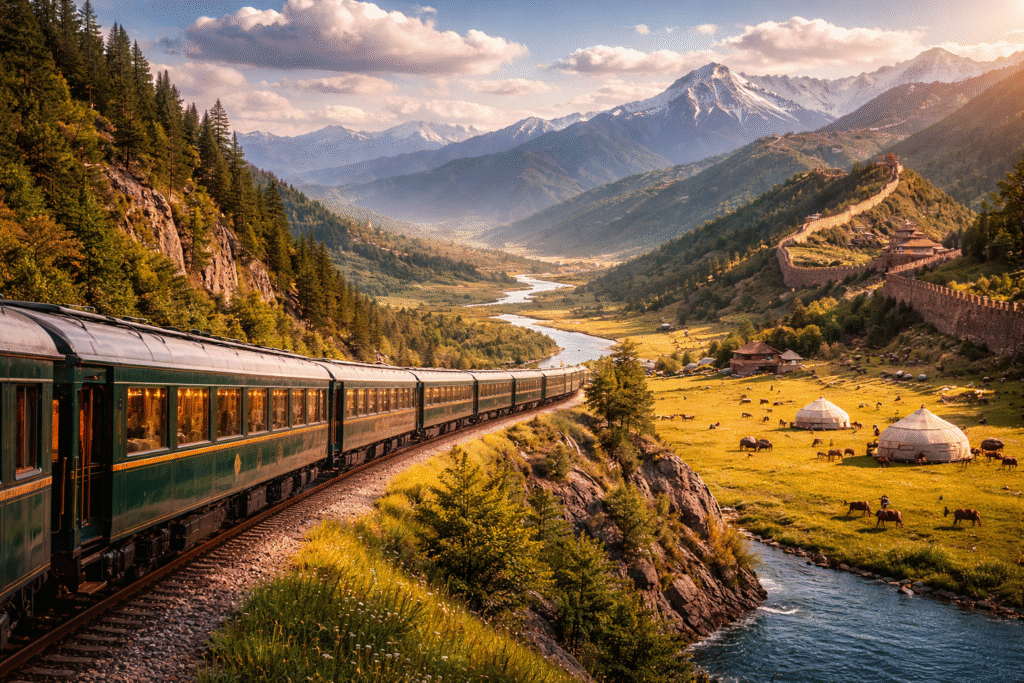
Russia, Mongolia, and China come together through one of the world’s most iconic rail journeys. The Trans-Siberian Railway delivers an unmatched travel experience across Eurasia. This route stretches across vast distances and connects cultures shaped by history and geography.
Travelers board the train for more than transportation. They enter a moving world of landscapes, traditions, and human stories. The railway offers access to regions that few travelers reach independently. Each stop reveals a different rhythm of life.
Government tourism agencies across the region promote rail travel as a cultural bridge. The Trans-Siberian Railway stands at the center of that vision.
Moscow Marks the Start of an Epic Crossing
The journey begins in Moscow, Russia’s historic and political heart. The city blends imperial architecture with modern urban energy. Travelers often spend several days exploring museums, markets, and grand public squares before departure.
From Moscow, the train heads east across forests, rivers, and industrial towns. Each hour brings a visible shift in scenery. European Russia slowly gives way to Siberia’s immense scale. The transition feels gradual yet powerful.
This first leg sets the tone for the adventure ahead.
Siberia Showcases Nature at Its Rawest
Siberia dominates much of the route and delivers unforgettable visuals. Dense taiga forests stretch beyond the horizon. Frozen rivers and snow-covered plains appear endless during winter months.
Passengers witness life in remote settlements where rail links remain essential. Small stations become social hubs for local communities. Vendors sell regional food directly on platforms.
Siberia also carries deep historical importance. The railway once supported national development and economic unity. Today, it continues to connect isolated regions with the rest of the country.
Lake Baikal Adds Natural Wonder to the Route
One of the journey’s most celebrated highlights includes Lake Baikal. This lake ranks as the deepest freshwater body on Earth. It also holds immense ecological value.
The railway runs close to the shoreline for several hours. Travelers enjoy panoramic views of crystal-clear waters and dramatic cliffs. In winter, the frozen surface creates a surreal landscape.
Many travelers stop nearby to explore local villages and hiking trails. This region reflects Russia’s commitment to environmental preservation and sustainable tourism.
Mongolia Introduces Vast Steppes and Nomadic Culture
The Trans-Mongolian route branches south toward Mongolia. This variation appeals to travelers seeking open landscapes and cultural contrast. The train enters a land defined by space and sky.
Mongolia’s steppes stretch endlessly with minimal development. Nomadic traditions remain visible across the countryside. Herds of horses and camels roam freely near the tracks.
Ulaanbaatar, the capital, offers a striking mix of ancient and modern life. Buddhist monasteries stand beside government buildings and new developments. Travelers often stop here to explore local history and cuisine.
China Adds Energy and Urban Scale
The final leg brings travelers into northern China. The scenery changes quickly as farmland and cities replace open plains. Rail infrastructure grows denser and faster paced.
Beijing marks the end point for many travelers. The city blends imperial landmarks with modern innovation. Visitors explore historic sites, bustling markets, and diverse neighborhoods.
This conclusion highlights the journey’s full cultural arc. Travelers experience a complete transition from Europe to East Asia by rail alone.
Multiple Routes Offer Flexible Experiences
The classic Trans-Siberian route runs from Moscow to Vladivostok. This journey covers over 9,000 kilometers and spans eight time zones. Travelers complete the trip in about seven days without stops.
The Trans-Mongolian route connects Moscow to Beijing through Mongolia in five days. The Trans-Manchurian route reaches Beijing through northeastern China in six days. Each option offers unique scenery and cultural exposure.
Tourism authorities encourage route customization to support longer stays and local economies.
Comfort Levels Suit Every Travel Style
The Trans-Siberian Railway offers several accommodation classes. Budget travelers choose basic sleeper compartments. These cabins encourage social interaction and cultural exchange.
First-class options provide private cabins, enhanced dining, and added comfort. Luxury tour operators also offer curated experiences with guides and upgraded services.
This flexibility makes the journey accessible to many travelers.
A Journey That Redefines Modern Travel
The Trans-Siberian Railway offers more than sightseeing. It encourages patience, observation, and connection. Travelers slow down and engage with the world beyond screens.
This journey supports cross-border tourism and cultural understanding. It aligns with regional tourism strategies that emphasize sustainable and immersive travel.
For adventurous travelers, the Trans-Siberian Railway delivers a rare opportunity. It unites three nations through shared rails, stories, and landscapes. The experience leaves a lasting impression long after the final station.
For more travel news like this, keep reading Global Travel Wire