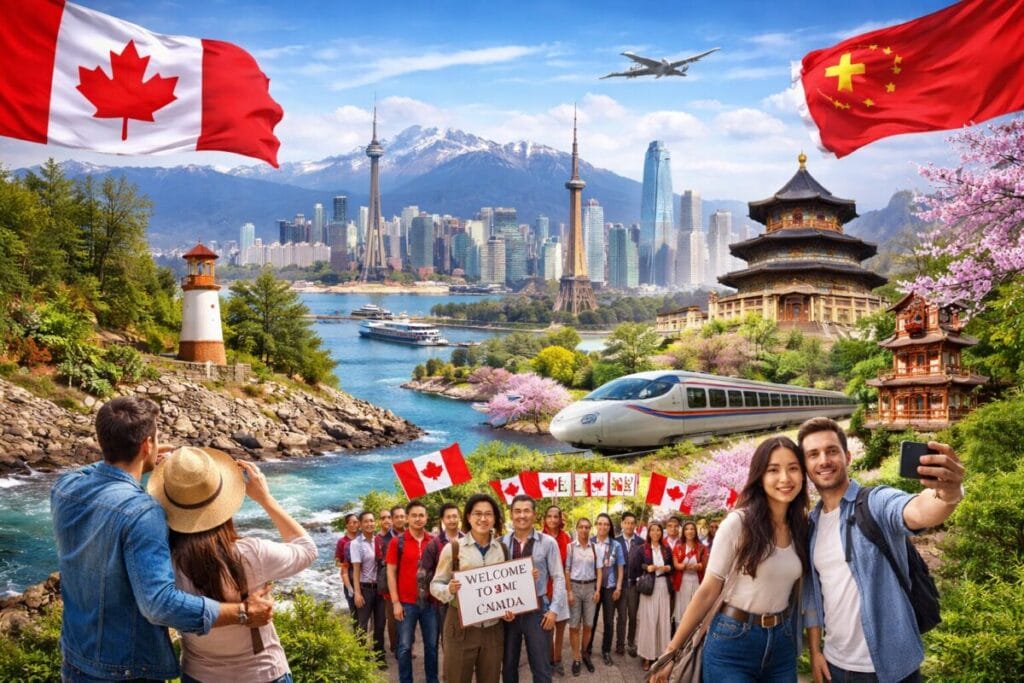
As 2026 unfolds, China and Canada are entering a new chapter of cultural diplomacy and tourism cooperation that is reshaping travel patterns between the two nations. Flexible visa policies, expanding flight networks, and the return of organized group tours are making cross-border travel more accessible and culturally enriching. This surge in mobility is positioning both countries as gateways for travelers seeking diverse landscapes, culinary experiences, and artistic expression.
For Canada, the uptick in Chinese tourism is supporting a broader strategy to strengthen international visitation and diversify tourism markets. Meanwhile, China’s cultural and tourism authorities are creating favorable entry conditions that appeal to Canadian travelers interested in exploring Chinese heritage sites, modern cities, and regional cuisines.
Visa Policy Enhancements Drive New Travel Momentum
One of the most notable shifts came from China’s evolving visa policies, which now provide expanded entry options for short-term visits. Travelers from Canada can benefit from a 240-hour visa-free transit program, allowing them to spend several days in select Chinese cities without submitting extensive visa applications. Additionally, a 30-day visa-free entry to Hainan Island offers Canadians a tropical escape featuring beaches, resorts, and duty-free shopping.
These policies are particularly attractive for spontaneous travel planners and multi-city explorers who may wish to pair visits to China with trips to nearby Asian destinations. The simplified entry framework also aligns with China’s broader goal of revitalizing inbound tourism following years of global travel disruption.
Resumption of Group Tours Reconnects Travelers
In November 2025, China officially resumed group tours to Canada—an important milestone for both nations. Group travel has historically played a major role in Chinese outbound tourism, particularly for first-time travelers who prefer guided itineraries to major destinations such as Vancouver, Toronto, Montreal, and the Canadian Rockies.
Shortly after the policy shift, Hainan Airlines resumed group services from Shenzhen to Vancouver, marking a symbolic and operational restart for organized tourism flows. Travel planners expect additional group itineraries to launch in 2026, especially during peak holiday periods such as Lunar New Year, Golden Week, and the Canadian summer season.
Tourism boards, hotel associations, and attractions across Canada are preparing for increased Chinese arrivals, noting that group travel typically stimulates spending across lodging, retail, dining, and cultural experiences. In turn, Canadian tourism agencies are expanding outbound initiatives to introduce Canadians to China’s destinations, from Beijing and Shanghai to lesser-known cultural hubs like Xi’an, Chengdu, and Suzhou.
Cultural Exchange Takes Center Stage
Beyond tourism infrastructure, cultural exchange has emerged as the heartbeat of the China-Canada relationship in 2026. Events, exhibitions, and performing arts acts are bringing people together and fostering cross-cultural understanding.
A key highlight was the China Tourism Culture Week hosted in Toronto, where audiences were treated to traditional performances including the visually striking face-changing art form. These showcases not only highlight cultural heritage but also promote travel inspiration by spotlighting regional customs, festivals, and artistic traditions.
Meanwhile, Canadian performing groups and student delegations have been welcomed in Chinese cities. One such example included the rowing team from Ridley College, which earned multiple medals at the Shanghai Rowing Open in October 2025. These exchanges embody a growing trend: cultural diplomacy not simply as international goodwill, but as tourism marketing that fuels two-way travel.
Major Tourism Cities Benefit on Both Sides
The strongest tourism flows for 2026 appear centered around major urban gateways. For Chinese travelers heading to Canada, Vancouver and Toronto remain top choices thanks to their multicultural dining scenes, natural landscapes, and vibrant neighborhoods. Vancouver offers easy access to outdoor adventures in British Columbia, while Toronto provides cultural attractions, sports, and festivals in the heart of Canada’s largest metropolitan region.
On the opposite side of the Pacific, Canadian travelers are showing increasing interest in Chinese cities such as Shenzhen, Beijing, Shanghai, Guangzhou, and Xi’an. Shenzhen has emerged as a rising cultural and design destination, celebrated for its creative districts, technology exhibitions, and modern waterfront developments.
Festivals and Events Signal a Bright Year Ahead
Cultural festivals related to Lunar New Year, Mid-Autumn celebrations, and seasonal art exhibitions will animate the 2026 calendar in both nations. These events are expected to attract tourists who are seeking deeper immersion into local customs rather than traditional sightseeing alone.
For Canadians traveling to China, Lunar New Year presents opportunities to experience culinary feasts, lantern festivals, temple fairs, and fireworks displays. Conversely, major Canadian cities are expected to host Chinese New Year parades, market bazaars, and cultural showcases, drawing both Chinese tourists and diaspora communities.
Travel Tips for 2026 Cross-Border Tourism
● Entry Convenience: Canadian travelers can take advantage of China’s visa-free transit options and Hainan entry privileges.
● Best Travel Seasons: Summer and autumn are popular for Canadian outdoor tourism, while spring and winter festivals draw travelers to China.
● Cultural Etiquette: Respectful engagement with local customs enhances the tourism experience in both countries.
Prospects for the Future
With clear momentum building, 2026 may become a pivotal year for China-Canada tourism relations. The combination of policy support, cultural diplomacy, and renewed flight connectivity bodes well for bilateral economic gains and enriched traveler experiences.
As both countries continue strengthening their tourism and cultural bridges, travelers on both sides of the Pacific will benefit from greater access, diversity, and opportunity.
For more travel news like this, keep reading Global Travel Wire