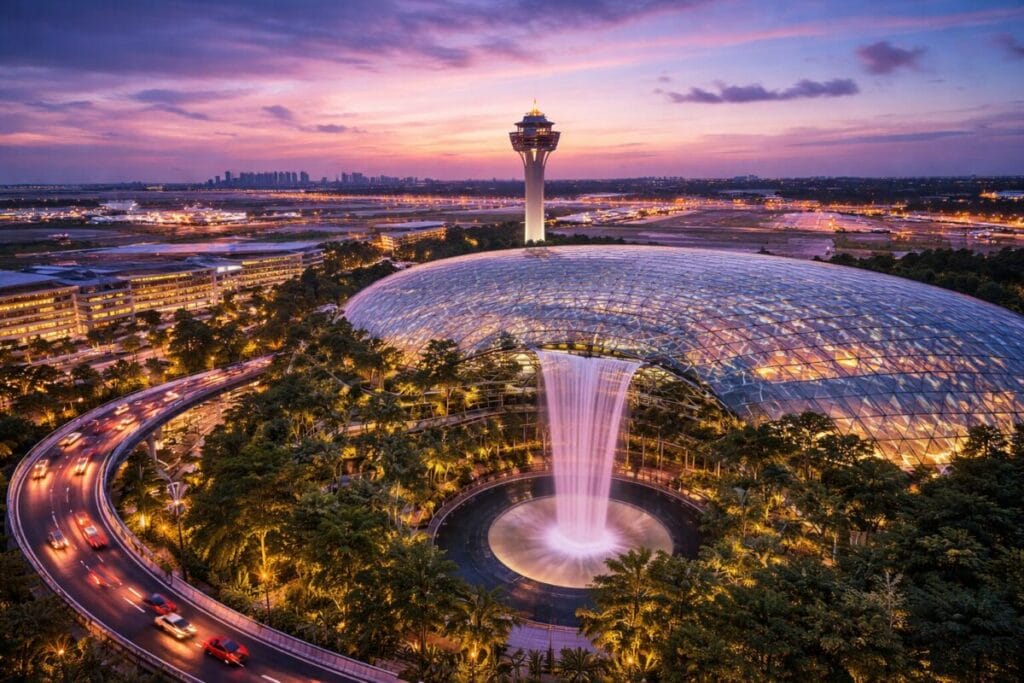
Singapore Changi Airport secured the second position in Travel and Tour World’s global airport rankings for 2026. This achievement highlights its reputation as one of the most advanced travel hubs in aviation. Changi continues to attract recognition due to its strong performance in smart technology, passenger growth, sustainability, and operational efficiency. Travelers value the smooth airport experience that blends convenience, automation, and premium hospitality.
Singapore positions aviation as a pillar of its tourism and economic growth strategy. This approach gives Changi Airport a strategic advantage in the Asia-Pacific region. Strong airline partnerships, wide international connectivity, and efficient infrastructure support Singapore’s ambitions as a global travel and business hub.
Passenger Traffic Surges During a Golden Growth Period
Changi Airport recorded record-breaking traveler numbers in 2025. Passenger arrivals surpassed historic benchmarks and demonstrated rapid recovery from pandemic-related declines. The airport processed 70 million passengers in 2025 and forecasts estimate up to 74 million in 2026. This sustained growth reflects renewed long-haul travel demand, robust intra-Asia traffic, and increasing transit flows through Singapore.
Travel demand from key markets such as China and Vietnam surged during the year. The Singapore-Jakarta route ranked among the busiest aviation corridors worldwide. Airlines expanded seat capacity and reinstated routes that connect Southeast Asia with Europe, Australia, and North America. These developments strengthened Singapore’s aviation ecosystem and created favorable conditions for continued tourism expansion.
Changi also recorded strong aircraft movements and cargo volumes. Aviation analysts note that both metrics matter for long-term profit stability. Freight demand remained high due to e-commerce and supply chain growth within Asia. This combination supports Changi’s position as both a passenger and logistics powerhouse.
Smart Technology Enhances the Travel Experience
Changi Airport leads in smart technology adoption. The airport invests in seamless travel systems that reduce queues, remove paperwork, and simplify airport navigation. The Fast and Seamless Travel (FAST) program includes biometric gates that support check-in, immigration, and boarding with facial and iris recognition. The system reduces waiting times by an estimated 40 percent and improves passenger satisfaction.
Digital twin technology creates a virtual model of the airport’s physical environment. Airport staff use the system to track real-time passenger flows, identify bottlenecks, and adjust resources. This proactive management approach prevents congestion and maintains service reliability during peak travel hours. Operators in other major hubs monitor Changi’s digital model as a benchmark for next-generation smart airports.
Autonomous systems also support ground operations. Robotic tractors handle oversized baggage. App-based autonomous wheelchairs assist travelers with reduced mobility. AI-powered tools monitor catering, fueling, and aircraft turnarounds. These digital enhancements reduce human error, shorten turnaround times, and boost on-time flight performance.
Terminal 5 Will Transform Future Capacity
The development of Terminal 5 strengthens Changi’s long-term growth strategy. Construction began in 2025 and the terminal will increase airport capacity by more than 50 percent. Forecasts estimate that Changi could eventually support up to 140 million passengers per year once T5 enters full operation in the mid-2030s. The terminal will integrate smart infrastructure, automated checkpoints, and sustainable design elements.
Aviation experts highlight T5 as one of the most ambitious terminal projects in the world. Singapore views the project as critical to maintaining its competitive aviation position as demand increases across the Asia-Pacific region. Global airline alliances continue to expand in Southeast Asia due to strong demographics and fast-growing international travel volumes.
Singapore Tourism Complements Changi’s Growth
Travelers who transit through Changi often extend their stay in Singapore due to the city’s diverse attractions. Singapore integrates tourism, aviation, and events to strengthen its global positioning. Visitors explore modern landmarks, cultural districts, and nature reserves during short or extended trips.
Top recommended attractions for 2026 include the Jewel complex, Gardens by the Bay, Marina Bay Sands, the Singapore Oceanarium, and the Mandai Wildlife Reserve. Each attraction provides immersive experiences for families, business travelers, and leisure tourists. Singapore’s clean urban design, reliable public transport, and safety ranking also support positive trip satisfaction.
Visitors use the MRT system to navigate the city quickly and affordably. Singapore encourages digital ticketing and contactless payments across public transport networks. Free tourist SIM options give short-term travelers access to data and online navigation tools during their stay.
Why Changi Airport Continues to Lead
Changi Airport succeeds due to technology leadership, excellent connectivity, and strong traveler experience management. Industry analysts expect Singapore to maintain its influence within global aviation. The city’s approach combines innovation with reliable operations and government support for tourism and trade sectors.
Changi’s recognition as the second-best airport in the world for 2026 reinforces its global standing. Travelers describe their journeys as efficient, convenient, and enjoyable. Aviation experts credit Changi for shaping standards that future airports will likely adopt as travel demand increases.
For more travel news like this, keep reading Global Travel Wire