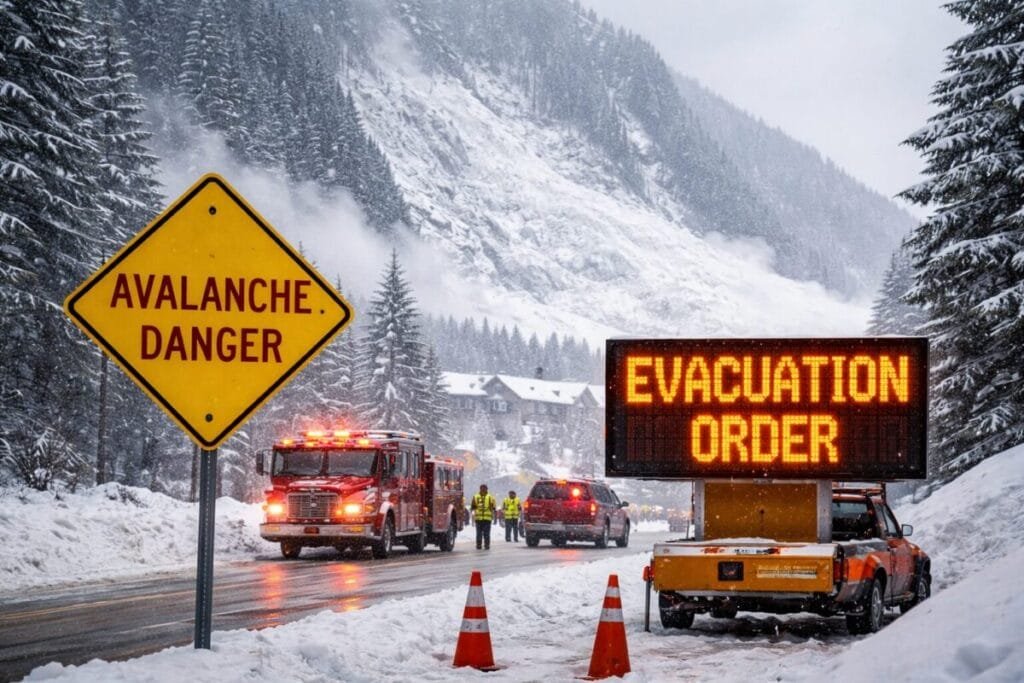
A rare and urgent US travel warning for Alaska has drawn national attention as the capital city of Juneau faces an unprecedented avalanche threat. Wireless emergency alerts were activated across the region for the first time in fifteen years, signaling a level of urgency that officials reserve only for life-safety emergencies. The situation has now become a major concern for travelers planning winter and early spring trips to Alaska.
Record Snowfall Followed by Sudden Thaw
Juneau’s crisis began in December when the city accumulated more than eighty inches of snow in a single month. That total nearly matched the amount the city usually receives in an entire winter season. The excessive accumulation created a deep snowpack on surrounding mountains and ridges. Residents in the region are used to heavy snowfall, but this season’s pattern moved far outside normal ranges.
Trouble intensified as temperatures rose rapidly in mid-January. Warm air pushed in from the Pacific and rain soaked the snowpack. Heavy rainfall can destabilize snow layers by adding weight and breaking the bonds that hold them in place. As water filters through deep snow, slopes become more prone to sudden release events that can send dense snow rushing downhill. The combination of rain, warming temperatures, and previous cold conditions produced a worst-case setup for avalanches.
Wireless Emergency Alerts Activated for First Time in Over a Decade
The National Weather Service issued a Civil Emergency Message to warn residents of immediate avalanche danger. This level of alert is rare and designed to cut through routine communication with loud phone notifications. Officials explained that the message was intended to reach everyone living or working near known slide paths, including visitors in short-term rentals, hotels, and tour accommodations. The activation of this alert system underscored how serious the threat had become in a short time.
Evacuation Advisories for High-Risk Zones
City officials issued evacuation advisories for neighborhoods mapped as high-risk avalanche zones. Residents in those areas were asked to relocate to safer locations until conditions stabilize. Emergency shelters opened for those without alternatives, while others stayed with family or friends in other parts of the city. For many, the advisory arrived with little warning, highlighting how fast the situation evolved.
Local authorities stressed that the advisory did not represent a routine precaution. Avalanche experts noted that this year’s snowpack could push slide boundaries beyond historically documented zones. That possibility added urgency to the advisory and expanded the number of people affected.
Multiple Hazards Compound the Emergency
While avalanches pose the main threat, other weather hazards are adding stress to the region’s emergency response. The National Weather Service issued a high wind warning and a gale warning for coastal waters. Strong winds can drift snow into thicker slabs and load slopes unevenly, increasing the chance of spontaneous releases.
Another round of heavy rain is expected to arrive as the week continues. Rainfall totals in some areas may exceed three inches, which is significant for winter conditions in southeastern Alaska. Additional precipitation could prolong or intensify avalanche risk, delay recovery efforts, and keep travel disruptions in place longer than usual.
Travelers Urged to Reconsider Non-Essential Trips
The rare travel warning has prompted tourism officials and agencies to advise caution. Winter tourism in Alaska appeals to travelers interested in skiing, glacier excursions, wildlife viewing, and cultural tours. However, authorities are urging visitors to avoid mountainous terrain until further notice and to stay updated on evolving conditions. Travel disruptions could affect flights, ferries, and road access to neighborhoods near avalanche-prone slopes.
Tour operators are adjusting schedules and offering rebooking flexibility. Hotels and lodges in Juneau have increased communication with guests about risks and recommended routes. Some outdoor excursions have been suspended until forecasts improve. Travelers already in the region are encouraged to follow local guidance and respect closures, even if conditions seem calm.
Community and Emergency Response
Juneau residents are accustomed to challenging winter conditions, but the wireless emergency alert created a new level of concern. Many described the alert as something associated with earthquakes or major disasters. Community members have mobilized to assist with transportation, temporary housing, and emergency coordination. Local organizations have opened additional shelter resources to support displaced residents.
Officials praised the cooperation between state agencies, weather services, and local authorities. Emergency managers noted that rapid communication and immediate public response play crucial roles during avalanche emergencies. As one official explained, time and awareness can separate a close call from a tragedy.
Rethinking Winter Tourism Safety in Alaska
The situation has also revived broader conversations about extreme weather variability in Alaska. Warmer storms, heavier precipitation events, and shifting snow cycles have challenged planning models used by both emergency agencies and tourism operators. As winter tourism grows, authorities emphasize the importance of flexible itineraries, hazard awareness, and real-time updates for visitors.
A Rare Warning With a Clear Message
For now, the rare travel warning stands as a reminder that Alaska’s beauty comes with powerful natural forces. Avalanches remain unpredictable, and the current setup in Juneau represents an extraordinary convergence of weather conditions. Authorities advise that visitors and residents prioritize safety, monitor alerts, and delay non-essential travel until conditions ease.
For more travel news like this, keep reading Global Travel Wire