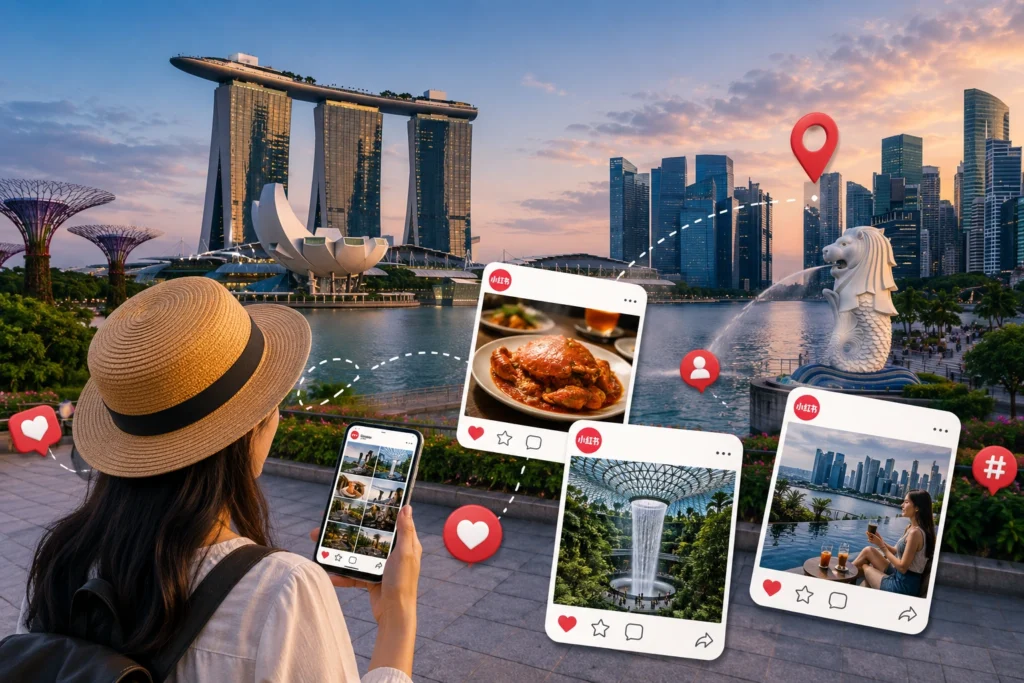
Singapore is strengthening its position as a leading destination for Chinese outbound travelers through a growing partnership between the Singapore Tourism Board and Xiaohongshu Business, the influential lifestyle and social commerce platform reshaping travel discovery across China. The collaboration highlights how interest-driven digital content is increasingly influencing destination choices, travel planning, and tourism spending among younger global travelers.
The latest discussions at the Singapore Outbound Tourism Forum underscored a major transformation taking place within international tourism, where traditional sightseeing itineraries are giving way to highly personalized experiences built around lifestyle interests, cultural immersion, and community-driven recommendations.
As digital platforms continue evolving into primary travel discovery tools, destinations like Singapore are adapting their tourism strategies to align with changing traveler behavior.
Interest-Driven Travel Changes Tourism Trends
Industry experts at the forum emphasized that modern travel decisions are now increasingly shaped by personal interests rather than simply famous landmarks.
Travelers are seeking experiences connected to food culture, architecture, wellness, photography, local neighborhoods, boutique hospitality, and lifestyle communities.
This shift is changing how destinations market themselves to international audiences.
Rather than promoting only iconic attractions, tourism campaigns are increasingly highlighting niche experiences and authentic local moments capable of resonating with highly targeted traveler groups.
Singapore’s tourism strategy now places greater focus on curated storytelling designed to showcase the city-state through diverse lifestyle perspectives.
User-Generated Content Influences Travel Planning
Xiaohongshu’s influence stems largely from its community-driven content ecosystem where users share travel reviews, photography, recommendations, and personal experiences.
Unlike traditional tourism advertising, the platform relies heavily on authentic storytelling and peer-to-peer influence.
Travelers searching for inspiration can explore content tailored to specific interests, creating a more personalized planning experience.
The platform effectively functions as both a travel inspiration engine and a lifestyle-focused search ecosystem where recommendations evolve based on real-time engagement and emerging trends.
For tourism destinations, visibility increasingly depends on relevance within specific interest communities rather than broad advertising exposure alone.
Singapore Expands Beyond Traditional Tourism Narratives
Singapore remains one of Southeast Asia’s most popular destinations for Chinese travelers, but the way visitors engage with the city is evolving significantly.
Tourism authorities are increasingly promoting experiences that move beyond standard sightseeing routes.
Local heritage districts, independent cafés, cultural workshops, boutique hotels, wellness spaces, and lesser-known attractions are becoming central elements of destination storytelling.
The strategy aims to encourage deeper visitor engagement while distributing tourism activity across broader parts of the city.
This approach aligns closely with global tourism trends favoring immersive and experience-led travel over fast-paced itineraries focused solely on major landmarks.
Local Businesses Gain Digital Marketing Advantages
The collaboration also creates new opportunities for Singaporean businesses seeking to connect with Chinese travelers more effectively.
Digital marketing tools introduced through the platform allow businesses to target users based on lifestyle preferences, travel habits, and personal interests.
Hotels, restaurants, attractions, and retailers can now position themselves directly within highly relevant audience segments.
For example, businesses focused on sustainability, wellness, luxury design, or culinary tourism can align marketing strategies around travelers already engaging with those themes online.
This precision-based approach helps businesses move beyond generic tourism promotion toward more meaningful customer engagement.
Content Creators Become Tourism Influencers
A major driver of the platform’s success lies in its creator ecosystem.
Content creators, influencers, and everyday users increasingly shape travel trends through firsthand experiences shared across social channels.
Authenticity has become one of the most important factors influencing traveler trust and booking decisions.
Travelers often place greater confidence in genuine personal recommendations than in traditional advertising campaigns.
For tourism destinations and hospitality brands, collaborations with creators now form an important part of broader marketing strategies aimed at building emotional connections with audiences.
Digital Communities Reshape Global Tourism
The developments highlighted at the Singapore forum reflect broader transformations taking place throughout global tourism.
Travel planning is increasingly becoming community-driven, digitally influenced, and shaped by lifestyle alignment rather than mass-market tourism campaigns.
The integration of online engagement with real-world travel experiences is creating new tourism ecosystems where inspiration, booking, and consumption occur within interconnected digital environments.
For Singapore, the partnership with Xiaohongshu represents more than a marketing collaboration alone.
It demonstrates how destinations are adapting to a future where tourism growth increasingly depends on authentic storytelling, personalized discovery, and the ability to connect travelers with experiences that reflect their individual identities and interests.