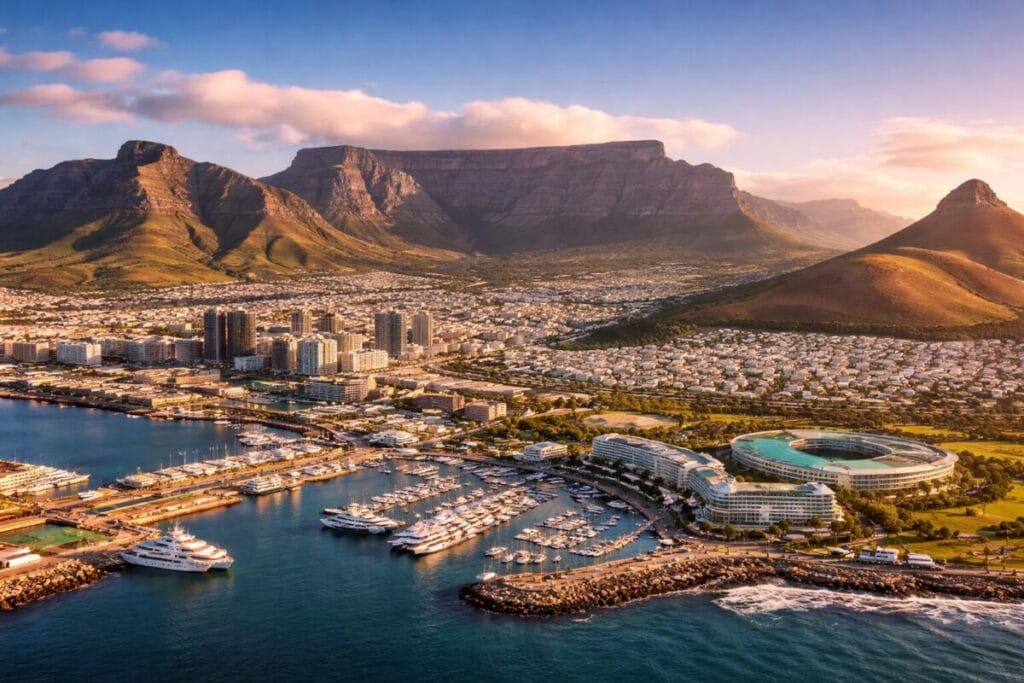
A groundbreaking international study has placed South Africa’s Table Mountain firmly in the global spotlight, blending scientific insight with travel appeal in a way that is reshaping how destinations are marketed and experienced. The iconic flat-topped mountain overlooking Cape Town has long been cherished by locals and admired by millions of visitors, but recent findings analyzing the biological reactions of viewers have confirmed something residents always suspected: Table Mountain is one of the world’s most visually magnetic natural wonders.
The research used state-of-the-art eye-tracking technology to measure how quickly and how long participants fixated on images of 56 prominent mountain ranges around the world. The data, gathered from a diverse international pool of volunteers, offers a rare glimpse into how the human brain instinctively responds to dramatic landscapes. While travel rankings often rely on subjective opinion, this analysis sought to remove personal bias entirely. Instead, visual appeal was quantified using neuro-aesthetic metrics: the speed of initial gaze fixation and the dwell time of the eyes. The results revealed a surprisingly consistent hierarchy of attention, reinforcing the idea that scenic beauty can be scientifically recognized and universally appreciated.
A New Era of Data-Driven Tourism
The study’s implications extend far beyond academic curiosity. Within the global tourism sector, the findings are being viewed as a preview of how travel preferences may evolve through 2026 and beyond. As travelers increasingly seek immersive experiences in nature, destinations backed by scientific validation gain new prestige. Bucket-list travel is expanding from “places people have heard about” to “places proven to captivate the mind,” creating a new class of scenic icons that carry measurable visual impact.
Table Mountain ranked within the top twenty globally, earning a score that competitors in Europe and North America would envy. Its unique silhouette rising above the Cape Town coastline, combined with its dramatic cliffs and panoramic summit views, creates a visual formula that the study identified as irresistible to the human eye. The combination of ocean horizon, rugged plateau, and lush fynbos vegetation produces a rare aesthetic harmony that kept participants’ attention locked longer than most peaks tested.
Cape Town Tourism Set for a Boost
Travel and tourism analysts say the ranking could support a new wave of international arrivals into South Africa’s Western Cape. Nature-based tourism is one of the fastest-growing segments of the global travel industry, and destinations that combine scenic appeal with accessibility tend to lead the market. Table Mountain excels in both categories. Visitors can reach the summit either by cableway or via a network of well-maintained hiking trails, allowing travelers across fitness levels to enjoy sweeping 360-degree views of Cape Town, Table Bay, Robben Island, and the surrounding mountains.
Local tourism officials note that Table Mountain has long contributed significantly to Cape Town’s visitor economy. However, recognition backed by scientific research adds a new narrative that strengthens its brand as an international attraction. It also reinforces South Africa’s position as a premier nature travel destination, grouping Table Mountain with other national treasures such as the Drakensberg, Kruger National Park, and the Cape Winelands.
Nature Travel Meets Neuro-Aesthetics
The methodology behind the ranking has drawn attention from both the travel and scientific communities. By focusing on involuntary eye behavior, the research aligned itself with neuro-aesthetics—a field examining how the human brain responds to beauty. Removal of personal bias allows for comparisons between continents and cultures. Peaks across Africa, Europe, South America, and North America were subjected to identical testing, creating a consistent standard for measuring scenic impact.
The findings reflect broader travel trends favoring destinations that offer sensory richness. Photographers, hikers, and outdoor travelers are increasingly seeking landscapes that inspire awe and stimulate visual exploration. This trend is fueling demand for guided eco-tourism, scenic photography tours, and environmentally conscious adventure travel packages.
Travel Preparation for High-Visibility Destinations
With global interest rising, experts are reminding travelers to approach popular high-altitude and nature-based destinations with preparation and respect for the environment. Table Mountain, despite its accessibility, still poses natural challenges such as sudden weather changes and rugged terrain. Visitors are encouraged to monitor conditions, carry appropriate gear, and follow established trails. Sustainable tourism advocates are also calling for balanced visitation, ensuring that natural beauty remains preserved even as visitor numbers grow.
Global Impact on Scenic Destination Marketing
The rise of scientifically validated scenic rankings is expected to influence how destinations compete for international visibility. Tourism boards are already incorporating panoramic imagery and drone footage into campaigns, emphasizing vistas that align with what the human eye instinctively finds captivating. Hotels, tour operators, and travel platforms are preparing to offer new packages linking scenic hotspots with experiential activities.
For Table Mountain, this shift opens opportunities for both traditional tourism and emerging sectors like travel wellness, expedition photography, and educational eco-tourism. Cape Town’s combination of mountains, coastline, wine estates, and cultural heritage provides a compelling ecosystem for multi-day itineraries that appeal to both adventure and luxury travel seekers.
A Landmark Entering a New Chapter
Table Mountain’s ranking reflects more than its physical form—it represents a growing appreciation of natural landscapes through the lens of science and experience. As travelers plan their 2026 adventures, South Africa stands to benefit from a tourism wave powered not by hype, but by data. The iconic plateau now serves as both a scenic marvel and a symbol of how nature, technology, and global travel are converging to shape the next era of exploration.
For more travel news like this, keep reading Global Travel Wire