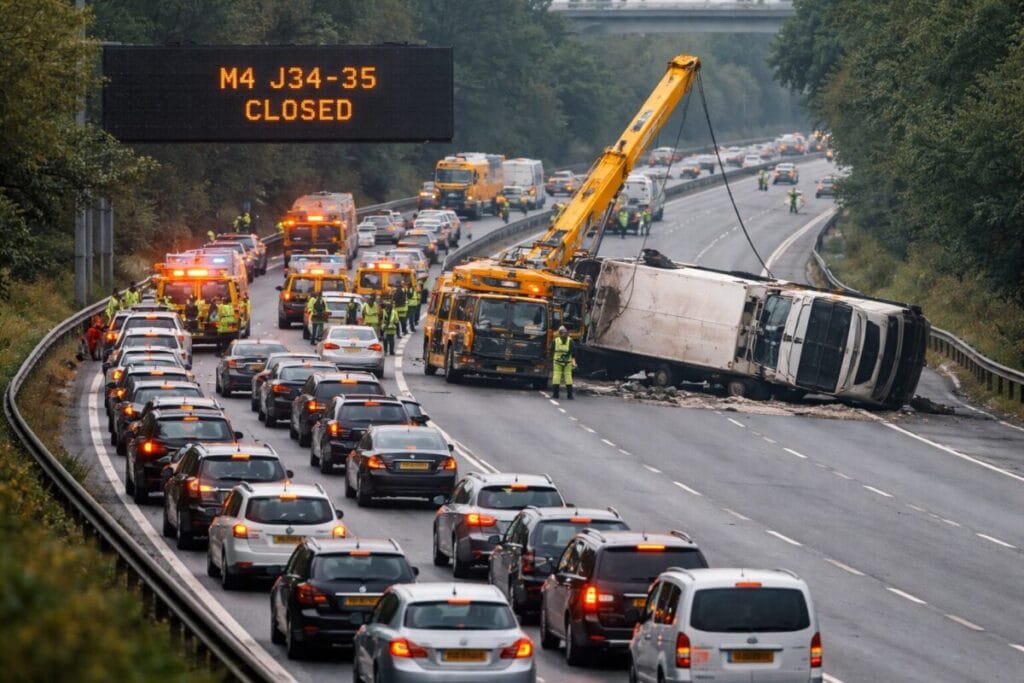
A serious lorry crash on the M4 motorway in Wales brought westbound traffic to a complete standstill this morning. The heavy goods vehicle overturned, blocking all lanes between junction 34 at Pontyclun and junction 35 near Miskin/Pencoed. This has caused long delays across a key travel route used by tourists and commuters.
Traffic came to a full stop shortly after the collision. Vehicles piled up in both local and long-distance traffic. Many drivers reported hours of waiting with little movement. The crash severely disrupted travel plans for visitors heading to South Wales towns, coastal areas, and attractions.
Where the Incident Happened
The crash took place on the westbound carriageway of the M4 motorway. This section connects Cardiff with Bridgend and onward to Swansea and west Wales. It is one of the busiest stretches of road in the country. Today’s closure has affected tourism travel, freight deliveries, and regular commutes alike.
Images from traffic cameras showed stationary vehicles stretching back for miles. Motorists reported slow or no movement well upstream of the crash site. Holidaymakers planning trips to beaches, heritage sites, and festivals struggled to find alternate routes.
Swift Emergency and Recovery Response
Emergency services and motorway patrol teams responded quickly to the crash. Their first task was to secure the scene and ensure the safety of all involved. They checked for injuries, cleared debris, and looked for fuel spills or unstable cargo.
Overturned heavy goods vehicles are complex to recover. Specialist recovery cranes were brought in to upright and remove the lorry. Safety checks had to take place before any lane could reopen, which extended delays.
Officials urged drivers to stay calm, be patient, and follow traffic officers’ instructions. They reminded motorists to expect delays on diversion routes and local roads as traffic tried to avoid the closed stretch.
Impact on Tourism Routes and Travel Plans
The M4 is a key artery for both domestic and international visitors. Many tourists use it to reach South Wales attractions, including beaches, castles, waterfalls, museums, and event venues. Today’s crash has disrupted these travel flows.
Visitors heading to popular spots like the Vale of Glamorgan coast, Brecon Beacons, and Pembrokeshire had to reconsider plans. Some drivers turned back, while others took longer secondary routes through country roads, adding time and stress to their journeys.
Local accommodation providers reported late arrivals. Some tourists missed check-in times at hotels, guesthouses, and campsites. Tour operators and coach companies also faced delays, affecting scheduled tours and group travel experiences.
This incident underscores how single road events can ripple across the wider tourism network. When major roadways close, nearby towns see increased traffic pressure. Smaller roads become congested. Tourist hotspots may see late arrivals and frustrated visitors.
Alternative Routes and Travel Advice
With the westbound M4 closed, many drivers were forced to use secondary roads. These include local county routes that are not built for heavy motorway volumes. As a result, villages and rural towns saw heavier traffic than usual.
Tourists and locals alike were advised to use navigation apps intelligently, avoid saturated backroads, and plan longer travel times. Officials reminded drivers to stay alert, watch for changes in conditions, and respect speed limits on smaller roads.
Transport authorities also pointed out that public transport, while unaffected by the M4 closure itself, faced indirect pressure. Bus and coach services were delayed, and some rail passengers opted for trains instead of road travel, increasing demand on railway services.
Why Such Crashes Hurt Travel Plans
A crash involving a heavy goods vehicle has a larger impact than most collisions. These vehicles block more space, take longer to clear, and need specialist recovery tools. On high speed roads like the M4, this means lengthier disruption.
For tourists, this creates uncertainty. Arrival times stretch, plans change at the last minute, and booked activities may be missed. Whether visitors are heading for seaside walks, historic sites, or city breaks in Cardiff, delays add frustration.
Safety is also a concern. Drivers stuck on motorways must stay in vehicles if they cannot move. Exiting cars near fast traffic is dangerous. Emergency and motorway crews work with precision to protect everyone involved.
Safety Reminders for Motorists
When travelling on major motorways, drivers should always prepare for unexpected conditions. Heavy traffic, weather changes, and breakdowns can all lead to delays. Safe driving includes:
- Checking journey updates before departure
- Allowing extra time for travel during peak seasons
- Keeping vehicles well maintained
- Using official travel information services for updates
Though weather was not directly blamed for today’s crash, conditions like rain can make roads more slippery and increase stopping distances. Tourists unfamiliar with local weather patterns should take extra care on long journeys.
Historical Patterns of M4 Disruptions
The M4 has long been a vital travel link in Wales. In past years, sections of it have experienced closures after major collisions or during roadworks. These events have shown how fragile travel flows can be when a key route is blocked.
Transport planners continue to look for ways to reduce such disruptions. Solutions include stronger monitoring, quicker recovery teams, and better real-time information for drivers. Yet, when incidents occur, effects linger across the network.
What Motorists Should Know Now
- The westbound M4 remains closed between junction 34 and junction 35.
- Heavy delays continue on the approach.
- Recovery and safety operations are ongoing with no confirmed reopening time.
- Drivers are urged to check official travel updates before setting off.
For those planning or currently on trips through South Wales, patience and flexibility are essential. Unexpected road closures can change travel plans, but well-prepared drivers can still enjoy Wales’ scenic beauty and attractions once they reach their destinations.
For more travel news like this, keep reading Global Travel Wire