Bali stands among the world’s most visited island destinations. Tourists arrive for beaches, culture, and natural beauty. However, traffic congestion now threatens the island’s global appeal.
Roads across Bali struggle under rising vehicle numbers. Tourism growth has accelerated urban expansion. Congestion now affects residents, workers, and visitors every day.
What once felt like a local issue has become an international concern.
Tourism Growth Pushes Roads Beyond Capacity
Bali’s tourism industry continues to expand at record pace. Visitor arrivals increase each year from Europe, Australia, and Asia. British visitor numbers alone continue to rise steadily.
More tourists mean more taxis, scooters, delivery vehicles, and private cars. Construction activity has also increased across the island. Road capacity has not matched this rapid growth.
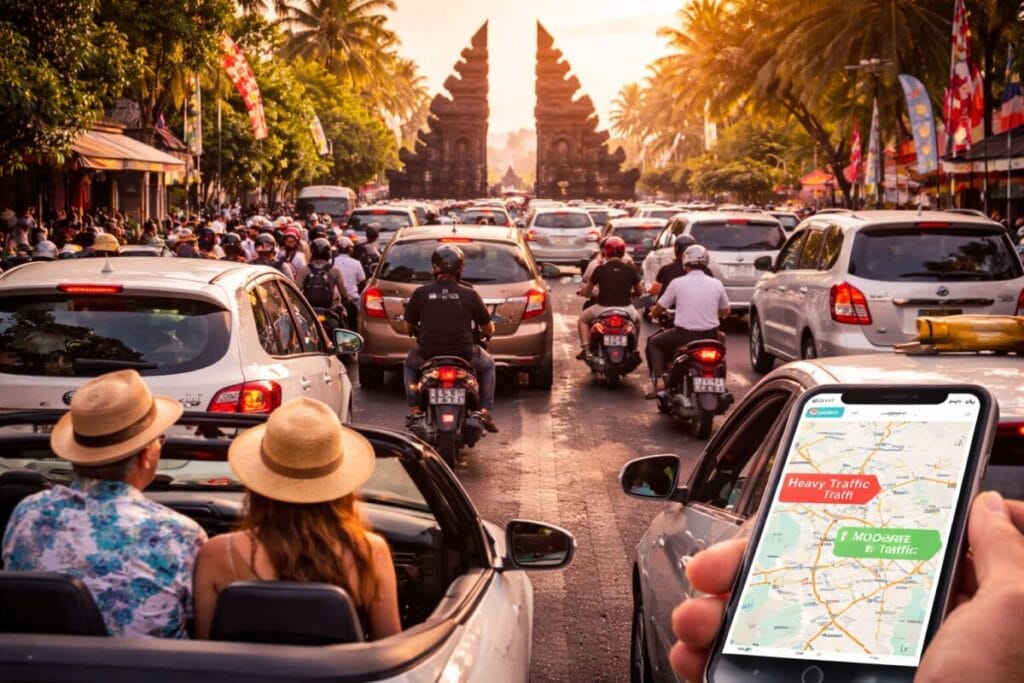
Popular areas such as Kuta, Ubud, Canggu, and Denpasar face daily gridlock. Commute times stretch longer each year.
Congestion Damages the Visitor Experience
Traffic congestion directly affects tourism satisfaction. Long travel times frustrate visitors. Delays reduce time spent at beaches, temples, and cultural sites.
Tourists expect convenience and accessibility. Traffic stress damages Bali’s reputation as a relaxed destination. Travel planners increasingly consider mobility when choosing destinations.
Local businesses also feel the impact. Delayed transfers affect hotels, restaurants, and tour operators.
UK Steps Forward With Technology Support
International attention has now turned toward Bali’s traffic challenge. The United Kingdom has entered discussions with Bali’s leadership. These talks focus on technology-driven transport solutions.
Bali’s governor met with the UK’s deputy ambassador in Denpasar in January 2026. Both sides discussed traffic congestion and infrastructure pressure.
The UK offered support through its Future Cities Infrastructure Programme.
Future Cities Programme Focuses on Smart Mobility
The UK programme emphasizes data-driven urban planning. It avoids immediate large construction projects. Instead, it focuses on smarter use of existing infrastructure.
UK transport experts propose advanced digital systems. These systems analyze traffic patterns in real time. Authorities can then respond faster to congestion events.
Technology allows better decision-making without road expansion.
Digital Twins Could Transform Traffic Management
One proposed solution involves digital replicas of Bali’s urban systems. These virtual models integrate data from roads, buildings, and tourist zones.
Traffic managers can monitor congestion live. They can identify pressure points before gridlock forms. Predictive tools can forecast peak travel periods.
Planners can test future developments digitally. This approach reduces costly mistakes.
Tourism Industry Stands to Gain the Most
Efficient transport supports sustainable tourism growth. Visitors move faster between attractions. Tour operators run schedules more reliably.
Improved traffic flow encourages longer stays. Tourists explore more regions beyond crowded centers. This shift spreads economic benefits across the island.
Hotels and businesses gain stronger guest satisfaction scores.
Businesses Benefit From Better Mobility
Traffic congestion increases costs for businesses. Delayed staff, late deliveries, and missed bookings reduce profitability.
Smarter traffic systems improve logistics. Employees arrive on time. Tour schedules remain reliable.
Improved mobility strengthens investor confidence in Bali’s tourism sector.
Peak Seasons Need Smarter Traffic Control
Bali experiences extreme congestion during peak seasons. Holiday periods amplify road pressure. Weather and events also affect traffic flow.
Smart systems allow authorities to adjust traffic patterns dynamically. Real-time rerouting reduces bottlenecks. Digital alerts guide drivers toward alternative routes.
These tools improve safety and reduce emissions.
Environmental Benefits Support Sustainability Goals
Traffic congestion increases pollution and fuel consumption. Smarter traffic reduces idle time and emissions.
Sustainability remains a priority for Bali’s tourism strategy. Cleaner transport supports environmental goals. Tourists increasingly favor eco-conscious destinations.
Technology supports both mobility and environmental protection.
Tourists Will Notice Immediate Improvements
Improved traffic management directly benefits visitors. Travel times shorten between hotels and attractions. Airport transfers become smoother.
Tourists experience less stress during their stay. Positive experiences drive repeat visits and recommendations.
Bali protects its image as a world-class destination.
Practical Travel Tips During Transition Period
Visitors can still reduce traffic stress today. Plan travel outside peak hours when possible. Early mornings and evenings see heavy congestion.
Use digital navigation tools for route updates. Consider professional drivers familiar with local traffic patterns.
Choose accommodations near planned activities to reduce travel distance.
Bali Sets an Example for Tourism Destinations
Many tourism destinations face similar challenges. Rapid growth often outpaces infrastructure. Bali’s collaboration with the UK offers a potential model.
Smart mobility solutions provide scalable answers. Data-driven planning costs less than massive road projects. Results appear faster.
Other tourism regions may follow Bali’s lead.
A Shared Responsibility for Bali’s Future
Bali’s traffic crisis demands cooperation across sectors. Government, technology providers, businesses, and communities must work together.
International partnerships bring expertise and innovation. Local leadership ensures solutions respect cultural and environmental values.
Tourism growth must balance accessibility and sustainability.
A Smarter Road Ahead for Bali Tourism
Bali’s future depends on effective mobility solutions. Traffic management now ranks as a tourism priority. Smart technology offers hope.
With international support and digital innovation, Bali can protect its appeal. Visitors can enjoy smoother journeys. Residents gain better daily mobility.
The island now stands at a turning point where smart planning can secure long-term tourism success.
For more travel news like this, keep reading Global Travel Wire