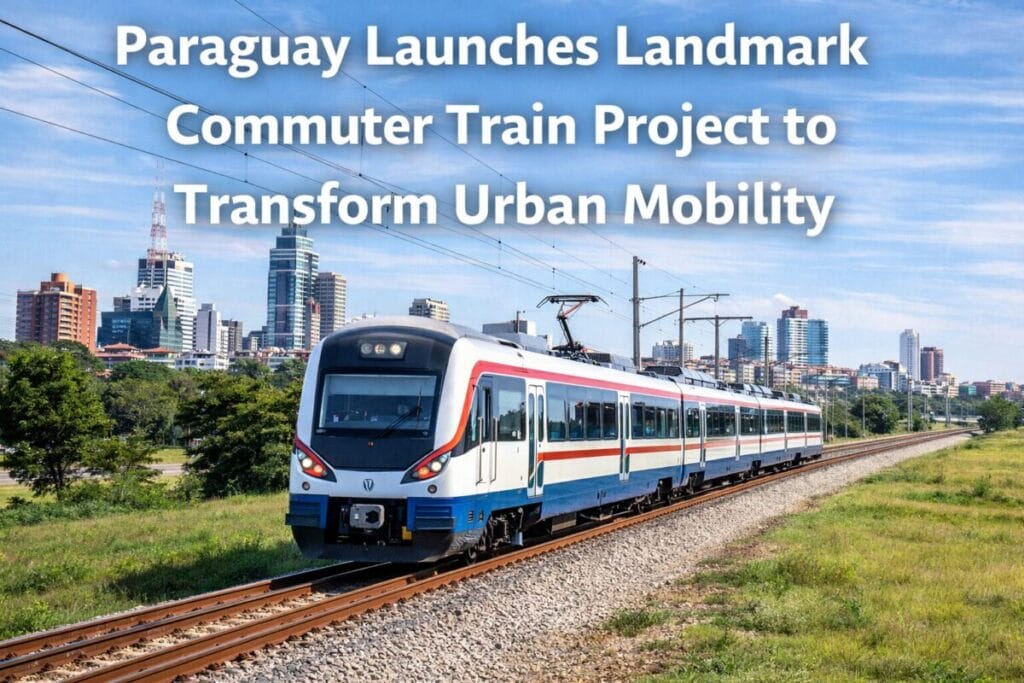
Paraguay is entering a new chapter in sustainable travel and urban mobility with the launch of an ambitious commuter train project designed to reshape how people move across its metropolitan region. The initiative, which will link Paraguay’s capital Asunción with Ypacaraí, marks one of the most significant transportation investments in the nation’s modern history. More than a rail line, the project represents a strategic leap toward cleaner mobility, economic resilience, and international collaboration.
For decades, Paraguay’s urban centers have grappled with congestion, long commute times, and limited public transport alternatives. Rapid urbanization and increased vehicle ownership have strained road networks, particularly during peak hours. The new commuter train aims to address these challenges by offering a reliable, efficient, and environmentally responsible alternative to car-dependent travel.
A Vision Rooted in History and the Future
The idea of rail-led modernization in Paraguay is not new. In the 19th century, national leaders envisioned railways as a pathway to global integration and economic progress. Today, that historic ambition is being revived through a modern partnership that combines advanced technology, renewable energy, and long-term planning.
The commuter train project is being delivered through a Special Purpose Vehicle formed between Ferrocarriles del Paraguay S.A. and Etihad Rail. This structure allows Paraguay to retain strategic oversight while benefiting from international expertise in rail construction, operations, and financing. Etihad Rail’s experience in delivering large-scale rail infrastructure brings technical depth and operational know-how that accelerates project delivery and risk management.
Connecting Cities, Reducing Congestion
In its initial phase, the commuter train will span 44 kilometers between Asunción and Ypacaraí, with the first operational segment covering approximately 20 kilometers to Luque. Over time, the network is expected to expand across the wider metropolitan area, integrating residential zones, commercial districts, and industrial hubs.
Once fully operational, the system is projected to run 11 train units across 12 stations, carrying up to 40,000 passengers daily. That translates to more than 14 million trips per year—each one representing a shift away from private vehicles and toward shared, low-emission transport.
By reducing pressure on roads, the commuter train is expected to significantly cut travel times, improve reliability for workers and students, and enhance overall quality of life. For visitors and business travelers, the system also promises smoother access between urban centers, strengthening Paraguay’s appeal as an emerging destination for investment and regional travel.
Sustainability at the Core
Environmental responsibility is central to the project’s design. The commuter train will operate using electric technology powered largely by renewable energy, aligning with Paraguay’s broader clean energy profile. This approach is expected to deliver substantial reductions in carbon emissions, air pollution, and fuel consumption compared with road-based transport.
Sustainable urban mobility has become a global priority as cities seek to balance growth with climate commitments. Paraguay’s investment positions it among forward-looking nations using public transport innovation to meet environmental goals while supporting economic development.
Economic Growth and Job Creation
Beyond mobility benefits, the commuter train is expected to generate significant economic value. Time savings, reduced fuel use, and lower vehicle operating costs could collectively save users an estimated US$150 million annually. Over a 30-year period, the project’s social and economic value is projected to reach billions, reflecting productivity gains and improved urban efficiency.
Employment impact is another major advantage. During construction, the project is expected to create nearly 20,000 jobs across engineering, construction, logistics, and support services. Once operational, approximately 500 permanent positions will be sustained, contributing to skills development and long-term workforce stability.
These gains extend beyond the rail sector, stimulating activity in real estate, retail, tourism, and services around station areas. Transit-oriented development is likely to reshape neighborhoods, encouraging compact growth and new commercial opportunities.
A Strategic International Partnership
The commuter train also highlights the deepening relationship between Paraguay and the United Arab Emirates. Over the past two decades, cooperation between the two countries has expanded across investment, infrastructure, sustainability, and institutional development. Agreements on investment protection, mobility, and technical exchange have laid the groundwork for confidence-driven collaboration.
Paraguay’s strategic location within a bi-oceanic corridor enhances its role as a logistics and trade gateway in South America. Combined with the UAE’s global reach in finance and transport, the partnership strengthens connectivity between regions and supports Paraguay’s integration into global markets.
Looking Ahead: Transforming Travel and Tourism
For the tourism sector, improved urban mobility is a game changer. Easier movement between cities, reduced congestion, and cleaner transport enhance the visitor experience while supporting sustainable travel goals. As Paraguay continues to promote cultural, ecological, and business tourism, modern infrastructure will play a critical role in shaping first impressions and long-term growth.
The commuter train is expected to be operational within the next three years, following feasibility studies and phased implementation. Governed by a long-term concession model, the system is designed for transparency, efficiency, and durability.
A Symbol of Modern Paraguay
Ultimately, the commuter train project is more than a transportation upgrade. It is a symbol of Paraguay’s ambition to modernize responsibly, leverage international partnerships, and invest in infrastructure that serves both people and the planet. By aligning economic growth with sustainability and innovation, Paraguay is redefining its urban future and setting a benchmark for inclusive, forward-thinking development in the region.
As trains begin to roll between Asunción and Ypacaraí, they will carry not just passengers, but a renewed vision of progress—one that connects communities, strengthens the economy, and positions Paraguay as a rising leader in sustainable urban mobility.
For more travel news like this, keep reading Global Travel Wire