Japan has issued safety warnings as rising spring temperatures begin melting heavy winter snow across the country. Authorities say the rapid thaw increases risks of avalanches, flooding, landslides, and accidents linked to snow removal. Both residents and international tourists are urged to stay alert, especially in regions known for heavy snowfall.
This winter brought unusually high snow accumulation to many areas. As warmer air moves into the Japanese archipelago, the sudden change creates unstable conditions. Snow that once remained frozen now softens and shifts, raising the likelihood of dangerous incidents.
The warning comes at a time when travel activity increases, including holiday periods and seasonal tourism. Popular winter destinations remain open, but officials advise visitors to understand the changing risks that accompany the transition from winter to spring.
Rapid Temperature Rise Increasing Disaster Risks
Meteorological experts expect temperatures to exceed seasonal averages in several regions. This warming trend accelerates snowmelt, which can destabilize slopes and increase water runoff. When snow melts too quickly, it may trigger avalanches in mountainous areas and flooding in low-lying regions.
Heavy snowpack absorbs large amounts of water. As temperatures rise, that stored water releases rapidly into rivers and valleys. Sudden surges can overwhelm drainage systems and cause localized flooding.
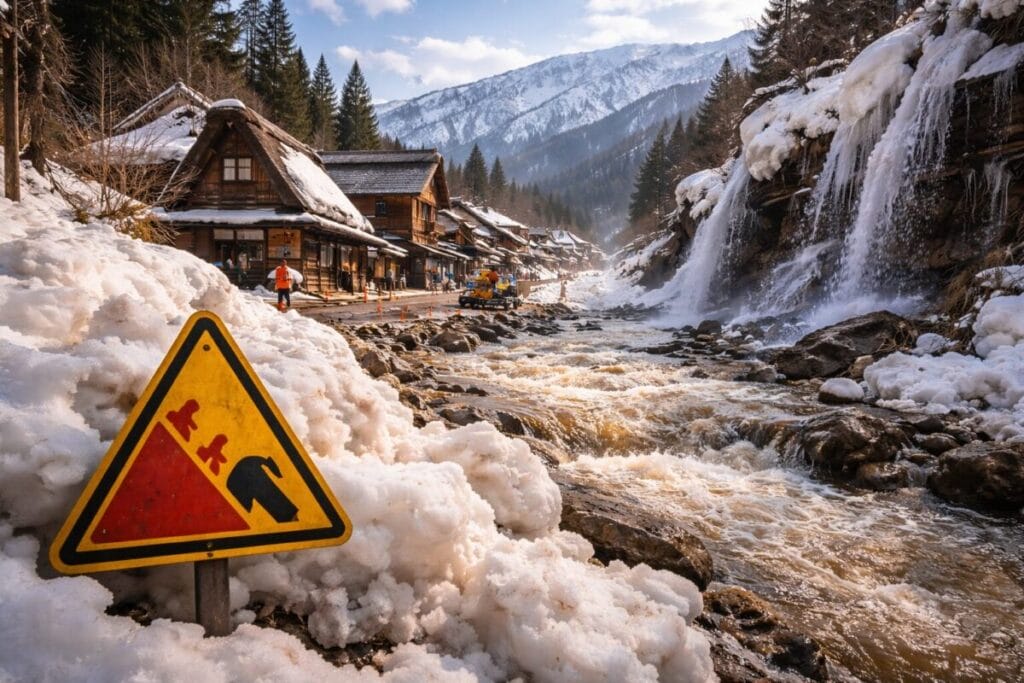
Mountain regions face additional challenges. Melting snow weakens the layers within snowfields, increasing the chance of avalanches or landslides. Travelers heading to ski resorts, hiking trails, or scenic mountain viewpoints should remain cautious during this seasonal shift.
Urban Areas Face Hidden Hazards During Snowmelt
Snowmelt risks are not limited to remote regions. Cities with heavy snowfall also experience increased accidents during early spring. Wet and uneven surfaces create slippery conditions, raising the likelihood of falls among pedestrians.
Snow removal operations add another layer of danger. Workers often clear accumulated snow from sidewalks, roads, and rooftops. While necessary for safety, these activities can leave behind icy patches or unstable piles of snow.
Falling snow and ice from rooftops remain a serious concern in urban environments. As temperatures fluctuate, heavy snow can suddenly slide off buildings, posing risks to people walking below. Travelers unfamiliar with snowy climates may underestimate these hazards.
Snow Removal Accidents Remain a Seasonal Risk
Every year, Japan reports numerous incidents linked to snow clearing. Many involve slips on icy surfaces or injuries caused by falling snow. While tourists rarely participate in snow removal work, they still face risks when walking through areas where snow clearing is underway.
Early mornings and evenings often see active snow removal operations. During these times, streets may remain wet, icy, or partially blocked. Visitors should remain aware of moving equipment such as snowplows and avoid standing near snow piles or rooftops with heavy buildup.
Safety Tips for Travelers Visiting Japan During Snowmelt Season
Staying safe during the snowmelt period requires preparation and awareness. Travelers can reduce risks by following practical safety measures.
Wear Proper Footwear
Non-slip, waterproof boots provide better traction on slushy or icy surfaces. Shoes designed for winter conditions help prevent falls and improve stability while walking.
Avoid Areas Beneath Snow-Loaded Roofs
Snow accumulated on rooftops can slide off without warning. Avoid standing near building edges where snow or ice may fall.
Monitor Weather Updates Regularly
Weather conditions change quickly during seasonal transitions. Checking local forecasts and safety alerts helps travelers plan activities and avoid high-risk periods.
Review Hazard Information for Mountain Travel
Mountain regions often provide safety maps highlighting avalanche zones and landslide risks. Consult this information before hiking or exploring snowy landscapes.
Stay Alert Around Snow Removal Work
Keep distance from active snow clearing operations. Watch for uneven surfaces or hidden ice patches left behind after plowing.
Plan Around Temperature Fluctuations
Large differences between daytime and nighttime temperatures create unstable snow conditions. Schedule outdoor activities during safer periods and avoid risky areas during rapid thaw cycles.
Understanding the Snowmelt Disaster Cycle
Snowmelt disasters occur when rising temperatures rapidly weaken snow structures. As snow turns into water, increased runoff flows downhill and can trigger floods or landslides. These events may happen suddenly and escalate quickly.
Authorities emphasize the importance of respecting local warnings and adjusting travel plans when necessary. Seasonal beauty often attracts visitors during spring, but awareness of environmental risks remains essential.
Tourism Continues Despite Seasonal Challenges
Japan’s spring landscapes draw travelers from around the world. Snow-covered mountains gradually transition into blooming scenery, creating unique travel experiences. However, officials stress that safety awareness must accompany exploration during this period.
Tourists who prepare properly can still enjoy Japan’s cultural sites, ski resorts, and scenic routes safely. Understanding snowmelt hazards allows visitors to make informed decisions while traveling.
As temperatures rise and snow begins to melt, Japan encourages everyone to stay informed, follow safety guidance, and remain cautious. With responsible planning and awareness, travelers can experience the country’s seasonal beauty while minimizing potential risks.
For more travel news like this, keep reading Global Travel Wire