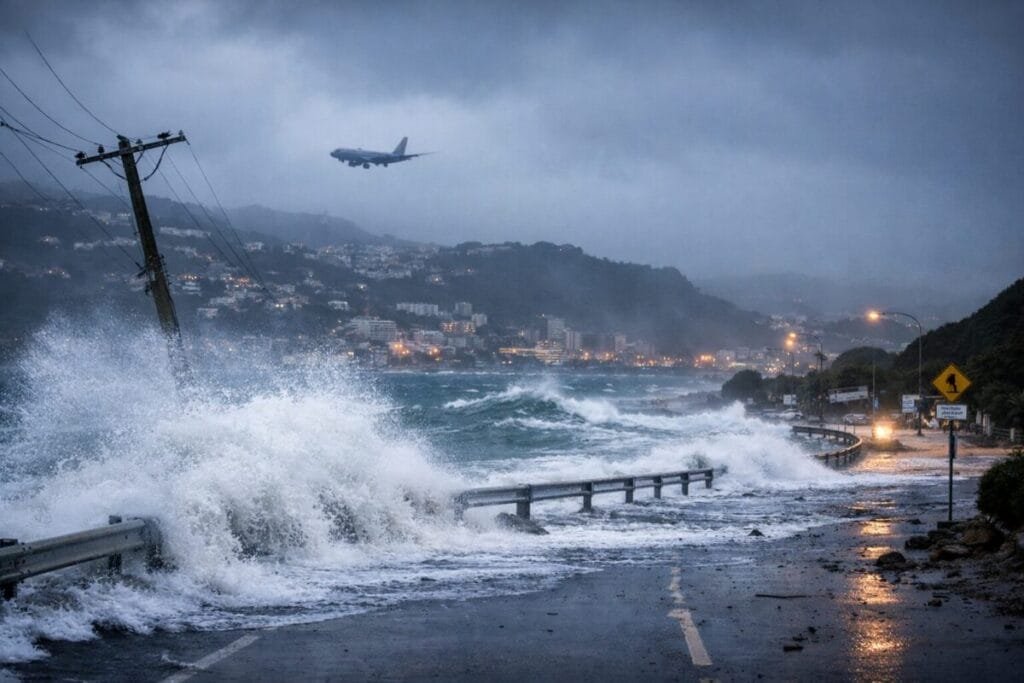
Wellington, the capital city of New Zealand, is currently battling an intense spell of severe weather that has triggered widespread disruptions to travel, public services, and everyday life. Powerful southerly winds, heavy rainfall, dangerous coastal swells, and infrastructure challenges have created a complex situation affecting both residents and visitors.
Authorities have issued multiple warnings as the city braces for ongoing impacts from the storm system, which has already forced flight cancellations, caused power outages, and raised safety concerns along Wellington’s coastline.
Flight Cancellations and Aviation Disruptions Affect Travellers
One of the most immediate impacts of the severe weather has been significant disruption to air travel. Regional flights operating in and out of Wellington Airport were suspended after strong winds exceeded safe operational limits for smaller aircraft. Aviation authorities have emphasized that safety remains the top priority, especially as gusty conditions create challenging landing and takeoff scenarios.
While larger jet services have continued operating under close monitoring, travellers have been advised to remain flexible and prepare for possible delays or further cancellations. Tourism operators have reported that many visitors are adjusting itineraries as weather conditions evolve, highlighting the vulnerability of travel plans during extreme weather events.
Passengers are encouraged to stay updated through airline communications and to check schedules frequently, as changing weather patterns may affect future departures.
Severe Weather Warnings Across Multiple Regions
Weather agencies have issued a series of warnings covering Wellington and surrounding areas, including the eastern hill suburbs and neighbouring districts. Heavy rain forecasts raise concerns about localized flooding, slippery roads, and reduced visibility, which could impact both commuters and tourists exploring the region.
In addition to rainfall, strong wind alerts indicate gusts capable of damaging trees, structures, and outdoor equipment. Residents have been advised to secure loose items, avoid unnecessary travel, and remain indoors during peak storm periods where possible.
Coastal areas face additional risks due to large ocean swells. Waves are expected to reach significant heights, posing threats to people walking near cliffs or beaches. Emergency authorities have warned that debris carried by waves could create unpredictable hazards along the shoreline.
Coastal Safety Concerns and Environmental Challenges
Beyond weather-related dangers, Wellington is dealing with a separate environmental issue that has intensified the crisis. A major wastewater treatment facility malfunction has resulted in untreated sewage being discharged into nearby waters. Officials have warned that contact with seawater could present health risks due to possible contamination.
The combination of heavy rainfall and existing infrastructure problems has increased pressure on the city’s drainage and wastewater systems. Authorities are working to stabilize operations while urging the public to avoid beaches until conditions improve.
For tourism, this has led to temporary closures of popular coastal areas, impacting recreational activities such as surfing, fishing, and sightseeing along Wellington’s scenic south coast.
Power Outages Impact Homes and Services
High winds have also affected the city’s electricity network, leaving thousands of households without power in several suburbs. Utility providers are investigating the causes of outages, with fallen debris and infrastructure strain suspected as contributing factors.
Emergency repair crews are working to restore electricity as quickly as possible, though some areas may experience extended disruptions due to ongoing weather risks. Residents have been advised to prepare for temporary outages by charging devices, conserving energy, and ensuring access to emergency supplies.
The outages have also affected local businesses, including hospitality venues and tourism services, further contributing to the wider impact on Wellington’s economy during the storm.
Safety Advice for Residents and Visitors
Local authorities have issued clear safety guidance as the storm continues:
- Stay indoors during periods of strong winds and heavy rain.
- Avoid coastal areas and beaches due to high swells and potential contamination risks.
- Secure outdoor furniture and objects that may become airborne.
- Monitor official updates for travel advisories and weather alerts.
- Postpone non-essential travel until conditions stabilize.
Tourists visiting Wellington are encouraged to stay informed through accommodation providers and visitor information centres, as changing conditions may affect tours, transport schedules, and outdoor attractions.
Emergency Response and Ongoing Monitoring
City officials and emergency management teams are working continuously to assess risks and coordinate response efforts. Power restoration, infrastructure monitoring, and environmental management remain top priorities as authorities attempt to minimize disruption and ensure public safety.
Weather systems affecting New Zealand can shift rapidly, and forecasts suggest that conditions may remain unstable in the short term. Authorities have urged the community to remain vigilant and follow official instructions as the situation evolves.
Tourism Impact and Outlook
Wellington is known for its vibrant cultural scene, coastal landscapes, and outdoor experiences, making it a popular destination for both domestic and international travellers. However, the current severe weather highlights how quickly conditions can change in coastal regions.
While the storm has temporarily affected travel and tourism activities, recovery efforts are expected to restore normal operations once weather conditions improve. Visitors planning future trips are advised to monitor forecasts, consider travel insurance, and allow flexibility in their plans during periods of unpredictable weather.
As Wellington navigates this challenging period, cooperation between authorities, residents, and travellers will play a key role in ensuring safety and minimizing long-term impacts on the city’s tourism industry.
For more travel news like this, keep reading Global Travel Wire