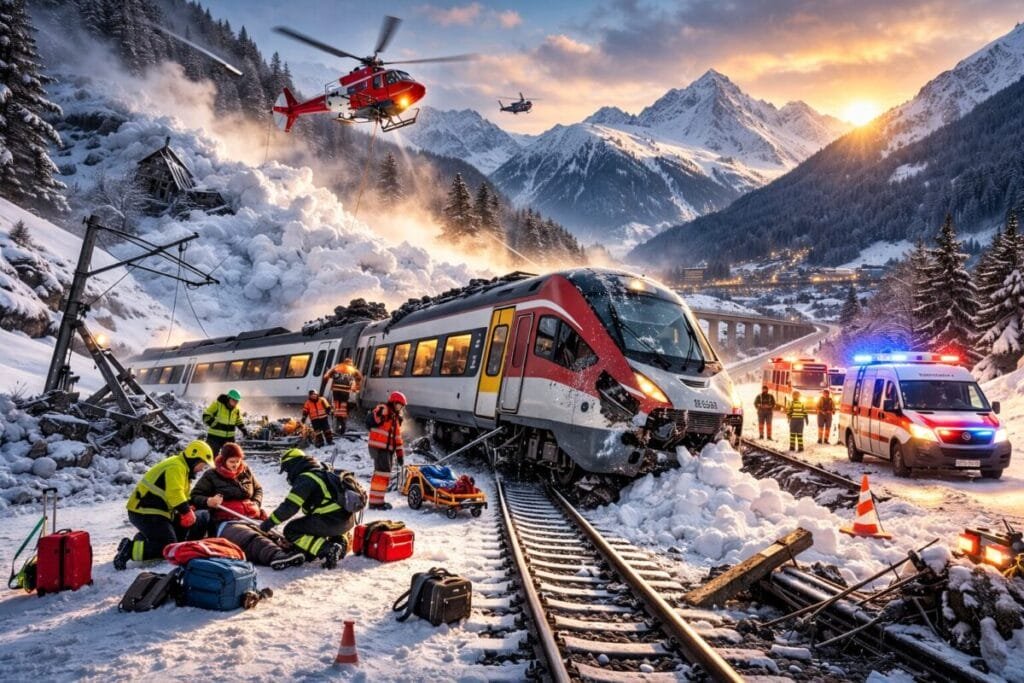
A passenger train derailment in the Swiss Alps following an avalanche has intensified discussions about winter travel safety and transport resilience in mountainous regions. The incident, which involved around 80 passengers, occurred during the early morning hours near the village of Goppenstein in the canton of Valais, a region known for both scenic landscapes and challenging winter weather conditions.
Emergency services responded quickly after several carriages left the tracks, and injured passengers received medical attention at nearby facilities. While authorities continue their investigation into the precise sequence of events, initial reports indicate that unstable snow conditions and heavy winter weather likely contributed to the accident. The derailment has renewed attention on how extreme seasonal hazards can disrupt tourism and transportation in one of Europe’s most popular winter destinations.
Winter Weather and Its Growing Impact on Travel
The Swiss Alps attract millions of visitors each year, particularly during the ski season, when travelers from around the world arrive to enjoy snow sports and mountain experiences. However, severe winter conditions, including avalanches, heavy snowfall, and strong winds, can create significant risks for both tourists and transport systems.
Avalanches are a natural hazard in alpine regions, especially during periods of rapid snowfall accumulation combined with fluctuating temperatures. Such conditions can destabilize mountain slopes, increasing the likelihood of snow slides that threaten roads, railways, and recreational areas. The recent derailment highlights the vulnerability of even well-developed infrastructure when faced with unpredictable environmental forces.
Tourism professionals emphasize that while Switzerland maintains high safety standards, changing weather patterns and evolving climate conditions may require additional monitoring and preparedness. Travelers planning winter trips are increasingly advised to remain flexible with itineraries and stay informed about real-time weather and safety updates.
Avalanche Risk Levels and Preparedness Measures
In the days leading up to the derailment, avalanche risk levels in parts of Valais were elevated following heavy snowfall and strong alpine winds. Risk ratings are typically determined using factors such as snowpack stability, temperature fluctuations, and wind conditions, all of which can contribute to increased avalanche activity.
Transport authorities regularly implement precautionary measures during high-risk periods, including speed reductions, route monitoring, and temporary closures when necessary. Despite these precautions, avalanches remain difficult to predict with absolute certainty, particularly in remote or high-altitude areas where weather patterns change rapidly.
The incident has sparked discussions about whether additional safety protocols or technological innovations could further reduce risks. Experts suggest that enhanced early-warning systems, advanced monitoring tools, and increased communication between transport operators and weather agencies could help improve preparedness.
Broader Implications for Alpine Tourism
Beyond the immediate impact on rail passengers, the derailment has wider implications for the tourism industry across the Alpine region. Winter tourism plays a vital role in local economies, supporting ski resorts, hospitality businesses, and regional transportation networks. Safety concerns following high-profile incidents can influence traveler confidence, making transparent communication and effective crisis management essential.
Tour operators and destination managers may also need to adapt to evolving risk landscapes by strengthening safety messaging and ensuring that visitors understand the challenges associated with alpine environments. This includes promoting awareness of avalanche risks, encouraging adherence to safety advisories, and providing clear guidance on emergency procedures.
The incident also underscores the importance of infrastructure resilience. Railways and mountain roads must withstand extreme weather conditions while maintaining reliable services for both residents and visitors. Investments in engineering solutions such as protective barriers, avalanche galleries, and advanced monitoring technology are likely to remain priorities for authorities seeking to minimize disruptions.
Transportation Safety in Snow-Prone Regions
Swiss rail networks are widely regarded as among the most reliable in the world, with extensive safety systems designed to address challenging terrain. However, the derailment demonstrates that even advanced infrastructure is not immune to environmental risks.
Rail operators across Europe may use this event as an opportunity to review operational procedures, particularly in high-risk zones. Enhanced collaboration between transportation agencies, weather experts, and emergency responders could lead to improved contingency planning and faster responses during extreme events.
Travel experts note that the growing popularity of adventure tourism has increased demand for transportation in remote alpine areas. As more travelers seek immersive nature experiences, transport providers must balance accessibility with safety, ensuring that routes remain secure during periods of heightened risk.
Climate Change and the Future of Winter Travel
Many scientists and industry observers point to changing climate patterns as a factor influencing winter tourism risks. Fluctuating temperatures and unpredictable snowfall patterns may contribute to more frequent or intense weather-related disruptions, including avalanches and landslides.
For the tourism sector, adapting to these changes will require innovation and long-term planning. Authorities may need to enhance infrastructure resilience, expand monitoring capabilities, and educate travelers about responsible behavior in high-risk environments.
Sustainability initiatives and safety investments often go hand in hand, as both aim to protect natural landscapes while ensuring safe visitor experiences. Improved data analysis and AI-based monitoring systems are increasingly being explored as tools for predicting hazards and managing transport operations more effectively.
A Reminder for Travelers to Prioritize Safety
The Swiss Alps train derailment serves as a powerful reminder that winter travel, while rewarding, carries inherent risks. Travelers heading to mountain destinations are encouraged to check weather forecasts regularly, follow official safety guidance, and allow extra time for potential delays caused by extreme conditions.
For tourism authorities and transport providers, the incident highlights the ongoing need for innovation, collaboration, and transparent communication. By strengthening safety protocols and leveraging new technologies, the travel industry can continue to provide memorable experiences while prioritizing passenger security.
As winter tourism evolves, maintaining trust through strong safety measures will be essential in ensuring that alpine destinations remain both attractive and secure for future visitors.
For more travel news like this, keep reading Global Travel Wire