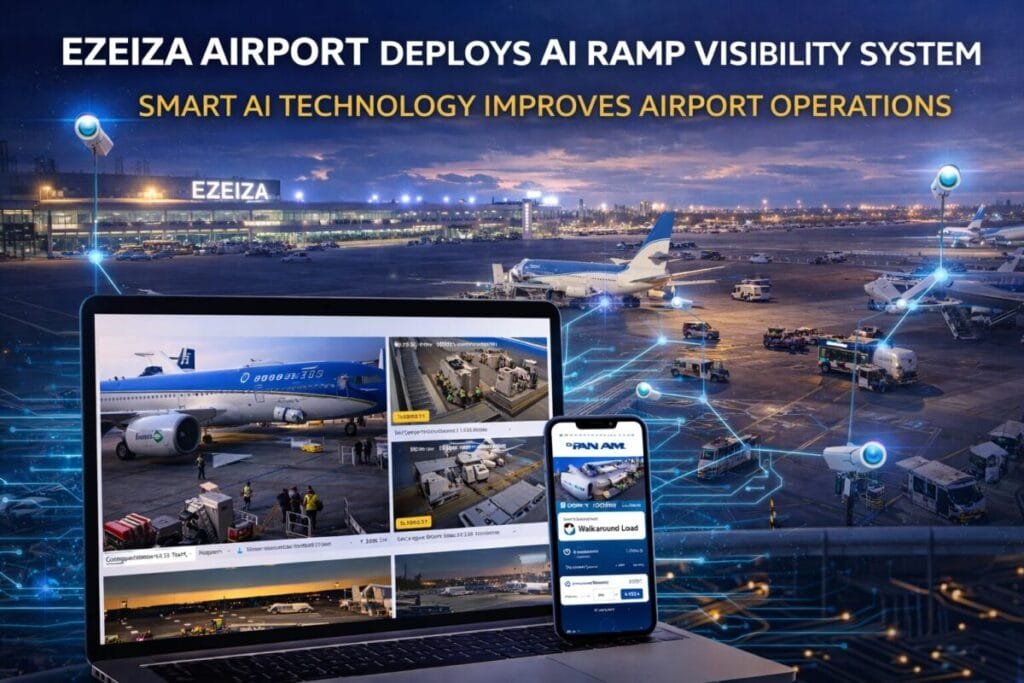
Buenos Aires’ Ezeiza International Airport has taken a significant step toward modernizing aviation operations by implementing an advanced artificial intelligence-based ramp visibility system. Developed by Synaptic Aviation, the technology has now been deployed across all passenger gates at the airport, positioning Ezeiza among the pioneers of AI-driven airport management in Latin America.
Following a successful 90-day proof-of-concept phase, the system is now fully operational, providing real-time monitoring and analytics designed to enhance safety, improve efficiency, and support smoother aircraft turnaround processes. The initiative reflects the growing global trend toward smart airport technologies that rely on data-driven insights to optimize operations.
A Major Leap Toward Smart Airport Innovation
Ezeiza International Airport serves as Argentina’s primary international gateway, handling millions of passengers annually and connecting South America with key destinations worldwide. As passenger volumes continue to grow, airports are increasingly investing in advanced technology solutions to maintain operational reliability and improve the traveler experience.
The introduction of AI-powered ramp monitoring marks a milestone in this transformation. More than 60 on-premises cameras have been strategically installed to provide continuous oversight of ramp areas — the critical zones where aircraft parking, refueling, baggage loading, catering, and maintenance activities occur.
By integrating these camera feeds into an AI-driven analytics platform, airport teams gain enhanced situational awareness, enabling them to track key milestones in aircraft turnaround processes. The technology helps identify delays, detect irregularities, and ensure compliance with safety protocols.
Enhancing Safety and Operational Efficiency
Ramp areas represent some of the most complex and dynamic environments within an airport. Ground handling teams must coordinate multiple activities under strict time constraints to ensure flights depart on schedule. Even minor disruptions can ripple through the entire network, leading to delays and reduced passenger satisfaction.
The new AI system provides real-time insights that allow airport personnel to monitor operations continuously. By automatically identifying deviations from planned processes, the platform enables quicker response times and more efficient coordination between ground crews, airlines, and operational control teams.
Improved visibility also enhances safety for workers and passengers. AI-based monitoring can detect potential hazards, such as equipment misplacement or unsafe movements near aircraft, helping teams intervene before issues escalate.
Industry analysts note that technology like this is becoming essential for maintaining competitive airport performance, especially in busy international hubs.
Leading AI Adoption in Latin America
Ezeiza’s deployment of a comprehensive AI ramp visibility system places it among a select group of airports globally embracing artificial intelligence for operational management. Within Latin America, the initiative is particularly significant, demonstrating how regional airports can integrate advanced technology while maintaining compliance with strict data protection regulations.
Collaboration between Synaptic Aviation, airport management, and Argentine aviation authorities ensured that the system meets national privacy standards while delivering actionable insights. The platform operates through secure on-premises infrastructure, addressing concerns related to data storage and cybersecurity.
By balancing innovation with regulatory compliance, Ezeiza sets an example for other airports considering similar technology investments.
Real-Time Data Drives Smarter Decision-Making
A key advantage of AI-powered ramp visibility lies in its ability to transform large volumes of operational data into meaningful insights. Instead of relying solely on manual reporting or delayed analysis, airport teams receive instant feedback on performance metrics.
This allows supervisors to evaluate turnaround times, identify recurring bottlenecks, and implement improvements based on objective data. Airlines operating at the airport also benefit from enhanced coordination, as accurate information supports more efficient scheduling and resource allocation.
Over time, the data generated by the system can help identify trends and support long-term planning decisions, such as infrastructure upgrades or staffing adjustments.
Supporting a Better Passenger Experience
While the AI system primarily focuses on ramp operations, its impact extends directly to passengers. Faster and more efficient aircraft turnaround reduces delays, improves on-time performance, and enhances reliability — key factors influencing traveler satisfaction.
Modern travelers increasingly expect seamless journeys supported by technology, from digital check-in to real-time updates about flight status. By optimizing behind-the-scenes processes, Ezeiza International Airport strengthens its ability to meet these expectations.
Improved operational efficiency also contributes to sustainability goals by minimizing unnecessary engine idle time and reducing fuel consumption during delays.
Preparing for the Future of Aviation
Airports worldwide are embracing digital transformation to address challenges such as rising passenger demand, labor shortages, and environmental pressures. Artificial intelligence, automation, and advanced analytics are becoming central tools in creating future-ready airport ecosystems.
Ezeiza’s adoption of AI ramp visibility technology highlights the importance of innovation in maintaining operational excellence. As global aviation evolves, airports that invest in smart infrastructure are better positioned to manage complexity and adapt to changing market conditions.
The success of this deployment may encourage other Latin American airports to explore similar solutions, accelerating regional modernization efforts.
Setting a New Benchmark in Airport Technology
By introducing AI-driven ramp monitoring across its passenger gates, Ezeiza International Airport demonstrates how technology can enhance both safety and efficiency without compromising privacy or security. The initiative represents a forward-thinking approach to airport management, combining advanced analytics with practical operational improvements.
As aviation continues to embrace digital innovation, projects like this illustrate how artificial intelligence can transform everyday airport functions, ensuring smoother operations for airlines and more reliable journeys for passengers.
With its latest technological investment, Ezeiza International Airport strengthens its position as a leader in smart aviation infrastructure — setting a new benchmark for AI adoption in airports across Latin America and beyond.
For more travel news like this, keep reading Global Travel Wire