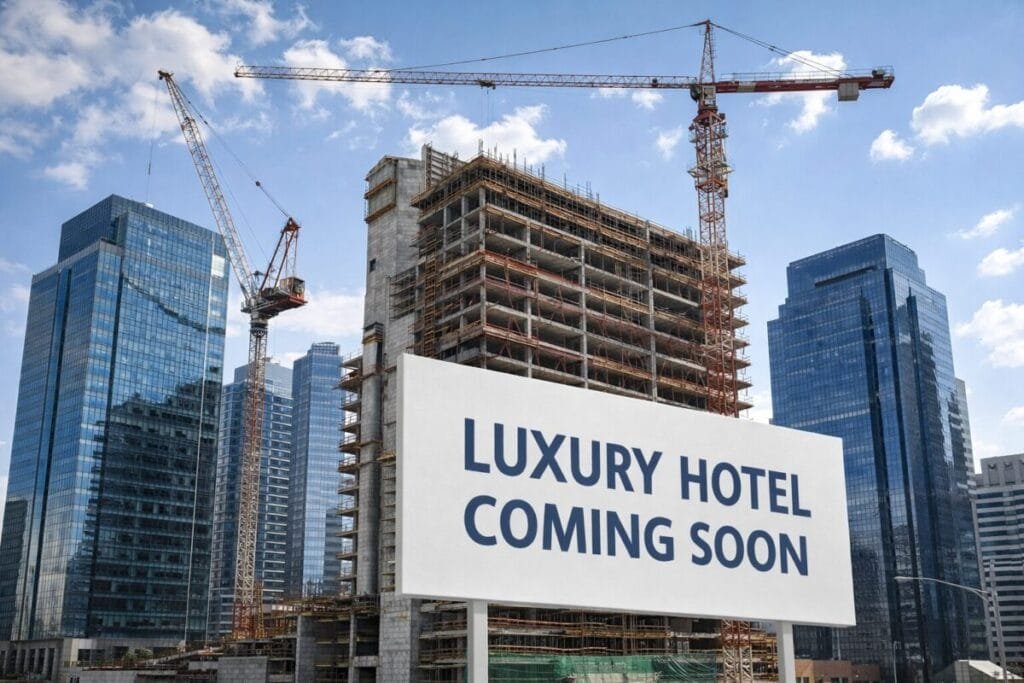
The United States is experiencing an unprecedented travel resurgence, and cities are responding with a rapid expansion of luxury hotels and large-scale hospitality projects. From Texas to Florida and beyond, cranes dominate skylines as developers race to deliver high-end rooms in time for major global events and sustained tourism growth.
Industry analysts describe 2026 as a defining year for American hospitality. Strong international arrivals, surging domestic leisure travel, and a packed global events calendar have combined to create record demand. In response, hotel brands and property owners are accelerating construction timelines, upgrading existing assets, and introducing new luxury concepts to remain competitive.
Houston’s High-Stakes Hospitality Push
Few cities illustrate this transformation more vividly than Houston. As preparations intensify for the upcoming FIFA World Cup matches scheduled across the United States, Houston has emerged as a key host city anticipating more than half a million international visitors.
Economic forecasts estimate that the tournament could inject over $1.5 billion into the local economy. To capture this opportunity, developers have launched extensive renovations and new-build projects throughout downtown and surrounding districts.
Luxury properties are undergoing multi-million-dollar upgrades to enhance guest rooms, lobby spaces, dining venues, and event facilities. A dual-branded Home2 Suites and Tru by Hilton development in downtown Houston is expanding room inventory, while established landmarks such as the JW Marriott Houston Downtown are completing comprehensive refurbishments to align with global luxury standards.
Local tourism authorities have emphasized that modernized accommodations are essential to preserving Houston’s reputation as a premier business and sports destination. Hotel rates are already trending upward as demand accelerates ahead of the tournament.
A National Construction Surge
Houston’s momentum reflects a broader national trend. According to hospitality development data, the United States continues to lead the world in active hotel construction projects. Thousands of properties are in various stages of planning or development, with Texas, Florida, Arizona, and California ranking among the most active states.
This surge is not limited to quantity; it also signals a shift in quality. Developers are focusing heavily on lifestyle-driven luxury experiences that blend business and leisure travel, often referred to as “bleisure.” Modern travelers expect flexible workspaces, wellness amenities, rooftop lounges, and immersive design concepts.
Coastal markets such as Miami and San Diego are witnessing major resort renovations that integrate sustainable energy systems, spa facilities, and technology-enhanced guest services. Mountain and desert destinations are also expanding upscale inventory to accommodate growing adventure tourism demand.
Independent boutique hotels are increasingly affiliating with major brands to tap into loyalty programs and global marketing networks. These brand transitions enable smaller properties to compete in an environment shaped by digital booking platforms and multinational chains.
Corporate Expansion Drives Growth
Large hospitality corporations are playing a decisive role in shaping the landscape. Marriott International, for example, has announced aggressive expansion plans across global markets, with hundreds of new agreements signed in the Europe, Middle East, and Africa region.
The company’s acquisition of the tech-focused citizenM brand has added thousands of rooms to its portfolio, reflecting demand for space-efficient, design-forward accommodations tailored to younger, digitally connected travelers.
Luxury banners such as The Luxury Collection and St. Regis continue to expand through adaptive reuse projects that convert historic structures into premium hotels. This approach not only preserves architectural heritage but also aligns with sustainability goals by minimizing new construction materials.
Branded residential developments have also become a major revenue stream. Affluent buyers are seeking hotel-style living experiences that combine private ownership with concierge services, fine dining, and wellness facilities.
Global Ripple Effects
The hotel boom is not confined to the United States. Across Europe, cities such as London, Frankfurt, and Berlin are witnessing landmark developments. Adaptive reuse remains central to European growth, with historic government buildings and mid-century structures transformed into contemporary hospitality hubs.
In the Caribbean, Jamaica and other island destinations are fast-tracking luxury resort projects to capitalize on rising demand for all-inclusive experiences. Major brands are expanding their footprint in tropical markets, signaling confidence in long-term tourism growth.
Back in the US, Las Vegas and Orlando are leveraging entertainment-driven tourism, while New York City continues to attract investment in ultra-luxury boutique properties targeting high-net-worth international travelers.
Economic Confidence and Traveler Expectations
Several factors are fueling this construction wave. Post-pandemic recovery has unleashed pent-up demand for experiential travel. Remote work flexibility allows professionals to extend leisure stays, and international arrivals are steadily rebounding as air connectivity improves.
Government tourism campaigns and infrastructure investments have further strengthened the sector. Airports across the country are expanding terminals and enhancing passenger experience to support increased capacity.
Meanwhile, traveler expectations have evolved. Guests now prioritize sustainability, digital convenience, and personalized service. Hotels are integrating smart room controls, contactless check-in systems, and eco-conscious design elements to meet these preferences.
Wellness tourism is another driving force. Luxury properties are dedicating more space to spas, fitness studios, meditation areas, and health-focused dining. These amenities cater to travelers seeking restorative experiences rather than purely transactional stays.
Risks and Long-Term Outlook
Despite the optimism, industry observers caution that rapid expansion carries risks. Rising construction costs, labor shortages, and fluctuating interest rates could challenge developers. Oversupply in certain markets is also a possibility if demand projections are overly ambitious.
However, most analysts believe that strategic planning and diversified offerings will sustain growth. Major events such as international sports tournaments, conventions, and cultural festivals provide predictable demand spikes that justify infrastructure investments.
The broader narrative is clear: travel is not merely recovering—it is evolving. Cities are no longer building hotels solely to accommodate visitors; they are creating immersive destinations that blend hospitality, entertainment, and community engagement.
A Transformative Era for Hospitality
The explosion of luxury hotel development across the United States represents more than a construction boom. It reflects confidence in the resilience of global tourism and the enduring appeal of experiential travel.
As 2026 unfolds, travelers will encounter a dramatically transformed lodging landscape—from reimagined historic landmarks to cutting-edge lifestyle resorts. For cities willing to invest boldly, the payoff could be lasting economic vitality and strengthened global stature.
In this new era, hospitality is not just about providing a room—it is about crafting memorable journeys that meet the expectations of a dynamic, interconnected world.
For more travel news like this, keep reading Global Travel Wire