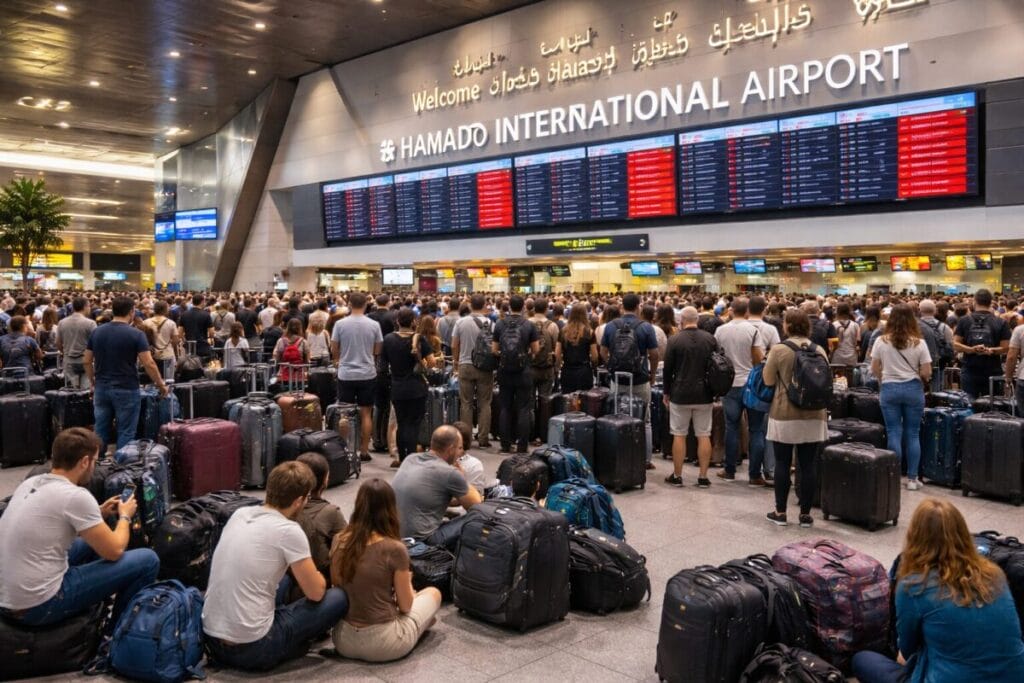
The Middle East tourism industry faces an unprecedented shutdown. Qatar has joined Saudi Arabia, the UAE, Oman, and Israel in suspending normal travel operations. Escalating tensions following the US-Israel strike on Iran triggered retaliatory missile activity across the region.
Governments responded by closing airspace and tightening security. These measures caused widespread flight cancellations and airport shutdowns. As a result, tourism across the Gulf and Israel has slowed dramatically.
Airlines, hotels, and tour operators now confront mounting losses.
Airspace Closures Trigger Aviation Chaos
Regional aviation authorities halted operations at major airports. Dubai, Doha, Abu Dhabi, Muscat, Jeddah, Riyadh, and Tel Aviv faced immediate disruption. Thousands of flights were cancelled or delayed within hours.
Airlines rerouted aircraft to avoid restricted corridors. Some carriers suspended services entirely until further notice. Long-haul routes between Europe, Asia, and the Gulf faced severe interruption.
Dubai flight cancellations exceeded a thousand departures in a single day. Hamad International Airport in Doha reported heavy delays and suspensions. Saudi airports experienced similar operational strain.
The shutdown created a domino effect across global aviation networks.
Dubai Tourism Feels Immediate Impact
Dubai, one of the world’s leading tourism hubs, suffered sharp booking declines. Luxury hotels along Palm Jumeirah reported sudden cancellations. Desert safari operators saw reduced demand almost instantly.
High-profile landmarks faced lower visitor numbers as safety concerns rose. Retail and shopping districts recorded weaker foot traffic. International conferences and corporate events faced postponement.
Travel agencies confirmed rising refund requests from Europe and North America. Many visitors postponed non-essential travel to the region.
The sudden tourism freeze placed heavy pressure on hospitality revenues.
Abu Dhabi Faces Cultural Tourism Slowdown
Abu Dhabi also witnessed a rapid tourism slowdown. Cultural attractions such as the Sheikh Zayed Grand Mosque and Louvre Abu Dhabi saw fewer visitors. Event organizers delayed exhibitions and international gatherings.
Zayed International Airport handled hundreds of cancellations and delays. Travelers struggled to secure alternative connections through unaffected hubs.
Tour operators reported increased inquiries about safety conditions. Although authorities reinforced security measures, uncertainty continued to influence booking behavior.
Oman’s Tourism Sector Hit by Transit Disruptions
Oman, though not directly involved in military activity, experienced aviation spillover effects. Muscat International Airport reduced operations due to regional airspace restrictions.
Flights linking Europe and Asia through Muscat faced delays or rerouting. Beach resorts in Salalah reported booking declines from long-haul markets.
Adventure tourism in Wahiba Sands and mountain regions slowed noticeably. International travelers opted for destinations perceived as stable.
Domestic tourism remained relatively steady, but international arrivals declined sharply.
Qatar Tourism Under Pressure
Qatar airspace shutdown measures significantly disrupted travel through Doha. Hamad International Airport experienced major delays and cancellations.
Major international events in Doha faced postponement. Hotels and tour operators reported lower occupancy levels. Cultural sites, including museums and heritage markets, saw reduced footfall.
Qatar Airways adjusted schedules and offered flexible rebooking policies. However, global transit passengers diverted through alternative hubs.
The uncertainty surrounding regional stability continues to weigh on traveler confidence.
Saudi Arabia’s Religious and Leisure Tourism Affected
Saudi Arabia relies heavily on religious tourism and large-scale development projects. Temporary airspace closures disrupted international pilgrim travel.
Flights to Jeddah and Riyadh faced heavy delays. Umrah travelers postponed trips due to uncertain schedules. Leisure destinations such as Al Ula also recorded slower bookings.
Major urban tourism projects experienced softer demand as business travel declined. Airlines worked to manage rerouted services and crew scheduling adjustments.
Despite ongoing development plans, short-term tourism revenue faces serious pressure.
Israel Confronts Declining International Arrivals
Israel experienced immediate aviation disruption following regional escalation. Ben Gurion Airport handled cancellations and limited departures.
International travelers reconsidered visits to Jerusalem, Tel Aviv, and the Dead Sea. Tour operators reported significant group cancellations from Europe and North America.
Beach tourism and heritage tours declined sharply. Airlines adjusted schedules based on evolving security advisories.
Travel advisories from several governments further influenced booking patterns.
Financial Impact on Regional Tourism
The combined financial effect across the UAE, Qatar, Saudi Arabia, Oman, and Israel is substantial. Airlines face rising operational costs due to rerouting. Hotels confront revenue losses from last-minute cancellations.
Event organizers and retail operators also face reduced consumer activity. Tourism boards have launched crisis communication strategies to reassure markets.
Industry analysts expect short-term revenue contraction. However, long-term recovery depends on regional stabilization.
Government and Industry Response
Authorities across the region have strengthened airport security and crisis management systems. Tourism ministries coordinate closely with airlines and hospitality providers.
Airlines offer flexible ticket policies and refund options. Hotels provide rescheduling opportunities for affected guests.
Governments continue monitoring regional security developments. Aviation regulators evaluate airspace safety daily before considering reopening decisions.
The Road to Recovery
The Middle East tourism crisis underscores the sector’s vulnerability to geopolitical instability. Air connectivity forms the backbone of Gulf tourism success.
Once airspace restrictions lift, airlines will gradually restore schedules. Marketing campaigns will likely focus on rebuilding traveler confidence.
The region possesses strong infrastructure and global brand recognition. However, restoring demand will require sustained stability and clear communication.
For now, travelers should remain flexible and informed. Tourism leaders across Qatar, the UAE, Saudi Arabia, Oman, and Israel continue working to stabilize operations.
The pace of recovery will depend on regional de-escalation. Until then, the Middle East tourism sector remains in cautious pause mode, awaiting safer skies and renewed traveler confidence.
For more travel news like this, keep reading Global Travel Wire