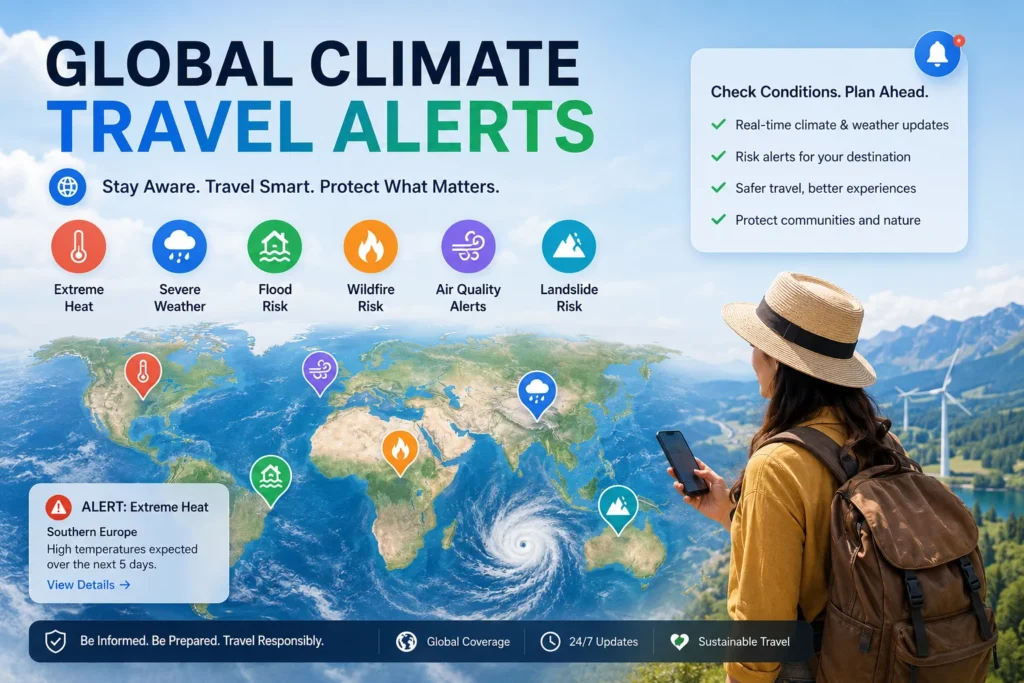
The World Meteorological Organization (WMO) has officially confirmed a rapid transition toward El Niño conditions in the tropical Pacific Ocean. According to the June 2026 WMO El Niño/La Niña Update, there is an 80 percent probability of a fully realized El Niño event establishing itself between June and August 2026. Furthermore, atmospheric predictive modeling indicates a 90 percent certainty that these conditions will persist through at least November 2026, with the potential to reach strong intensity by the end of the year.
For the international hospitality and tourism sectors, these verified atmospheric shifts represent a structural challenge to traditional seasonal vacation planning. While climate anomalies present varying localized outcomes, global travelers must anticipate widespread disruptions to transportation infrastructure, localized water preservation mandates, altered storm tracks, and extreme heat indices across heavily trafficked tourism corridors.
The Science Behind the Global Temperature Surge
An El Niño event is characterized by the sustained warming of sea surface temperatures in the central and eastern equatorial Pacific. Subsurface ocean measurements compiled by global producing centers reveal that subsurface temperatures are exceeding 6 degrees Celsius above historical averages, creating a profound reservoir of ocean heat. Concurrently, the Southern Oscillation Index—the atmospheric companion to ocean warming—reflects a significant weakening of equatorial trade winds.
WMO Secretary-General Celeste Saulo noted that while El Niño is a naturally occurring phenomenon, its arrival will interact with a baseline climate already affected by greenhouse gas concentrations. Although scientific consensus notes that global climate shifts do not necessarily increase the frequency of El Niño occurrences, they substantially amplify the moisture availability and thermal energy driving subsequent extreme weather events. The WMO’s complementary Global Seasonal Climate Update projects a near-universal dominance of above-normal land surface temperatures through the peak summer travel months.
Regional Drought Patterns and Tourism Infrastructure Constraints
True to historical parameters, the emerging El Niño pattern is introducing severe rainfall deficits across specific geographic sectors. The South Asian Climate Outlook Forum and parallel regional bodies have forecast below-average monsoon rainfall for much of South Asia, Central America, and the Caribbean.
For travelers, prolonged dryness presents distinct logistical adjustments:
Australasia and Indonesia: Diminished rainfall accelerates wildfire risks in rural nature reserves and places pressure on regional water networks.
The Greater Horn of Africa: Regional climate forums predict below-normal precipitation during the critical June-to-September window, potentially limiting eco-tourism access to sensitive wildlife preserves.
Central American Hospitality Corridors: Decreased water table levels have historically prompted localized municipalities to implement resource rationing, affecting non-essential hospitality amenities such as large-scale resort pools, water parks, and municipal recreational complexes.
Accelerated Precipitation and Flood Risks in Southern Latitudes
Conversely, the redirection of atmospheric moisture plumes will generate significant precipitation surpluses in other parts of the world. The southern United States, central Asia, and parts of southern South America are projected to experience heightened flood probabilities.
In previous moderate-to-strong events, countries including Peru, Brazil, and Colombia faced intense flash flooding that disrupted regional rail networks and restricted access to remote historical landmarks. Overland transport corridors, mountain highway systems, and secondary rural bridges face structural vulnerabilities during intense rain events. Tourism boards in affected regions are preparing for localized infrastructure closures, emphasizing that standard transit schedules may require real-time adjustments as regional ministries manage drainage and landslide hazards.
Altered Tropical Cyclone Formations and Maritime Adjustments
The accumulation of thermal energy in the central and eastern Pacific alters traditional tropical storm dynamics. During a boreal summer dominated by El Niño, the warmer waters provide fuel for the formation of stronger hurricanes and typhoons across the central and eastern Pacific basins, potentially affecting island destinations like Hawaii and Fiji.
In contrast, the phenomenon typically introduces strong vertical wind shear across the Atlantic basin, which tends to suppress the overall frequency of tropical storm development in the Caribbean and Gulf of Mexico. Maritime operators, including global cruise lines, alter their navigational tracks based on these structural shifts, meaning passengers booking Pacific itineraries may experience short-notice route realignments to bypass active storm depressions.
| Impact Category | Official Meteorological Projections | Potential Tourism Infrastructure Effect |
| Thermal Index | Universal dominance of above-normal land temperatures. | Elevated heat stress; altered peak operating hours for outdoor tours. |
| Rainfall Deficits | Drier conditions in South Asia, Central America, Australia. | Localized water conservation mandates; restriction of water-based activities. |
| Rainfall Surpluses | Heavy precipitation in Southern U.S. and Southern South America. | Flash flooding risks; short-notice delays across overland rail/road links. |
| Storm Dynamics | Increased energy in Central/Eastern Pacific; suppressed Atlantic trends. | Rerouting of Pacific cruise itineraries; strict airport safety closures. |
Strategic Technical Guidance for 2026 Travelers
Given the high probability of compounding weather hazards, national travel ministries suggest that passengers transition away from static vacation planning toward highly adaptive strategies. Maintaining comprehensive travel protection policies that feature flexible cancellation provisions, trip interruption coverage, and medical evacuation riders is increasingly critical.
Before completing reservations, tourists are urged to verify that their chosen accommodations possess independent backup power infrastructure, particularly in regions dependent on hydropower, which can suffer generation shortages during droughts. Registering with government consular services, utilizing official meteorological smartphone tracking platforms, and checking daily localized weather alerts will remain the most effective methods for ensuring personal safety and protecting financial investments as the 2026 El Niño strengthens.
For more travel news like this, keep reading Global Travel Wire