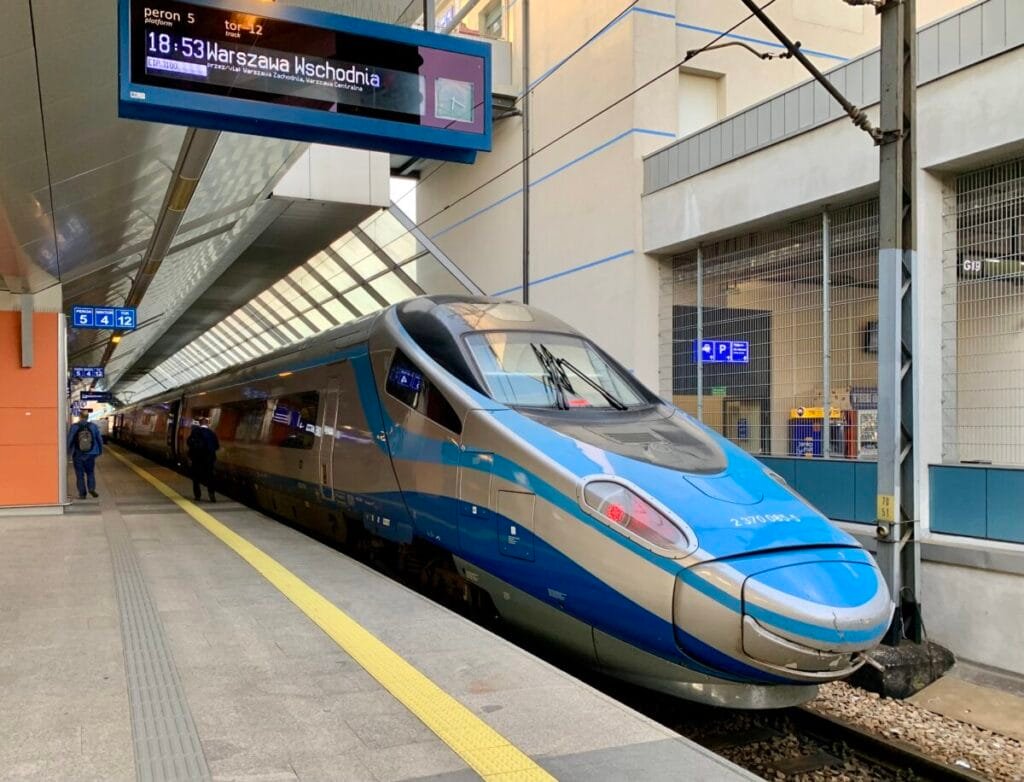
Poland is positioning itself at the forefront of Europe’s rail renaissance with a landmark partnership between Siemens Mobility and Newag. The newly signed Memorandum of Understanding between the German rail technology leader and Poland’s prominent rolling stock manufacturer marks a decisive step toward building one of Central Europe’s most advanced high-speed rail networks.
As the country accelerates infrastructure investments and prepares for next-generation train fleets, the collaboration signals Poland’s intent to compete with established high-speed rail markets such as France, Germany and Spain.
A Strategic Alliance for Rail Innovation
The agreement between Siemens Mobility and Newag focuses on joint development, production and long-term maintenance of high-speed trains tailored for Poland’s evolving transport needs. By combining Siemens’ global expertise in high-speed rail engineering with Newag’s domestic manufacturing capabilities, the partnership aims to create trains that meet international performance standards while strengthening Poland’s industrial base.
Siemens Mobility has decades of experience delivering high-speed platforms capable of operating at speeds exceeding 300 km/h across multiple European corridors. Newag, headquartered in Nowy Sącz, has built a strong reputation in regional and intercity rolling stock production, supplying electric multiple units and locomotives across Poland and neighboring countries.
Together, the companies intend to exchange technical knowledge, conduct feasibility studies and explore production frameworks that align with Poland’s national rail expansion strategy.
Powering Poland’s High-Speed Rail Vision
Poland’s ambitions extend far beyond incremental upgrades. The country is developing its first dedicated high-speed line connecting Warsaw and Łódź, forming the backbone of a broader transport transformation centered around the planned Central Communication Port (CPK).
The Central Communication Port is envisioned as a multimodal hub integrating air, rail and road networks. High-speed rail will play a critical role in connecting regional cities to the new airport, significantly reducing domestic travel times and enhancing Poland’s position as a Central European transit gateway.
Plans include trains capable of operating at speeds of up to 300 km/h on key corridors, with additional fleets designed for speeds around 200 km/h to serve upgraded conventional routes. The strategy aims to reduce journey times between major Polish cities and improve links to neighboring countries.
Expanding Rolling Stock Procurement
Poland’s rail modernization drive is already visible in recent procurement initiatives. The Central Communication Port project has announced plans to acquire high-speed trains through leasing arrangements, allowing operators to access cutting-edge rolling stock without bearing full capital costs upfront.
Meanwhile, the national long-distance operator PKP Intercity has launched tenders for high-speed units capable of reaching 250 km/h. The contracts include extended maintenance agreements and provisions for the construction of dedicated service facilities, reflecting a long-term approach to reliability and operational efficiency.
These procurement efforts demonstrate strong institutional commitment to transforming Poland’s rail landscape and preparing it for future passenger demand.
Maintenance and Reliability at the Core
A defining feature of the Siemens–Newag collaboration is its focus on advanced maintenance systems. High-speed rail requires precise engineering and continuous monitoring to ensure safety and punctuality. Predictive maintenance technologies, digital diagnostics and specialized service centers are expected to form a central component of the partnership’s framework.
By embedding maintenance planning into the production process, the companies aim to extend train lifespans and reduce lifecycle costs. This integrated model aligns with broader European rail trends emphasizing sustainability and efficiency.
For passengers, this translates into improved reliability, fewer disruptions and higher service standards across long-distance routes.
Strengthening Domestic Manufacturing
The partnership also represents an important industrial milestone for Poland. By involving Newag in high-speed rail production, the country strengthens its domestic supply chain and creates opportunities for skills development, research and employment.
Poland has steadily expanded its rail manufacturing capacity over the past decade. The collaboration with Siemens allows local expertise to integrate with global technology standards, potentially opening export opportunities in the future.
Such industrial partnerships are increasingly seen as strategic tools to balance modernization with economic development.
Regional Rail Growth Continues
While high-speed rail captures headlines, regional rail modernization remains a parallel priority. Newag continues to deliver modern electric multiple units to regional operators, including contracts with Koleje Małopolskie.
These new-generation trains are designed to improve passenger comfort, energy efficiency and accessibility across regional routes. Funding support from European infrastructure and climate programs underscores the importance of rail in meeting sustainability goals.
The simultaneous development of high-speed and regional networks ensures that Poland’s rail transformation benefits both long-distance travelers and daily commuters.
Competing on the European Stage
Poland’s geographic location positions it as a bridge between Western Europe and emerging markets in Central and Eastern Europe. Enhanced high-speed connectivity could significantly reduce travel times to cities such as Berlin, Prague and Vienna, strengthening cross-border mobility.
As European transport policy increasingly favors rail over short-haul aviation to reduce emissions, countries investing in high-speed infrastructure stand to gain strategic advantages. Poland’s modernization drive aligns with these continental priorities, supporting both economic integration and environmental objectives.
By integrating advanced technology, domestic production and multimodal planning, Poland aims to position itself among Europe’s most dynamic rail markets.
Looking Ahead
The Siemens–Newag partnership signals more than a business agreement; it marks a shift in Poland’s transportation narrative. From the Warsaw–Łódź corridor to the Central Communication Port hub, the country is laying the groundwork for a faster, greener and more interconnected rail system.
As procurement processes advance and infrastructure projects move forward, Poland’s high-speed ambitions are becoming tangible realities. The coming years will determine how effectively these plans translate into operational networks, but the direction is clear.
Poland is not merely upgrading its railway—it is redefining its role within Europe’s transport future.
For more travel news like this, keep reading Global Travel Wire