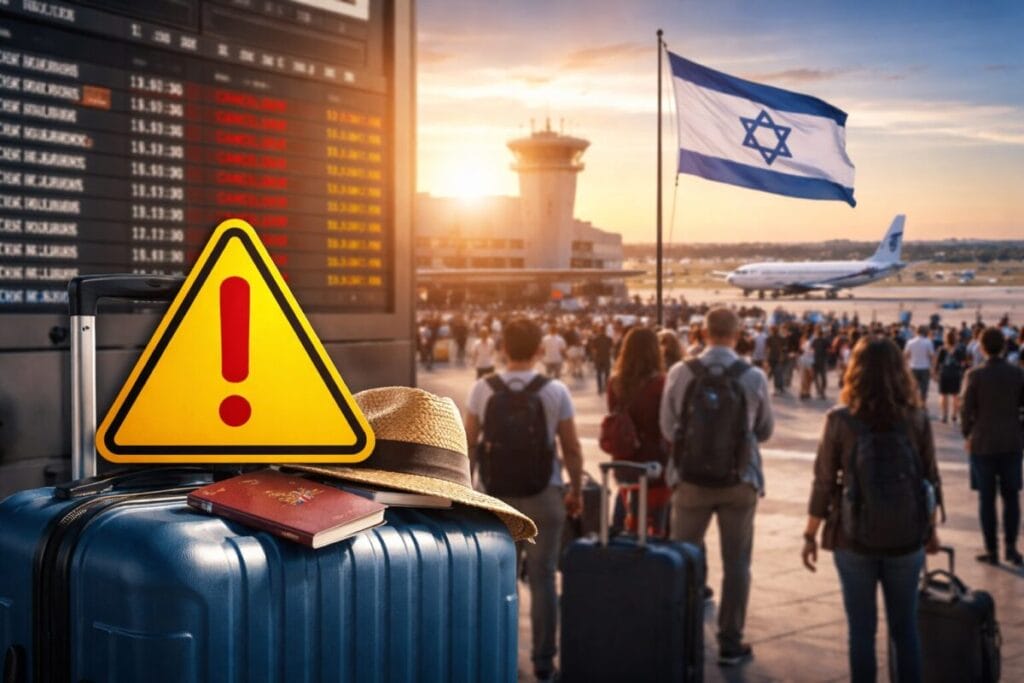
The United Kingdom has joined France, Germany, Italy, and Poland in issuing a strong travel warning for Israel and the West Bank. The advisory follows rising tensions between Israel and Iran. Governments cite growing security risks and the possibility of rapid escalation.
Officials now advise against non-essential travel to affected areas. Authorities urge citizens to reconsider upcoming trips and monitor official guidance closely.
The move reflects deepening concern across Europe about safety in the region.
Rising Security Risks Across Israel and the West Bank
Security agencies report a volatile environment. Missile threats, regional military activity, and civil unrest have raised alarm levels. Officials warn that the situation could change quickly.
Major cities such as Tel Aviv and Jerusalem remain under close watch. The West Bank faces additional concerns due to localized tensions. Governments stress that even routine travel could become risky without warning.
Airspace disruptions and sudden travel restrictions also remain possible. Travelers may face flight cancellations or route changes with little notice.
What the UK Travel Advisory Says
The UK government has updated its foreign travel advice. It now warns against all non-essential travel to Israel and the West Bank. Authorities highlight the risk of missile attacks, armed clashes, and sudden security operations.
Officials also urge British nationals already in the region to stay alert. They recommend following local safety instructions and checking emergency procedures.
The advisory emphasizes preparedness. Travelers should confirm travel insurance coverage and understand evacuation options.
France, Germany, Italy, and Poland Follow With Similar Warnings
France, Germany, Italy, and Poland have issued comparable advisories. Each government stresses unpredictability in the security environment.
French authorities have advised citizens in the region to avoid public gatherings and identify nearby shelters. German officials have encouraged nationals to register with diplomatic missions. Italy and Poland have also asked citizens to reconsider planned visits.
These coordinated warnings show a unified European response. Governments are prioritizing citizen safety amid mounting regional instability.
Diplomatic Staff Relocation Signals Serious Concern
Several countries have temporarily relocated diplomatic staff within Israel. Some personnel have shifted from high-risk areas to more secure zones.
Embassies continue to operate. However, services may be limited or offered remotely. Governments describe these steps as precautionary.
Relocation decisions often signal heightened security assessments. While embassies remain functional, the moves underline the seriousness of the situation.
Impact on Middle East Tourism
Israel is a major global tourism hub. It attracts millions of visitors each year. Pilgrims, heritage travelers, and leisure tourists drive strong demand.
Jerusalem remains one of the most visited spiritual cities in the world. Tel Aviv draws visitors with beaches, nightlife, and innovation hubs. The Dead Sea and Galilee region also attract international tourists.
Travel warnings now affect bookings. Airlines report fluctuating demand. Tour operators face cancellations and itinerary changes. Hotels in key cities have seen slower reservations.
Tourism plays a significant role in Israel’s economy. Reduced visitor numbers could impact local businesses, restaurants, and guides.
The West Bank also depends on cultural and religious tourism. Bethlehem and Jericho receive steady international visitors in stable periods. Ongoing security concerns now affect travel flows.
Airline and Travel Industry Response
Airlines continue to monitor the situation. Some carriers have adjusted flight schedules. Others have introduced flexible ticket policies.
Travel insurance providers have updated advisory clauses. Many policies limit coverage in areas under official travel warnings.
Travel agencies advise clients to review cancellation terms carefully. Flexible rebooking options have become essential in uncertain environments.
Industry experts expect short-term volatility. Recovery depends on regional stability and diplomatic developments.
Alternative Destinations in the Region
Travelers seeking Middle East experiences may consider alternative destinations. Jordan offers historic landmarks such as Petra and Wadi Rum. Egypt continues to attract tourists to Cairo, Luxor, and the Red Sea coast.
These countries maintain active tourism sectors and stable visitor flows. Many travelers are redirecting plans toward these locations.
Tourism boards across the region are closely watching developments.
Safety Advice for Travelers Still Planning to Visit
Some travelers may still choose to visit Israel. Authorities recommend strict precautions.
Stay informed through official government updates. Register with your embassy upon arrival. Keep emergency contacts accessible.
Avoid large gatherings and protest areas. Follow instructions from local authorities at all times. Identify nearby shelters and safe zones.
Ensure travel insurance covers conflict-related disruptions. Prepare contingency plans for sudden changes.
Preparedness remains essential in a fluid security situation.
What Happens Next for Israel Travel?
The future of travel to Israel and the West Bank depends on geopolitical developments. Diplomatic negotiations and regional military movements will shape the outlook.
If tensions ease, advisories may relax gradually. Tourism demand often rebounds once stability returns. Israel has demonstrated resilience in past crises.
For now, governments continue to prioritize caution. Travelers must weigh risks carefully before confirming plans.
A Critical Moment for Middle East Travel
The UK, France, Germany, Italy, and Poland have taken decisive action. Their travel warnings highlight serious concerns about safety in Israel and the West Bank.
The situation remains dynamic. Rapid developments could reshape travel guidance at any time.
Tourists should remain vigilant, flexible, and informed. Safety must come first during periods of geopolitical uncertainty.
Middle East tourism stands at a sensitive crossroads. The coming weeks will determine how quickly confidence returns to one of the world’s most historically significant travel destinations.
For more travel news like this, keep reading Global Travel Wire