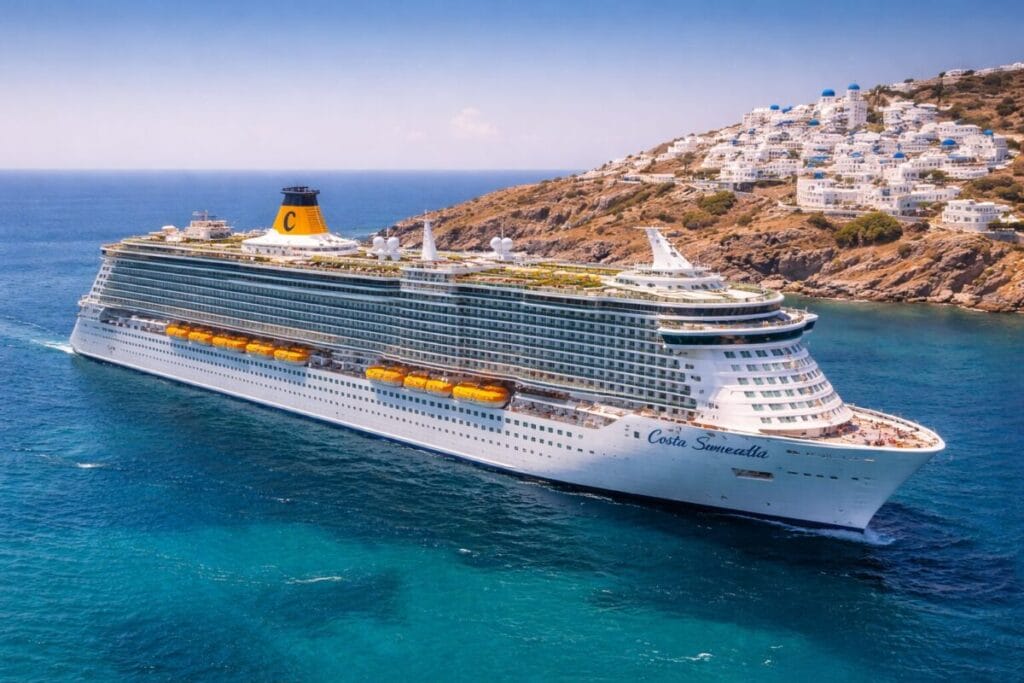
Mediterranean cruise travel has seen another sudden itinerary adjustment. Costa Cruises has removed the Tunis port call from the sailing schedule of its flagship vessel Costa Smeralda.
The decision reflects growing operational and security considerations across parts of the Mediterranean region. Cruise companies frequently adjust routes when regional developments influence maritime operations.
Costa Smeralda will now continue its Mediterranean journey without visiting Tunis. Passengers will instead visit alternative destinations during the voyage.
Despite the change, the overall cruise experience remains intact. Travelers will still explore several well-known Mediterranean destinations.
Cruise companies often revise itineraries to ensure safe and smooth travel conditions. These adjustments allow operators to respond quickly to changing regional circumstances.
Costa Smeralda Updates Mediterranean Itinerary
Costa Smeralda originally scheduled a port visit in Tunis during the voyage. This stop would have allowed passengers to explore Tunisia’s capital and nearby attractions.
The cruise line has now removed the Tunis stop from the sailing plan. Guests will instead continue to other Mediterranean ports along the route.
Cruise operators routinely assess port calls before each sailing. Maritime authorities, security advisors, and operational teams contribute to these reviews.
If conditions raise concerns, companies adjust itineraries quickly. Passenger safety and reliable operations always guide these decisions.
Costa Cruises has informed guests about the updated itinerary. Travelers will still enjoy a full cruise experience across the Mediterranean.
Tunis Remains an Important Cultural Gateway
Although the port call was cancelled for this sailing, Tunisia remains an attractive cruise destination. The country offers a rich mix of culture, history, and coastal beauty.
Tunis serves as the gateway to many famous historical sites. Visitors often explore the Medina of Tunis, a UNESCO World Heritage site filled with traditional architecture.
Another popular excursion leads travelers to the ancient ruins of Carthage. This archaeological site once served as the capital of a powerful Mediterranean empire.
Travelers also visit the picturesque village of Sidi Bou Said. The town attracts visitors with its white buildings and blue balconies overlooking the sea.
Tunisia’s diverse attractions continue to draw international tourists each year. Cruise tourism plays a growing role in the country’s travel economy.
Cruise Industry Continues to Adapt to Regional Changes
The cruise industry operates across many international regions. Cruise lines must constantly monitor geopolitical developments and maritime advisories.
Operational teams evaluate conditions in each port before confirming visits. These assessments consider security updates, port logistics, and passenger safety.
When conditions change, cruise operators quickly revise itineraries. This flexibility allows ships to continue sailing without major disruptions.
Passengers usually receive alternative destinations or extended port visits elsewhere. Cruise companies aim to ensure that travelers still enjoy a memorable holiday.
Modern cruise ships offer diverse experiences onboard. Therefore, itinerary adjustments rarely reduce overall travel satisfaction.
Passenger Experience Remains a Key Priority
Cruise lines place strong emphasis on guest satisfaction during itinerary changes. Costa Smeralda continues to provide a wide range of onboard experiences.
Passengers can enjoy restaurants, entertainment venues, and relaxation spaces during the voyage. These facilities create a complete travel experience even between ports.
The ship also offers wellness centers, observation decks, and cultural activities. Guests often participate in cooking demonstrations, performances, and themed events.
Cruise lines also maintain strong communication with travelers. Guests receive regular updates whenever itinerary adjustments occur.
These updates ensure passengers remain informed about their travel plans. Transparent communication helps maintain trust between cruise operators and guests.
Mediterranean Cruise Tourism Remains Strong
The Mediterranean remains one of the world’s most popular cruise regions. Millions of travelers visit the region each year through cruise itineraries.
Popular destinations include Italy, Spain, Greece, France, and Turkey. These countries offer historic cities, scenic coastlines, and famous cultural landmarks.
Cruise tourism has rebounded strongly following global travel disruptions in previous years. Many cruise companies now operate larger fleets and advanced ships.
The introduction of environmentally efficient vessels also supports long-term tourism growth. Cruise lines continue to invest heavily in modern maritime technology.
As a result, Mediterranean cruise routes remain highly attractive for travelers worldwide.
Tunisia Continues to Develop Its Cruise Tourism Sector
Tunisia continues to promote its ports as cruise tourism gateways. The Port of La Goulette serves as the primary cruise terminal for Tunis.
This port welcomes cruise ships throughout the Mediterranean sailing season. Government tourism strategies aim to attract more cruise operators.
Officials continue to improve port infrastructure and visitor services. These investments support long-term tourism development.
Tourism remains a vital sector for Tunisia’s economy. Cultural heritage, Mediterranean beaches, and historic sites attract travelers from many countries.
Despite occasional itinerary changes, Tunisia remains part of numerous Mediterranean cruise routes.
Cruise Lines Balance Safety with Travel Experiences
Cruise operators must balance passenger safety with enjoyable travel experiences. This responsibility requires constant monitoring of regional conditions.
Ships travel across multiple countries and maritime zones during each voyage. Therefore, cruise companies maintain strong cooperation with global security advisors.
This collaboration helps operators anticipate potential disruptions. It also allows companies to protect passengers and crew members.
Flexible itinerary planning remains essential in modern cruise travel. Cruise lines design routes that allow adjustments without reducing overall trip quality.
Mediterranean Cruise Travel Moves Forward
The removal of Tunis from Costa Smeralda’s itinerary highlights how cruise operators adapt quickly to changing conditions. These adjustments remain a normal part of international cruise operations.
Passengers aboard Costa Smeralda will still explore other Mediterranean destinations during their journey. The ship continues to deliver entertainment, relaxation, and cultural experiences throughout the voyage.
The Mediterranean continues to attract cruise travelers from around the world. Its combination of historic cities, coastal scenery, and cultural diversity ensures strong demand for cruise tourism.
As cruise lines expand fleets and introduce new ships, the region will remain a major hub for global cruise travel. Destinations like Tunisia will continue to play an important role in this vibrant tourism landscape.
For more travel news like this, keep reading Global Travel Wire