TUI Cruises has announced major operational changes across its Middle East cruise program. The cruise line canceled several sailings after reviewing the current regional security situation.
The company released an update on March 3, 2026. Officials confirmed ongoing communication with local authorities and international security specialists.
These consultations help the cruise line evaluate risks affecting scheduled voyages. The company continues to monitor developments across key Middle East ports.
Cruise lines operating in sensitive regions must respond quickly to security changes. TUI Cruises stated that guest and crew safety remains its highest priority.
The decision to cancel sailings reflects the company’s cautious approach to operations in the region.
Onboard Operations Continue for Current Voyages
Despite itinerary disruptions, onboard activities continue normally on several ships. Passengers currently traveling aboard the Mein Schiff 4 and Mein Schiff 5 still receive full service.
Crew members continue to provide dining, entertainment, and leisure activities. Guests can enjoy the cruise experience without disruption onboard.
The company emphasized that all passengers remain safe and well cared for. Ship crews maintain standard hospitality services throughout the voyage.
Cruise lines often implement additional safety protocols during uncertain situations. These measures help ensure that passengers remain comfortable while traveling.
TUI Cruises also continues to provide updates to guests regarding any operational changes.
Several Cruise Departures Cancelled in the Region
TUI Cruises confirmed the cancellation of six sailings scheduled in early 2026. These cancellations affect voyages planned for both Mein Schiff 4 and Mein Schiff 5.
The cancelled departures include four sailings of Mein Schiff 4. These voyages were scheduled for March 1, March 2, March 8, and March 9.
The company also cancelled two sailings of Mein Schiff 5. These departures were originally scheduled for February 28 and March 5.
The cruise line made this decision after evaluating regional conditions. Security uncertainties made normal operations difficult.
Cruise operators often adjust itineraries when conditions create operational risks. These adjustments help protect passengers and crew members.
Although cancellations disrupt travel plans, safety considerations remain the top priority.
Airlines Coordinate Passenger Return Travel
TUI Cruises has worked closely with airline partners to assist affected passengers. Many travelers rely on coordinated flights after cruise journeys.
The company has arranged return travel options for guests whose sailings were cancelled. Staff members continue to provide travel guidance and updated flight schedules.
Air travel disruptions also affect cruise tourism during regional instability. Limited flight availability often complicates passenger movements.
Therefore, cruise operators must coordinate closely with airlines. These partnerships help ensure safe and reliable return journeys.
TUI Cruises continues to monitor flight availability across Middle East airports. The company aims to minimize inconvenience for passengers.
Crisis Management Team Monitors Security Situation
TUI Cruises has activated a dedicated crisis management team to handle the situation. The team collaborates with security experts and government authorities.
The cruise line also coordinates closely with its parent company TUI AG. Security specialists from Royal Caribbean Group also provide support.
These teams evaluate regional developments around the clock. Continuous monitoring helps the company respond quickly to new information.
Cruise companies often maintain global security networks to manage risks. These systems support passenger protection during unexpected events.
TUI Cruises uses these resources to guide operational decisions across its fleet.
Impact on Middle East Cruise Tourism
The recent cancellations highlight challenges facing cruise tourism in the Middle East. Over the past decade, the region has developed into a growing cruise destination.
Major ports such as Dubai, Abu Dhabi, and Doha welcome international cruise ships each year. These destinations attract visitors with modern infrastructure and luxury experiences.
Cruise tourism contributes significantly to local economies. Passengers often spend money on tours, restaurants, and shopping.
When cruise sailings cancel, local tourism businesses feel immediate economic impact. Tour operators, transport providers, and retail shops often lose visitor traffic.
Industry analysts note that cruise tourism remains sensitive to geopolitical events.
Key Ports Affected by Itinerary Changes
Several scheduled itineraries originally planned to depart from Dubai and Doha. These ports serve as important cruise hubs in the Middle East.
Dubai has invested heavily in cruise tourism infrastructure. The city operates one of the region’s largest cruise terminals.
Doha also promotes cruise tourism as part of its broader tourism strategy. Modern port facilities support international cruise operations.
However, security developments forced cruise operators to reconsider travel routes.
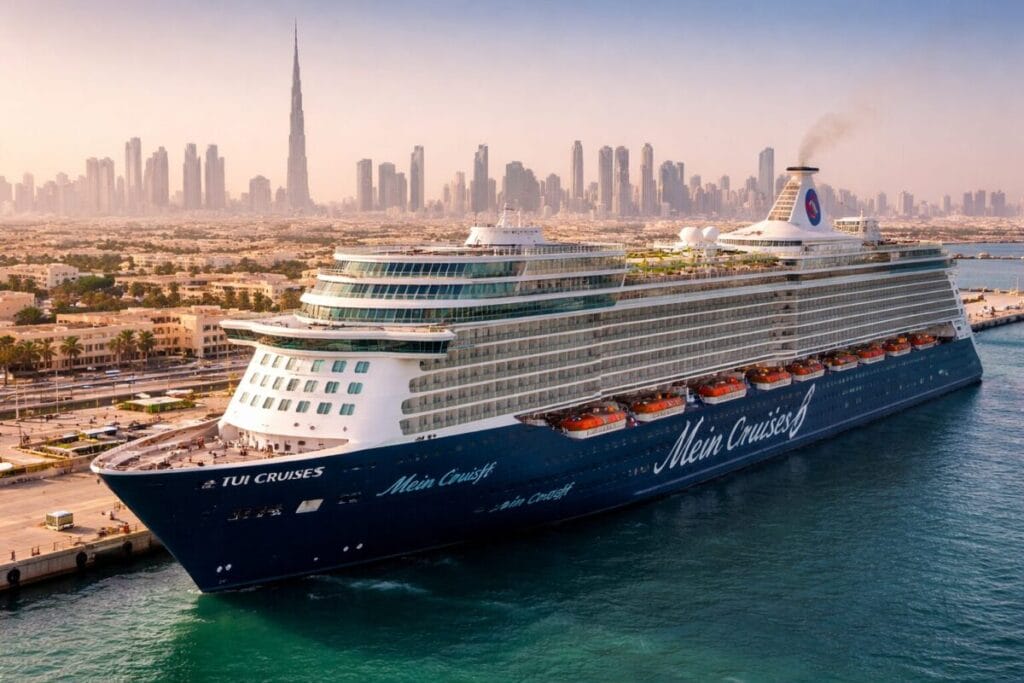
Currently, Mein Schiff 4 remains docked in Abu Dhabi while monitoring conditions. Meanwhile, Mein Schiff 5 stays in Doha until further decisions occur.
Cruise companies often reposition ships during uncertain situations. This strategy allows operators to evaluate alternative routes.
Cruise Industry Responds to Regional Challenges
The global cruise industry regularly faces operational challenges. Weather events, political developments, and logistical issues can affect itineraries.
Cruise lines therefore build flexible planning strategies. Operators must adjust routes quickly while maintaining guest safety.
Industry experts expect cruise tourism in the Middle East to recover over time. The region remains attractive due to its luxury destinations and modern infrastructure.
Tourism authorities across the region continue to promote international travel. Investments in cruise ports and tourism services remain strong.
However, stability remains essential for long-term cruise growth.
Safety Remains the Core Priority for Cruise Operators
Passenger safety remains the central focus for cruise companies worldwide. Operators regularly assess potential risks across travel regions.
TUI Cruises continues to update passengers and travel partners about ongoing developments. Transparent communication helps travelers adjust their plans.
The cruise line also provides support services for affected guests. Customer service teams assist with refunds, rebooking options, and travel guidance.
Industry observers note that proactive safety measures help protect long-term brand trust.
Navigating the Future of Middle East Cruise Travel
The situation involving TUI Cruises illustrates the complex nature of modern cruise operations. Travel companies must balance guest safety with operational planning.
Middle East cruise tourism has grown rapidly in recent years. Luxury ports, modern attractions, and winter cruise routes attract international travelers.
However, regional security developments can quickly affect travel plans.
Cruise operators must remain flexible and responsive to changing conditions. Strategic planning and strong safety protocols support this process.
TUI Cruises continues to monitor the situation closely. The company aims to resume normal operations once regional conditions improve.
For now, the cruise line remains focused on passenger safety while navigating challenges across the Middle East cruise tourism market.
For more travel news like this, keep reading Global Travel Wire