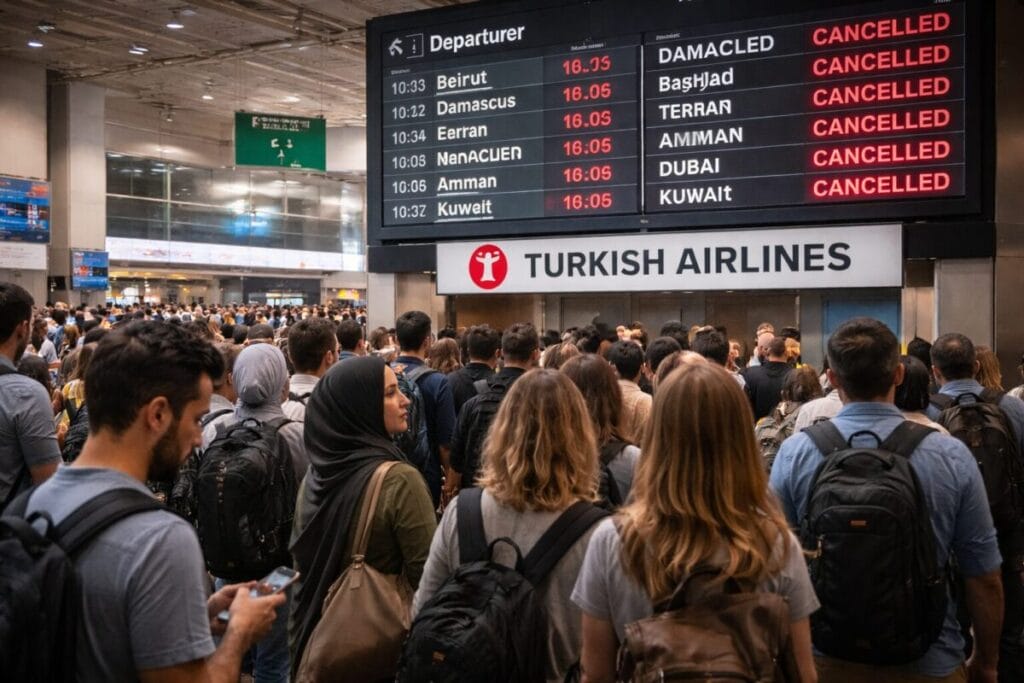
Turkish Airlines has suspended several major routes across the Middle East due to escalating regional tensions. The airline announced widespread flight cancellations and service disruptions across multiple destinations.
Authorities across several countries closed large sections of regional airspace. These closures followed escalating military tensions and security concerns across the Middle East.
Turkish Airlines confirmed that flights to Lebanon, Syria, Iraq, Iran, and Jordan will remain suspended until at least March 2, 2026.
The airline cited passenger safety and restricted air corridors as key reasons for the suspension. These measures have disrupted travel plans for thousands of tourists and business travelers.
Gulf Routes Also Experience Major Disruptions
Flight disruptions have extended beyond conflict zones. Turkish Airlines also cancelled several scheduled flights to Gulf destinations.
Affected routes include Qatar, Kuwait, Bahrain, the United Arab Emirates, and Oman. Authorities in several Gulf countries introduced temporary airspace restrictions.
Airlines must now adjust routes to avoid closed or restricted airspace. These changes often increase travel distance and operational complexity.
Many airlines prefer suspending flights instead of navigating risky or unstable flight corridors.
As a result, regional aviation networks now face significant operational challenges.
Regional Aviation Network Faces Severe Disruption
The airspace crisis has disrupted aviation across the Middle East. Major airline routes that normally cross Iran, Iraq, and Syria have collapsed.
These countries often serve as key transit corridors for flights between Europe and Asia. Airspace closures have forced airlines to redesign international flight routes.
Many airlines now operate longer routes through alternative air corridors. These adjustments increase fuel costs and extend flight times.
Airlines also face difficulties maintaining schedules during rapid geopolitical developments.
Regional aviation experts warn that disruptions may continue until airspace conditions stabilize.
Airports Across the Region Experience Operational Pressure
Major Middle Eastern airports now experience widespread operational disruptions. Airports in Doha, Dubai, Abu Dhabi, Kuwait, and Bahrain report increasing flight cancellations.
Airlines must coordinate closely with aviation authorities to maintain safety standards. Airport staff also manage stranded passengers and disrupted travel schedules.
Passengers report longer waiting times at terminals and service counters. Airlines continue to provide updates as the situation evolves.
Many travelers now seek alternative routes through unaffected regions.
Airport authorities urge passengers to check flight status before traveling.
Tourism Industry Faces Immediate Impact
Tourism across several Middle Eastern destinations has experienced sudden disruption. Flight cancellations directly affect visitor arrivals and international tourism flows.
Lebanon and Jordan normally attract large numbers of cultural tourists. These destinations offer historic landmarks, ancient cities, and UNESCO heritage sites.
The suspension of airline routes may reduce tourist arrivals during the current travel season.
Business travel has also suffered disruptions. Companies often rely on consistent air connectivity for meetings and conferences.
Travel agencies across Europe, Asia, and Africa now adjust itineraries for affected travelers.
Turkish Airlines Responds to Passenger Concerns
Turkish Airlines has introduced several measures to support affected passengers. The airline continues to monitor the regional situation closely.
Passengers with cancelled flights can request refunds or alternative bookings. Customer service teams now assist travelers with new travel arrangements.
The airline encourages passengers to check flight updates before heading to airports.
Turkish Airlines may introduce additional cancellations if conditions worsen.
Safety remains the airline’s highest priority during the crisis.
Other Airlines Follow Similar Flight Suspensions
Several airlines have followed similar safety measures. Turkish Airlines subsidiary AJet has also suspended flights to several affected destinations.
Pegasus Airlines has introduced similar route suspensions across parts of the Middle East.
Many international airlines now avoid flying through restricted airspace. Aviation authorities continue to issue updated safety guidance.
Airline industry analysts describe the situation as one of the largest regional airspace disruptions in recent years.
These disruptions demonstrate how geopolitical tensions directly affect global aviation.
Business Travel and Trade Face Additional Challenges
The Middle East plays an important role in global business travel. Cities such as Dubai, Doha, and Abu Dhabi host major international conferences and trade events.
Airline disruptions now affect corporate travel schedules. Companies may delay meetings, exhibitions, and investment events.
Cargo transport has also experienced disruptions. Airlines often transport goods through the same regional air corridors.
Changes in air routes can increase shipping costs and delivery times.
Economic sectors connected to aviation may also feel the impact.
Travelers Urged to Monitor Flight Updates
Travelers planning trips to the Middle East should remain cautious. Airlines may continue adjusting schedules as the situation evolves.
Passengers should monitor airline announcements and aviation updates closely.
Travel experts recommend flexible travel plans during periods of geopolitical instability.
Travel insurance and airline rebooking policies may help reduce financial losses.
Tourists should also check government travel advisories before planning new trips.
Future Outlook for Middle East Aviation
The timeline for restoring normal air travel across the Middle East remains uncertain. Aviation authorities continue evaluating airspace safety conditions.
Airlines will likely resume flights gradually once security risks decline.
Tourism boards and aviation authorities hope to restore international connectivity as soon as possible.
For now, airlines must balance operational efficiency with strict safety requirements.
The Middle East aviation network remains under pressure as the regional situation continues to evolve.
For more travel news like this, keep reading Global Travel Wire