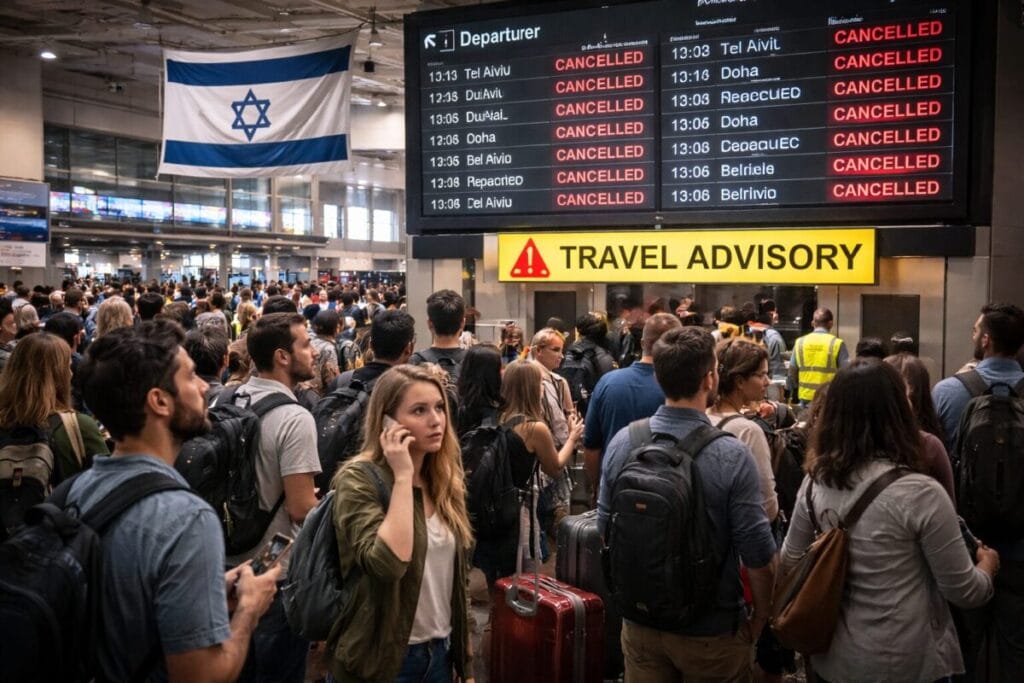
Rising tensions in the Middle East have triggered major disruptions across global travel networks. The escalating conflict involving Israel has forced governments to issue urgent travel advisories.
Airlines have cancelled flights across several regional airports. Travelers now face uncertainty, delays, and sudden route changes.
Authorities across Europe, North America, and Asia now warn citizens about travel risks in the region. Tourism experts expect continued disruptions as the situation evolves.
Many travelers have postponed trips to Israel and neighboring destinations. Others remain stranded while airlines adjust schedules and air routes.
The crisis now affects both tourism and international business travel across the Middle East.
Airspace Restrictions Cause Major Flight Disruptions
Airspace restrictions across Israel and nearby regions have disrupted thousands of flights. Airlines have cancelled or rerouted flights across the Middle East.
Major international hubs such as Dubai, Abu Dhabi, and Doha now handle unexpected travel disruptions. Passengers report delays, long queues, and last-minute schedule changes.
Airlines continue to revise routes to avoid restricted airspace. These adjustments often increase travel times and operational costs.
Some airlines have temporarily suspended flights to Israel and nearby destinations. Aviation authorities continue to monitor safety conditions in regional air corridors.
Travel experts warn that additional flight disruptions could occur if tensions increase.
Governments Issue Urgent Travel Advisories
Several governments have updated official travel advisories for the Middle East. Authorities now advise citizens to avoid non-essential travel to conflict-affected areas.
Foreign ministries across Europe and North America warn travelers about security risks. Officials emphasize the possibility of sudden travel disruptions and airport closures.
Security concerns extend beyond Israel to nearby regions. Authorities also warn travelers about unpredictable developments in neighboring countries.
Embassies continue to monitor conditions closely. Many diplomatic missions now provide frequent updates to citizens traveling in the region.
Travelers should review official advisories before making new bookings.
Airports Across the Region Face Operational Pressure
Airports across the Middle East now face increased operational pressure. Airlines continue to adjust schedules to handle changing airspace restrictions.
Dubai International Airport remains one of the busiest hubs in the world. Flight rerouting has increased congestion across several terminals.
Airports in Doha and Abu Dhabi have also experienced increased traffic disruptions. Airline staff work around the clock to assist passengers.
Travelers should expect longer waiting times at check-in counters and security checkpoints. Airlines encourage passengers to arrive earlier than usual.
Airport authorities continue to coordinate with airlines to maintain safe operations.
Passenger Rights During Flight Cancellations
Many travelers now seek clarity about their rights after flight cancellations. Airline regulations require carriers to provide several forms of assistance.
Passengers usually receive full refunds for cancelled flights. Airlines may also offer alternative travel arrangements when available.
Travelers stranded overnight may receive hotel accommodation and meals. Airlines typically coordinate these services directly with passengers.
However, conflicts and security crises often fall under extraordinary circumstances. In such situations airlines may not provide financial compensation.
Passengers should contact airlines directly to confirm available options.
Travel Insurance Limitations During Conflict
Travel insurance policies often exclude coverage related to war or armed conflict. Many travelers now review their insurance policies after recent disruptions.
Standard travel insurance typically covers medical emergencies and lost baggage. However, many policies exclude cancellation due to conflict risks.
Some specialized insurance policies provide additional protection for high-risk travel regions. These policies may include evacuation coverage and emergency assistance.
Travelers should always review insurance conditions before visiting politically sensitive destinations.
Insurance providers often publish updated guidance during international crises.
Governments Organize Repatriation Flights
Several governments have begun organizing evacuation and repatriation flights for citizens. Diplomatic missions now assist travelers who want to leave affected areas.
Embassies encourage citizens to register through official travel registration systems. These platforms help governments locate travelers during emergencies.
Countries across Europe have already announced special evacuation arrangements. Some governments coordinate flights with military or charter aircraft.
Repatriation efforts depend on airspace access and security conditions. Travelers should remain in contact with embassies for the latest information.
Government support remains critical during large international crises.
Safety Advice for Travelers in the Region
Travelers currently in the Middle East should remain cautious and informed. Authorities recommend following local government instructions at all times.
Tourists should avoid areas where military activity occurs. Visitors should also monitor official announcements and security alerts.
Hotels often provide safety updates and emergency guidance to guests. Travelers should communicate regularly with tour operators and local contacts.
Mobile communication apps help travelers receive real-time alerts. Emergency information often spreads quickly through official channels.
Preparation and awareness remain essential during unstable situations.
What Stranded Travelers Should Do Now
Travelers who remain stranded in the region should take immediate action. Several practical steps can help reduce stress during disruptions.
First, passengers should contact airlines to confirm flight status. Airlines may offer rebooking options or travel refunds.
Second, travelers should register with their embassy or consulate. Diplomatic offices can provide evacuation information and emergency assistance.
Third, travelers should secure temporary accommodation if flights remain unavailable.
Finally, visitors should monitor official announcements and airport updates.
These steps help travelers respond effectively during uncertain conditions.
Middle East Travel Outlook Remains Uncertain
The Middle East travel situation remains highly unpredictable. Aviation authorities continue to monitor developments across the region.
Tourism experts believe travel disruptions may continue in the coming weeks. Airlines will likely adjust routes until airspace conditions stabilize.
Travelers planning future trips to the region should remain cautious. Checking official travel advisories remains essential before booking flights.
Despite the crisis, global tourism networks continue adapting to new challenges.
For now, travelers should remain alert, informed, and prepared for ongoing disruptions across Middle East travel routes.
For more travel news like this, keep reading Global Travel Wire