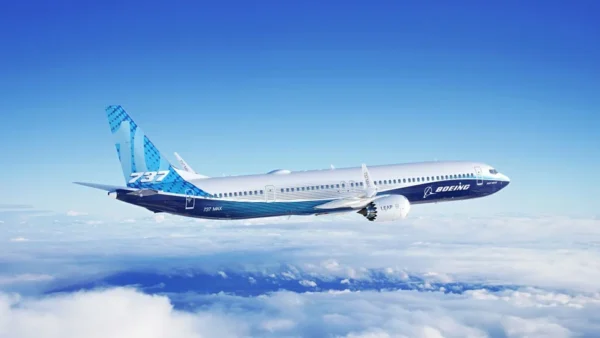
Lufthansa Group is advancing its long-term fleet renewal strategy by committing to 20 additional Boeing 737 MAX 10 aircraft.
The German aviation group exercised purchase options secured through an earlier agreement with Boeing. Deliveries are expected to begin during the early 2030s.
The new aircraft will support the gradual replacement of older Airbus A320-family jets across the group. Lufthansa aims to improve efficiency, increase capacity and prepare its European network for future passenger demand.
The commitment carries a list value of approximately US$3.4 billion. However, aircraft manufacturers and airlines commonly negotiate confidential commercial terms that differ from published list values.
Lufthansa expects to receive more than 250 new aircraft by 2035. The broader programme covers short-haul, medium-haul and intercontinental operations across its airline portfolio.
Existing Options Become Firm Commitments
Lufthansa secured the options through its 2023 agreement for 40 Boeing 737 MAX 8 aircraft.
That order included purchase rights for additional aircraft from the 737 MAX family. The group has now converted the first 20 options into firm commitments for the larger MAX 10 variant.
Aircraft options allow airlines to reserve future production opportunities while retaining flexibility over their fleet requirements. Carriers can later convert those rights when network plans and market conditions become clearer.
The latest decision demonstrates Lufthansa’s confidence in long-term European travel demand. It also provides the group with time to prepare crews, maintenance systems and airport operations before deliveries begin.
The aircraft will not produce an immediate change for passengers. Its influence will emerge gradually as deliveries enter the fleet during the next decade.
MAX 10 Brings Additional Capacity
The Boeing 737 MAX 10 is the largest aircraft within the 737 MAX family.
Its additional seating capacity makes it suitable for busy short- and medium-haul routes. Airlines can carry more passengers without necessarily adding another departure.
This capability could prove valuable at constrained airports where departure and arrival slots remain limited. Frankfurt and Munich both operate as major connecting hubs within Lufthansa’s network.
Larger single-aisle aircraft can help the airline maximise capacity on popular European services. They may also support efficient passenger connections into long-haul flights.
Lufthansa expects the MAX 10 to achieve approximately 30% lower fuel consumption than the older aircraft targeted for replacement. The group also anticipates around 20% lower unit costs through improved efficiency and higher seating capacity.
Actual performance will depend on factors including route length, configuration, passenger load and operating conditions.
Fleet Renewal Supports European Connectivity
Lufthansa Group operates an extensive European and international network through several airline brands.
These include Lufthansa Airlines, SWISS, Austrian Airlines, Brussels Airlines and Eurowings. Aircraft deployment decisions will depend on the operational needs of individual carriers and markets.
A more flexible narrow-body fleet could help the group adjust capacity across major cities and regional destinations. This becomes important during summer peaks, business travel periods and major international events.
European passengers depend on frequent short-haul services for direct trips and hub connections. Modern aircraft can support those networks while reducing the operating pressure associated with older fleets.
Newer jets generally require less fuel and can provide lower maintenance needs than previous generations. However, fleet transitions also require significant spending on training, engineering and infrastructure.
Business Travel Gains Long-Term Support
Corporate travel remains an important part of Lufthansa’s network model.
European businesses rely on aviation links connecting financial centres, manufacturing regions and technology markets. Dependable schedules also support connections to global destinations through Frankfurt, Munich and other group hubs.
The additional MAX 10 aircraft could increase capacity on routes with sustained corporate demand. Larger aircraft may allow Lufthansa to carry more passengers while preserving existing flight frequencies.
New aircraft can also support operational reliability when combined with effective maintenance and sufficient spare capacity.
Nevertheless, the benefits remain long-term. Business travellers will not experience the new aircraft until deliveries and operational deployment begin in the 2030s.
Tourism Markets Could Receive More Capacity
Fleet expansion also carries implications for European tourism.
Germany remains a major source market for international travel and an important destination for inbound visitors. Lufthansa’s network distributes passengers across European cities while feeding longer international journeys.
Additional aircraft capacity could help the group strengthen seasonal services and respond to demand during peak travel periods.
Tourism destinations may benefit if larger aircraft bring more visitors through existing airport slots. Hotels, attractions, restaurants and transport providers all depend on reliable air access.
The order also provides a long-term signal for airports and tourism partners planning future capacity. However, it does not confirm specific routes or destinations for the MAX 10.
Efficiency Becomes Central to Growth
Fleet renewal represents one of the most immediate methods available to airlines seeking lower fuel use per passenger.
Lufthansa’s strategy also includes sustainable aviation fuel, operational improvements, digital technology and better air-traffic management. New aircraft alone cannot remove aviation’s environmental impact.
However, replacing older jets can support more efficient operations while the wider sector develops additional decarbonisation solutions.
Higher seating capacity can lower fuel use and operating costs per passenger when airlines achieve strong load factors.
Order Shapes Lufthansa’s Future Network
The 20-aircraft commitment strengthens Boeing’s place within Lufthansa’s future narrow-body fleet, alongside the group’s extensive Airbus operations.
Using aircraft from multiple manufacturers can provide strategic flexibility. It can also increase complexity through separate training, maintenance and spare-parts requirements.
For Lufthansa, the decision forms part of a transformation extending well beyond one aircraft type.
As deliveries begin in the 2030s, the MAX 10s could support larger passenger volumes, replace ageing jets and strengthen European connectivity.
The Lufthansa fleet expansion ultimately signals confidence in future aviation growth. Its success will depend on efficient deployment, dependable operations and matching aircraft capacity with evolving business and leisure demand.
For more travel news like this, keep reading Global Travel Wire