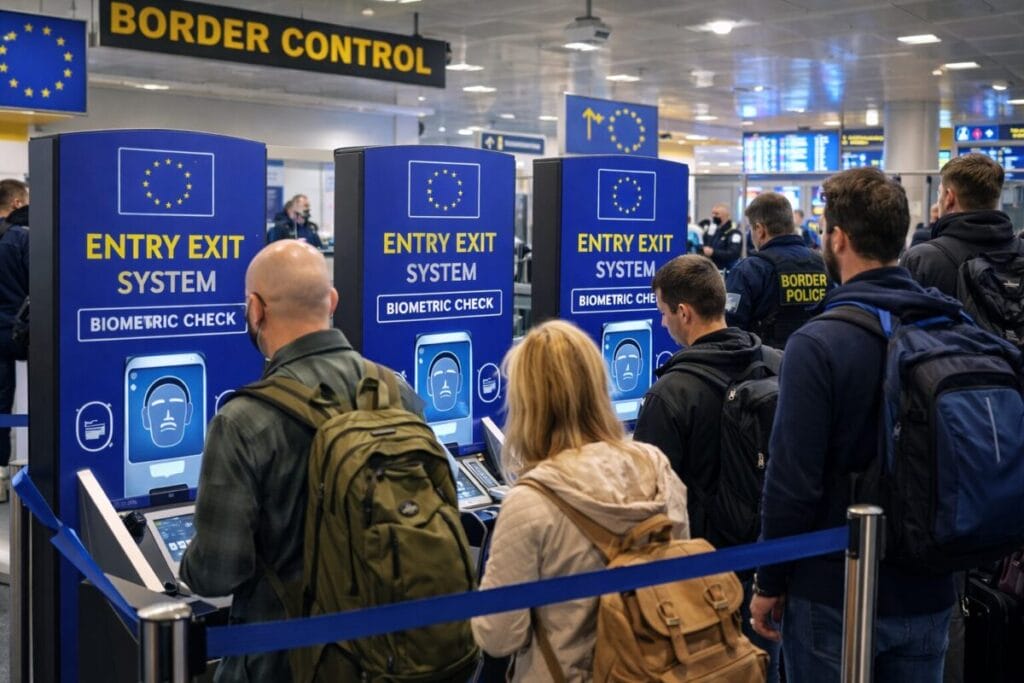
European countries have introduced a major transformation in border control procedures. The Netherlands, Italy, France, Germany, Spain, Portugal, Greece, and other nations will enforce biometric checks for travelers.
The new system will take effect across Europe on April 10, 2026. Authorities aim to strengthen border security and improve travel monitoring.
The policy will affect visitors entering the Schengen Area, including tourists from the United Kingdom.
Travelers must now provide fingerprints and facial photographs at border checkpoints. These biometric records will allow authorities to monitor entry and exit movements across European borders.
Officials believe the new system will modernize border management. However, travelers should expect temporary delays during the early rollout phase.
Entry Exit System Changes Border Procedures Across Europe
The new system is called the Entry Exit System, often referred to as EES. European authorities developed the system to replace traditional passport stamping procedures.
Under the EES framework, border officials will capture biometric data during a traveler’s first visit.
Officials will record fingerprints and a facial image. The system will store these details securely within European border databases.
Future visits will become faster once the traveler completes the initial registration.
The digital record will help authorities confirm traveler identities more quickly. This approach reduces reliance on manual passport stamps.
European policymakers view the EES as an important modernization step.
United Kingdom Travelers Face New Entry Requirements
British travelers will notice the biggest changes at European borders. Since the United Kingdom left the European Union, British citizens now enter the Schengen Area as third country nationals.
This classification requires additional identity checks at border crossings.
Under the new biometric system, UK tourists must register fingerprints and facial data during their first entry.
Border officials will then store this information digitally.
Future trips will require only verification of existing records.
Although the process may take extra time initially, authorities expect faster border clearance later.
Travel experts advise UK tourists to plan extra time for immigration procedures.
Schengen Countries Prepare for the Biometric Rollout
Twenty nine countries will implement the Entry Exit System. These nations form part of the Schengen travel zone.
The system will operate at airports, land borders, and seaports across Europe.
Countries participating in the rollout include Austria, Belgium, Bulgaria, Croatia, the Czech Republic, Denmark, Estonia, Finland, France, Germany, Greece, Hungary, Iceland, Italy, Latvia, Liechtenstein, Lithuania, Luxembourg, Malta, the Netherlands, Norway, Poland, Portugal, Romania, Slovakia, Slovenia, Spain, Sweden, and Switzerland.
These countries allow passport free travel between members. However, travelers entering from outside the zone must pass border control.
The biometric system will standardize these checks across all participating countries.
Airports Prepare for Increased Passenger Processing
Airports across Europe are preparing for the transition to biometric checks.
Many airports have installed self service kiosks to collect traveler information.
Passengers will scan passports, provide fingerprints, and capture facial photographs using these devices.
Border agents will verify the information before granting entry.
The technology aims to reduce processing times once travelers complete registration.
However, the early implementation stage may slow passenger movement through immigration.
Officials expect longer queues during busy travel periods.
European Authorities Emphasize Security Improvements
European policymakers introduced the biometric system primarily to strengthen border security.
The system allows authorities to track traveler movements more accurately.
Officials can identify visitors who overstay visas or violate entry conditions.
The technology also improves identity verification at border crossings.
Biometric checks reduce the risk of identity fraud and document forgery.
Law enforcement agencies will benefit from more reliable data during investigations.
The system also helps combat cross border crime and human trafficking.
European officials believe digital border control will improve safety across the continent.
Travel Industry Prepares for Adjustment Period
Airlines, travel agencies, and tourism operators have begun preparing passengers for the new system.
Industry experts warn that travelers may encounter longer immigration queues during the first months.
Many airports will process biometric data for millions of visitors for the first time.
Busy travel seasons could increase pressure on border control systems.
Summer tourism months often bring large passenger volumes to European airports.
Travel companies encourage passengers to arrive earlier for international flights.
Extra preparation can help reduce stress during airport procedures.
Technology and Digital Tools Aim to Speed Up Entry
European authorities have introduced several digital solutions to support the new system.
Some airports will offer mobile applications that allow travelers to pre register their biometric data.
Passengers can upload passport details and biometric information before arrival.
This step may reduce waiting time at immigration checkpoints.
Self service kiosks will also speed up the registration process.
Travelers will complete biometric scans before meeting border officers.
Authorities believe these tools will help improve efficiency once the system becomes routine.
Tourism Industry Monitors Potential Travel Impact
The tourism sector closely monitors how the new system affects visitor experiences.
Europe remains one of the most popular travel destinations worldwide.
Millions of tourists visit cities, beaches, and cultural attractions each year.
Travel delays during the rollout phase may affect traveler perceptions.
However, tourism officials believe long term benefits will outweigh early challenges.
Faster digital border processing could improve traveler experiences once the system stabilizes.
Security improvements may also increase traveler confidence.
Preparing for Europe’s New Border System
Travelers planning trips to Europe should prepare for the biometric entry process.
Passengers should allow extra time for immigration checks at arrival airports.
Carrying valid passports and travel documents remains essential.
Officials also recommend monitoring travel advisories and airport announcements.
Understanding the new system before traveling can help reduce confusion.
The Entry Exit System represents one of the largest border technology upgrades in Europe.
Although the transition may cause short term disruptions, the system promises long term efficiency.
European authorities believe biometric border control will shape the future of international travel.
For more travel news like this, keep reading Global Travel Wire