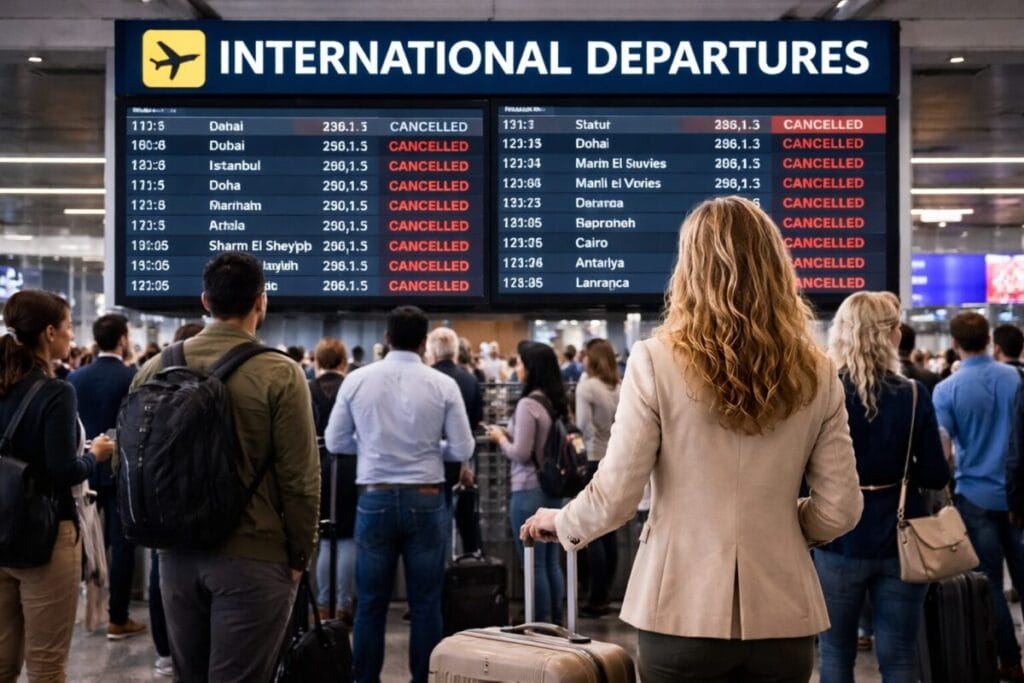
British travelers now face growing travel uncertainty as tensions across the Middle East affect international tourism routes. The UK government has issued updated travel guidance for several popular destinations. Officials warn that flight disruptions, airspace closures, and security concerns may affect travel plans.
The Foreign, Commonwealth and Development Office continues to monitor developments closely. Authorities urge travelers to review safety advice before booking or departing. These warnings cover destinations including Turkey, Cyprus, Qatar, Egypt, and the Maldives.
Airlines have already adjusted schedules across several international routes. Travel delays and cancellations now affect passengers flying between Europe, Asia, and the Middle East. Tourism operators expect these disruptions to influence travel demand during the coming months.
Many British travelers continue to choose Mediterranean and Indian Ocean destinations for holidays. However, the evolving situation now requires travelers to stay informed and flexible.
Government advisory urges caution for multiple destinations
The UK government issued updated travel guidance after conflict in the Middle East intensified. Authorities now advise British nationals to review travel plans carefully. Some destinations carry full travel restrictions while others require caution.
Officials strongly advise against travel to several countries experiencing active conflict. These locations include Afghanistan, Iran, Iraq, Syria, Yemen, and areas within Israel and Palestinian territories. Security risks remain extremely high in these regions.
Authorities emphasize the dangers posed by military activity and political instability. Travelers may face limited emergency support in these locations. Government guidance therefore urges citizens to avoid travel entirely.
Other countries currently allow only essential travel due to regional tensions. Bahrain, Kuwait, Qatar, and Saudi Arabia fall into this category. Officials warn that conditions could change quickly.
Certain border regions also present higher security risks. Travelers must monitor local guidance and security alerts when visiting these areas.
Popular holiday destinations face increased travel caution
Several destinations popular with British tourists remain open for travel but require increased vigilance. Cyprus continues welcoming visitors but authorities warn of potential security concerns. Tourists should remain alert in crowded areas and major attractions.
Turkey also remains a major tourism destination for UK travelers. However, officials advise travelers to avoid areas near the Syrian border. Military operations and regional tensions create heightened security risks there.
Egypt also attracts millions of tourists annually. Government guidance recommends caution when visiting certain regions outside major resorts. Travelers should follow local safety instructions and avoid restricted areas.
The Maldives also faces indirect travel disruptions due to regional airspace closures. Flights between Europe and Asia often cross Middle Eastern airspace. Airlines must adjust routes when conflicts affect these corridors.
Longer flight routes and schedule changes may therefore affect travel to island destinations. Travelers should confirm flight schedules before departure.
Airline route changes disrupt international travel
Airspace restrictions remain one of the largest challenges for global travel during regional conflict. Several countries closed sections of airspace due to safety concerns. Airlines must reroute flights to avoid restricted areas.
These adjustments increase flight times and operational costs for airlines. Some airlines also suspend services temporarily until conditions stabilize. Travelers may therefore experience delays or itinerary changes.
Major airlines across Europe and the Middle East continue monitoring the situation. Safety assessments guide decisions regarding flight operations. Airlines prioritize passenger safety when determining route adjustments.
Travelers should remain in contact with airlines for updated schedules. Many carriers now provide real-time notifications regarding delays and cancellations. Mobile applications also help passengers track changes quickly.
Flexible travel plans help reduce stress during periods of disruption.
British government organizes support for affected travelers
The UK government has launched support operations for citizens in affected regions. Emergency teams work closely with embassies and local authorities. These teams assist travelers who require help leaving unstable areas.
Authorities have arranged special flights to return British nationals safely. Charter flights recently evacuated travelers from several Middle Eastern locations. Additional support services remain available through diplomatic missions.
Officials advise citizens to register travel plans through government travel services. Registration allows authorities to contact travelers during emergencies. Communication remains essential during rapidly changing situations.
Travelers already present in affected areas should follow official safety instructions. Local authorities and embassy teams provide updated guidance regularly.
Global tourism industry responds to regional tensions
Tourism markets often react quickly to geopolitical instability. Travelers tend to postpone or cancel trips during periods of uncertainty. Destinations connected to affected regions may experience reduced visitor demand.
Travel companies now adjust marketing strategies and booking policies. Flexible reservations help travelers adapt to sudden schedule changes. Many tour operators also expand insurance coverage options.
Airlines and hotels also introduce flexible cancellation policies during unstable periods. These policies encourage travelers to book with greater confidence. Flexibility remains a key factor in maintaining tourism demand.
Tourism boards continue monitoring visitor trends across affected destinations. Officials hope improved stability will restore normal travel patterns soon.
Travel experts recommend preparation and awareness
Travel experts encourage travelers to stay informed before international trips. Government travel advisories provide important safety updates. Travelers should check official guidance before making reservations.
Travel insurance also plays a crucial role during uncertain travel periods. Comprehensive coverage protects travelers from cancellations and disruptions. Policies may cover flight changes caused by geopolitical events.
Passengers should also verify airline policies regarding delays or rerouting. Understanding these rules helps travelers respond quickly during unexpected disruptions.
Travelers should also monitor news updates and airline communications. Real-time information helps travelers adapt travel plans efficiently.
Global travel adapts to evolving geopolitical conditions
International travel often responds quickly to global events and security developments. Airlines, tourism boards, and governments cooperate closely during crises. These partnerships help protect travelers while maintaining tourism activity.
Modern travel technology also improves communication between travelers and airlines. Mobile alerts, digital boarding passes, and travel apps provide immediate updates. These tools help travelers navigate disruptions more easily.
Tourism leaders remain optimistic about long-term travel demand. Travelers continue seeking global experiences despite short-term challenges. The industry therefore continues investing in safety and flexibility.
The current situation highlights the importance of travel awareness and preparation. Travelers who monitor official guidance can still enjoy safe international trips.
As global travel conditions evolve, safety and adaptability will remain central priorities for travelers and tourism authorities alike.
For more travel news like this, keep reading Global Travel Wire