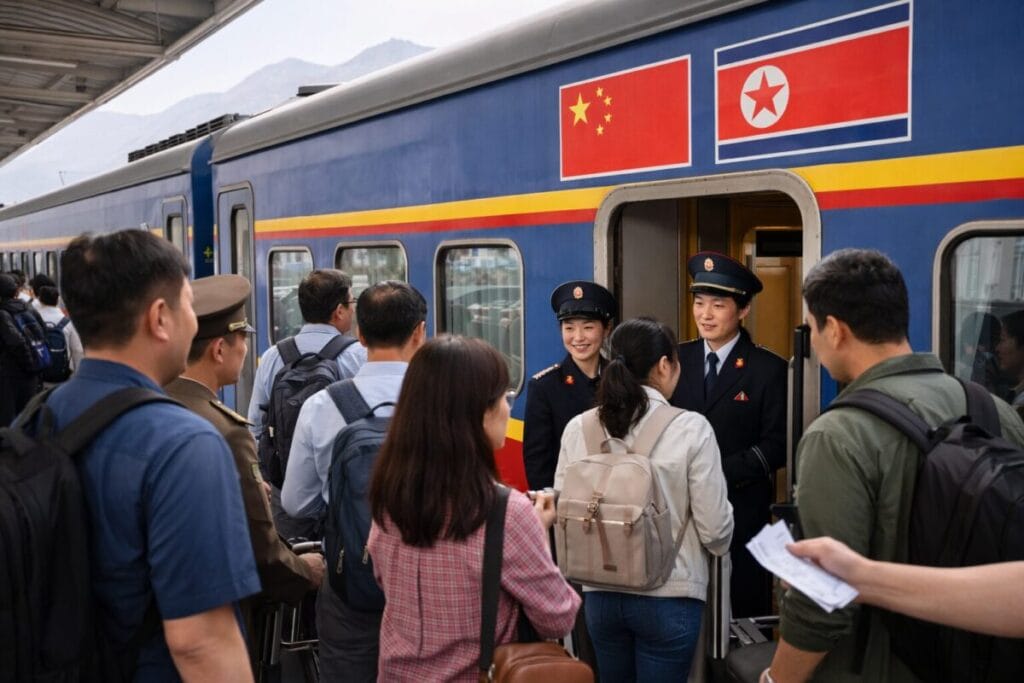
China and North Korea have restarted the historic passenger train service connecting Beijing and Pyongyang after a six-year suspension. The revived railway link signals stronger economic, diplomatic, and transport cooperation between the two neighboring countries. Officials expect the reopening to improve regional connectivity and support business travel across East Asia.
The train service once served as a major travel corridor linking the Chinese capital with North Korea’s capital. Authorities suspended the route in 2020 after the COVID-19 pandemic triggered strict border closures. Now both governments have revived the railway connection to rebuild cross-border movement and strengthen long-standing bilateral relations.
Travel demand quickly surged after officials announced the train’s return. Tickets for the first scheduled journey sold out before departure. This early demand highlights the importance of the railway route for business travelers and government delegations.
Although tourism access remains limited, the revived rail connection could influence future travel policies between the two countries.
Historic railway route reconnects Beijing and Pyongyang
The Beijing–Pyongyang railway route has played a vital role in regional transport for decades. The train connects China’s political and economic center with North Korea’s administrative capital. Passengers travel through northeastern China before crossing the border into North Korea.
Before the pandemic, the train operated regularly between the two capitals. Business travelers, diplomats, and journalists often used the service. The railway also allowed limited tourism exchanges between the countries.
When the pandemic began in early 2020, North Korea sealed its borders to prevent virus transmission. International transport connections stopped almost immediately. Rail services between China and North Korea remained suspended for several years.
The return of the train service now signals renewed cooperation between the two governments. Authorities from both countries worked closely to restore operations safely.
Strong demand emerges for the first train departure
Travel demand surged as soon as the railway reopened for passengers. Tickets for the first train journey from Beijing to Pyongyang sold out rapidly. Travelers with approved visas rushed to secure seats on the historic route.
Most passengers on the first train held business visas issued by North Korean authorities. Entrepreneurs, diplomats, journalists, and trade officials formed the majority of travelers. Many hoped to strengthen economic ties and explore new partnership opportunities.
The high demand demonstrates the strategic importance of this rail connection. Business communities in both countries rely on reliable transport links. The revived train route allows faster travel compared with complicated air connections.
Officials confirmed additional train departures in the following weeks. Passengers who missed the first journey could book seats on upcoming services.
New railway schedule improves cross-border connectivity
Railway authorities in China have announced a regular operating schedule for the revived train service. The Beijing–Pyongyang train will run four times each week. Scheduled departures will occur on Mondays, Wednesdays, Thursdays, and Saturdays.
This timetable allows travelers to move more easily between the two capitals. Business travelers and government officials can now plan trips more efficiently. The railway link restores an important transportation option between China and North Korea.
Another rail connection will operate between the Chinese border city of Dandong and Pyongyang. This route will run daily and provide additional travel flexibility. Dandong serves as the main border gateway between the two countries.
The city has long supported cross-border trade and passenger travel. Freight trains regularly transport goods through Dandong into North Korea. The revived passenger service now complements these trade routes.
Tourism remains restricted despite railway reopening
Despite the restored railway connection, North Korea continues to restrict foreign tourism. The country maintains strict entry rules for most international travelers. Only limited groups receive permission to visit.
Before the pandemic, Chinese tourists represented the largest share of visitors to North Korea. Many travelers entered the country by train from Chinese cities. Tour companies arranged guided tours that followed strict government regulations.
However, the government has not fully reopened the country to global tourism. Authorities still limit access for travelers from Western nations. Organized tour groups remain rare under current policies.
Travel agencies continue monitoring developments in North Korea’s tourism sector. Many companies hope the reopened railway could signal gradual changes in travel policy.
Cultural events remain uncertain for international visitors
Cultural and sporting events once provided rare opportunities for foreign visitors to enter North Korea. One of the most famous events was the annual Pyongyang Marathon. This event allowed international runners to compete alongside local athletes.
The marathon previously attracted travelers from around the world. Participants often combined the race with guided tours of Pyongyang and nearby cultural sites. The event created one of the few tourism openings in the country.
However, organizers recently announced the cancellation of the upcoming marathon. Officials did not provide a clear explanation for the decision. The cancellation disappointed travelers and tourism professionals.
This decision highlights the cautious approach North Korea continues to take toward foreign interaction. Authorities prioritize domestic stability and controlled engagement with outside visitors.
Economic cooperation strengthens through rail connectivity
The revived railway connection strengthens economic cooperation between China and North Korea. China remains North Korea’s largest trading partner and economic supporter. Reliable transport links play a crucial role in maintaining these ties.
Railway corridors allow the movement of goods, materials, and personnel between the countries. Passenger trains support diplomatic meetings and commercial negotiations. These connections help maintain stability in regional trade networks.
Experts also note the strategic importance of railway diplomacy in East Asia. Transport infrastructure often supports broader political relationships. The Beijing–Pyongyang train represents both a transportation service and a diplomatic symbol.
The restored rail route demonstrates continued cooperation between the two governments.
Future tourism prospects remain uncertain but hopeful
The return of the passenger train between Beijing and Pyongyang represents an important milestone in regional connectivity. The route restores a historic transportation corridor after several years of suspension. Business travelers and officials already benefit from improved mobility.
However, North Korea’s tourism policies remain cautious and tightly controlled. The country continues limiting foreign visitors under strict regulations. Tourism operators therefore remain uncertain about future opportunities.
Despite these challenges, the railway revival offers a glimpse of potential change. Improved transport links could support gradual growth in tourism and cultural exchange. Observers will closely watch how travel policies evolve in the coming years.
For now, the Beijing–Pyongyang train stands as a powerful symbol of renewed connectivity between China and North Korea.
For more travel news like this, keep reading Global Travel Wire