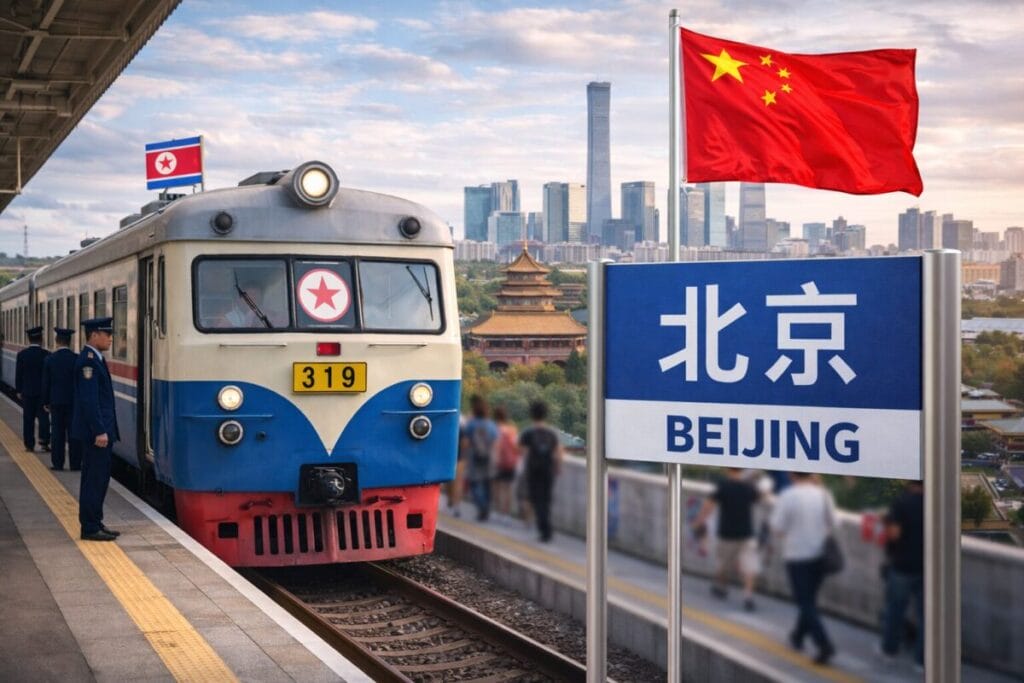
North Korea has resumed passenger train services connecting its capital Pyongyang with Beijing, marking a significant step toward restoring international travel links between the Democratic People’s Republic of Korea and China. The reopening of the rail route signals renewed efforts to strengthen cross-border connectivity, boost tourism potential, and revive regional transportation networks that were disrupted in recent years.
The train service between the two capitals has historically served as one of the most important transportation corridors linking North Korea with the outside world. Its return is expected to support tourism activity, facilitate cultural exchange, and encourage travel between the neighboring countries.
For travelers interested in exploring East Asia through rail journeys, the revived connection also highlights the continuing importance of train travel as an alternative to air transport.
A Historic Rail Link Returns
The railway connection between Pyongyang and Beijing has long been an essential route for diplomatic travel, tourism groups, and business delegations. The train traditionally travels through several key Chinese cities before arriving in Beijing, providing passengers with a comfortable and scenic way to move between the two nations.
The service had been suspended for several years due to international travel disruptions and border restrictions. Its resumption indicates gradual progress toward restoring transportation links and reopening regional tourism pathways.
Officials involved in the railway operations view the revival of the route as a practical step in re-establishing cross-border movement and improving connectivity between China and North Korea.
Rail Travel Gains Attention in East Asia
The renewed train service also reflects a broader trend across Asia where rail travel is gaining popularity among travelers seeking efficient and environmentally friendly transportation options.
Trains offer a unique travel experience compared with air travel. Passengers can observe landscapes, interact with fellow travelers, and experience the gradual transition between regions and cultures.
For tourists exploring East Asia, rail journeys often provide an opportunity to see historic towns, agricultural regions, and mountain scenery that might otherwise be missed when traveling by plane.
The Pyongyang-Beijing railway route has historically attracted travelers interested in experiencing both the cultural heritage of China and the distinctive environment of North Korea.
Beijing Remains a Major Tourism Gateway
The resumption of passenger train services to Beijing further strengthens the Chinese capital’s position as one of Asia’s most important tourism gateways.
Beijing attracts millions of visitors each year due to its rich historical heritage, iconic landmarks, and vibrant modern culture. Famous attractions such as the Forbidden City, the Great Wall, the Temple of Heaven, and the Summer Palace continue to draw travelers from around the world.
The city also serves as a major transportation hub, connecting international visitors to other destinations throughout China via high-speed rail networks, domestic flights, and intercity trains.
With the revival of the Pyongyang rail route, travelers arriving from North Korea can once again reach Beijing by land, expanding travel opportunities between the two countries.
Cultural Exchange Through Rail Connectivity
Railway links have traditionally played an important role in cultural exchange across East Asia. Passenger trains not only transport travelers but also help facilitate educational visits, cultural tours, and diplomatic engagement.
The Pyongyang-Beijing route has historically been used by organized tourism groups interested in learning about the region’s history and political landscape. Guided travel experiences often include visits to historic monuments, museums, and cultural sites.
The return of the service may gradually encourage renewed tourism cooperation between China and North Korea as international travel continues to recover.
Tour operators specializing in regional travel believe that rail journeys can offer travelers deeper insight into local culture compared with faster forms of transportation.
Economic Benefits for Tourism and Hospitality
The reopening of the train connection may also provide economic benefits for tourism industries in both countries. Cross-border visitors typically contribute to local economies through hotel stays, guided tours, transportation services, and dining experiences.
Cities along the railway route may also see increased activity as travelers stop to explore regional attractions before continuing their journeys.
Tourism analysts suggest that improved transportation infrastructure plays a vital role in encouraging international travel. Reliable rail connections can make destinations more accessible and encourage visitors to extend their trips to additional cities.
As travel demand across Asia continues to recover, transportation links such as the Pyongyang-Beijing train may help stimulate regional tourism growth.
Sustainable Travel Opportunities
Rail transportation is widely recognized as one of the most environmentally responsible ways to travel between cities. Compared with air travel, trains produce significantly lower carbon emissions per passenger.
For environmentally conscious travelers, rail journeys offer a way to explore destinations while reducing the environmental impact of travel.
China has invested heavily in rail infrastructure over the past two decades, building one of the world’s largest railway networks. The emphasis on rail travel aligns with broader efforts to encourage sustainable tourism and reduce reliance on short-distance flights.
The renewed passenger service between Pyongyang and Beijing highlights how rail travel can support both tourism development and environmental goals.
Looking Ahead for Regional Travel
The resumption of the Pyongyang-Beijing train route could signal further improvements in regional transportation connectivity in the future. Tourism experts believe that stronger rail links across East Asia could encourage multi-destination travel experiences for international visitors.
Travelers increasingly seek immersive journeys that allow them to explore several destinations within one region. Rail networks are well suited for this type of travel because they connect city centers and provide flexible travel schedules.
While international tourism to North Korea remains limited and carefully regulated, the revival of passenger train services demonstrates the continuing importance of transportation infrastructure in supporting travel opportunities.
A Symbolic Step Toward Reconnecting Routes
For the tourism and travel industry, the return of the Pyongyang-Beijing passenger train represents more than just a transportation update. It symbolizes a gradual reopening of historic travel corridors that once played a vital role in connecting cultures and economies across East Asia.
As global tourism continues to recover and travelers seek meaningful experiences, rail journeys such as this one may once again become an important way for visitors to explore the region.
The renewed train service highlights how rail travel can combine practicality, sustainability, and cultural discovery—offering travelers a distinctive way to experience both China and North Korea through one of Asia’s most historic transportation links.
For more travel news like this, keep reading Global Travel Wire