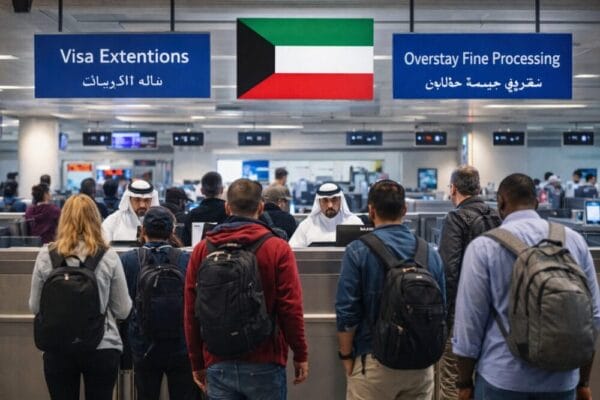
Kuwait has introduced emergency visa relief measures for thousands of travelers stranded due to widespread airspace closures across the Middle East. The country announced automatic one-month extensions for visit visas along with a complete waiver of overstay fines, providing urgent support to foreign visitors unable to leave the region as flights remain disrupted.
The move comes as geopolitical tensions in the Middle East continue to affect international aviation routes, forcing airlines to cancel, delay, or reroute flights. As a result, many travelers have found themselves unable to depart from countries in the Gulf region.
Governments including Germany, the United States, Italy, Canada, the United Kingdom, Russia and China have been coordinating with Kuwaiti authorities to assist their citizens caught in the travel disruption. The diplomatic response highlights a growing international effort to manage the humanitarian and logistical challenges created by the aviation crisis.
Kuwait Announces Automatic Visa Extensions for Visitors
Kuwait’s immigration authorities introduced the temporary visa relief policy to prevent travelers from facing penalties due to circumstances beyond their control. Under the new policy, visit visas that were scheduled to expire from late February 2026 onward will automatically receive a one-month extension.
Importantly, the measure does not require travelers to submit additional paperwork or visit immigration offices. The extension is applied automatically through Kuwait’s immigration system.
Authorities also confirmed that all overstay fines connected to the current travel disruptions will be waived. This decision removes financial penalties that stranded visitors might otherwise face if they remain in the country longer than originally permitted.
The policy applies to a wide range of travelers including tourists, business visitors, and expatriate family members who entered Kuwait on temporary visas.
Global Flight Disruptions Leave Thousands Stranded
The travel crisis emerged after escalating regional tensions led to the closure or restriction of several airspace corridors across the Middle East. International airlines have had to suspend flights, reroute aircraft, or cancel services altogether as safety concerns increased.
Airspace closures in parts of the Gulf and neighboring regions have had a cascading effect on global aviation networks. Major airline routes connecting Europe, Asia, and North America frequently pass through Middle Eastern airspace, meaning disruptions quickly impact international travel.
As flights were grounded or diverted, travelers from many countries became stranded in Kuwait and neighboring destinations while waiting for alternative routes or the resumption of normal operations.
The situation has placed pressure on governments and embassies to assist citizens who cannot immediately return home.
Germany Supports Nationals Stranded in Kuwait
Germany has been among the countries actively coordinating with Kuwaiti authorities to assist its citizens affected by the travel disruption. German embassy officials in Kuwait have been providing guidance to travelers whose visas were approaching expiration.
The automatic visa extension ensures that German nationals stranded in the country can remain legally without facing penalties while waiting for flights to resume.
German authorities have also been working with European partners to monitor developments in the region and ensure that affected travelers receive timely updates on travel options and safety advisories.
United States Coordinates Emergency Assistance
The United States has also welcomed Kuwait’s decision to provide visa relief for foreign nationals. With thousands of American citizens traveling through the Gulf each year for business, tourism, and government assignments, the disruption has affected a significant number of travelers.
U.S. diplomatic staff in Kuwait have been assisting Americans who are unable to leave the country due to flight cancellations. Embassy officials have provided guidance on visa status, travel advisories, and possible evacuation routes if commercial aviation remains disrupted.
The visa extension ensures that American visitors will not face overstay penalties while waiting for travel conditions to stabilize.
Italy, Canada and the United Kingdom Respond to the Travel Crisis
European and North American governments have also been working together to support their nationals affected by the disruption.
Italy’s foreign affairs authorities acknowledged Kuwait’s humanitarian approach and emphasized the importance of international cooperation during travel emergencies. Italian embassy officials have been helping stranded tourists and expatriates navigate the situation while flights remain limited.
Similarly, Canada and the United Kingdom have issued guidance to their citizens in Kuwait, advising travelers to remain patient while aviation operations gradually recover.
Both governments have also maintained close communication with local authorities to ensure their citizens benefit from the visa extension and overstay fine waiver.
Russia and China Provide Support for Nationals
Russia and China, which maintain strong economic and diplomatic ties with Kuwait, have also been assisting their citizens affected by the flight disruptions.
Russian nationals working in engineering, construction and energy sectors form a notable expatriate community in Kuwait. Russian authorities have welcomed the visa relief measures as an important safeguard for workers and their families.
China has also expressed appreciation for Kuwait’s support. Chinese diplomats in the country have been helping coordinate assistance for business travelers, students and expatriates while exploring options for charter flights once aviation conditions improve.
Regional Cooperation Helps Stabilize the Situation
Kuwait’s decision to extend visas has been widely viewed as a humanitarian step aimed at easing stress on stranded travelers during a rapidly evolving crisis.
Other countries in the Gulf region have also introduced temporary relief measures, including visa extensions and flexible immigration rules for visitors unable to depart due to the aviation disruption.
These coordinated responses highlight how regional governments and international partners can work together during global travel emergencies.
Travelers Advised to Monitor Updates
While the visa extensions provide immediate relief, travelers are still being encouraged to stay informed about airline schedules and regional security developments.
Airlines are gradually adjusting routes and evaluating safe flight corridors, but full restoration of normal travel operations may take time depending on geopolitical conditions.
Embassies and aviation authorities continue to monitor the situation closely while providing updates to affected travelers.
Kuwait’s Relief Measures Offer Stability Amid Travel Uncertainty
For thousands of visitors stranded by the Middle East airspace crisis, Kuwait’s automatic visa extensions and fine waivers have provided critical breathing room.
The policy ensures that travelers can remain legally in the country while waiting for flights to resume, reducing stress during an already uncertain travel situation.
As governments across Europe, North America and Asia coordinate their response, the international cooperation surrounding Kuwait’s decision reflects a shared commitment to protecting travelers during one of the region’s most significant aviation disruptions in recent years.
For more travel news like this, keep reading Global Travel Wire