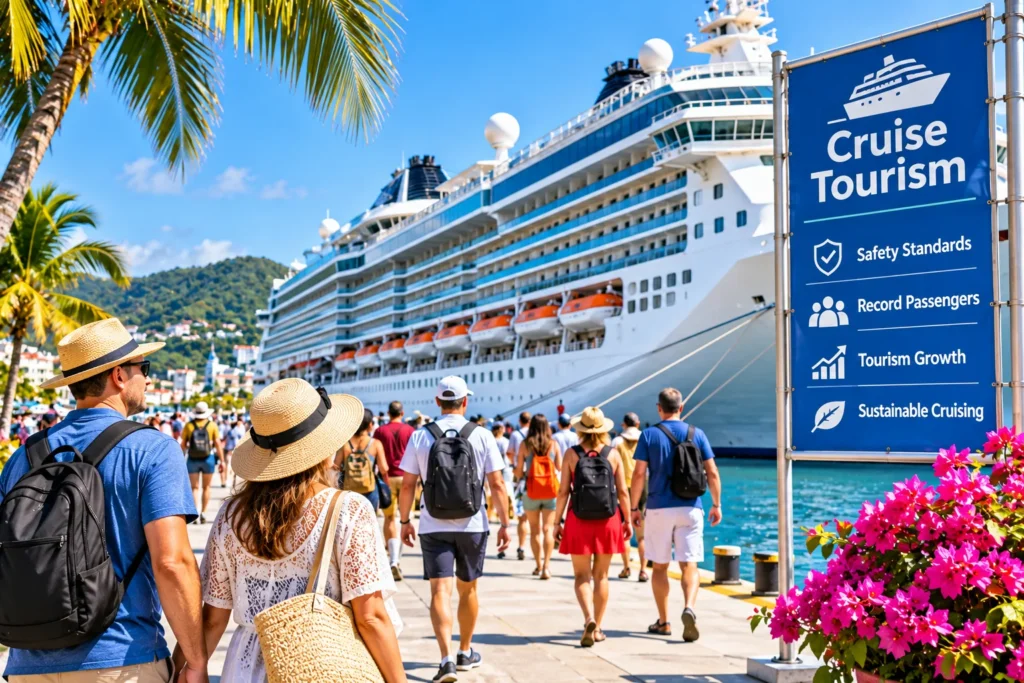
Global cruise tourism continues to chart unprecedented expansion in 2026, defying sensational headlines about isolated maritime incidents as millions of travelers embrace the convenience, value, and multi-destination appeal of ocean and river voyages. According to official industry statistics published by the Cruise Lines International Association, global ocean-going cruise passenger volume reached a historic record of 37.3 million travelers in 2025—representing a 7.7 percent increase over 2024—and is projected to climb further to 39.1 million passengers across 2026.
While rare operational disruptions, onboard medical emergencies, or criminal investigations periodically capture intense public attention, comprehensive safety and public health records confirm that modern cruising remains one of the most tightly regulated and statistically secure modes of international travel. Supported by strict maritime oversight, transparent sanitation inspections, and predictable all-inclusive holiday budgeting, cruise vacations are attracting both loyal repeat guests and a rapidly growing wave of younger and multi-generational travelers.
Record Passenger Demand and Changing Traveler Demographics
Official market data underscores the sustained momentum driving cruise passenger growth worldwide. Between 2010 and 2019, global ocean cruise ridership more than doubled from 14.8 million to 29.7 million passengers before rebounding past pre-pandemic levels to exceed 37 million travelers in 2025. North America remains the largest source market, generating 22 million cruise guests in 2025—including 20.6 million travelers from the United States—while Europe contributed nearly 9 million passengers and Asian source markets surpassed 3 million travelers.
Cruising’s enduring appeal rests largely on a straightforward logistical advantage: travelers unpack once while exploring multiple ports, countries, and cultural regions without repeatedly checking into hotels or navigating connecting flights. That seamless itinerary model resonates equally with senior travelers seeking effortless multi-stop journeys on ocean liners and European river vessels, as well as families with children who value predictable upfront vacation costs covering accommodations, dining, and onboard entertainment. Official demographic surveys indicate that roughly one-third of all cruise trips in 2026 are multi-generational family holidays, while approximately 35 percent of global cruise passengers are under the age of 40.
Maritime Health Safety and CDC Oversight Outpace Land-Based Norms
Questions surrounding onboard hygiene and infectious illness remain closely monitored by public health authorities, particularly in the wake of past global health challenges. In the United States, the Centers for Disease Control and Prevention oversees cruise ship hygiene through its Vessel Sanitation Program, which conducts unannounced environmental health inspections on passenger vessels calling at U.S. ports and mandates immediate reporting whenever gastrointestinal symptoms reach defined thresholds.
Official public health data demonstrates that onboard illness outbreaks represent a tiny fraction of total cruise travel. Across more than 20 million passengers embarking from North American ports annually, the Centers for Disease Control and Prevention recorded 18 acute gastroenteritis outbreaks involving 2,041 ill individuals in 2024 and 23 outbreaks across all of 2025—equating to well below one-tenth of one percent of total cruise guests. Public health specialists note that cruise vessels are not inherently riskier than commercial flights, motorcoach tours, or crowded land-based resorts; rather, mandatory onboard medical logging detects and contains mild illnesses far faster than in land-based hotels or restaurants where guests disperse without centralized reporting.
Reinforcing those regulatory safeguards, cruise operators have embedded visible hygiene protocols directly into daily onboard routines. Across major family and luxury fleets, crew members actively distribute sanitizing wipes at dining entrances, guide guests to dedicated handwashing stations prior to buffet service, and maintain rigorous surface disinfection schedules throughout public lounges and staterooms.
High Repeat Intent Anchors Global Maritime Investment
Ultimately, traveler satisfaction continues to outweigh isolated negative headlines. According to the Cruise Lines International Association’s 2026 global state-of-the-industry findings, nearly 90 percent of cruisers state that they intend to sail again—the highest return-intent rate ever recorded by the association—while 60 percent of recent cruise passengers later return to a destination they first discovered during a port call.
Backed by this sustained consumer confidence, global cruise lines are investing heavily in next-generation fleets, shore-power infrastructure, and sustainable marine technologies, with 66 new member vessels scheduled for delivery over the coming years. For millions of holidaymakers worldwide, the combination of effortless multi-port exploration, transparent safety standards, and strong overall value keeps global cruise tourism sailing firmly at full speed.
For more travel news like this, keep reading Global Travel Wire