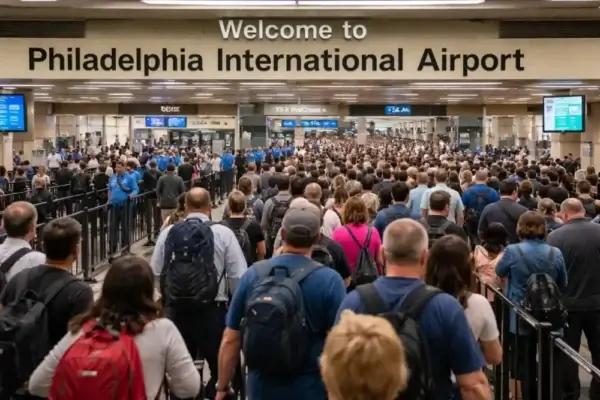
Philadelphia International Airport is experiencing major travel disruptions due to ongoing federal government shutdown impacts. TSA checkpoint closures have forced authorities to change security operations across the airport. As a result, travelers now face longer lines and altered screening routes.
The airport remains open, but fewer checkpoints have increased pressure on existing facilities. Passenger flow has shifted significantly, which has created congestion during peak hours. Travelers must now adjust their plans to manage these changes.
TSA Checkpoint Closures Reshape Airport Operations
Airport officials have closed several TSA checkpoints due to staffing shortages. The closures started with Terminal C and quickly expanded to other areas. Terminals F and A-West also saw shutdowns in recent days.
Currently, only a limited number of checkpoints remain open for all passengers. These include checkpoints at D/E, A-East, and Terminal B. Travelers can still access all terminals after security, but they must follow new routes.
This consolidation has forced passengers to rely on fewer entry points. As a result, congestion has increased at operational checkpoints.
Crowds Increase as Passenger Flow Changes
Fewer checkpoints have shifted large crowds into smaller areas. This change has created longer queues and slower movement through security. Travelers now spend more time waiting before reaching their gates.
Although delays remain manageable compared to larger airports, congestion still affects many passengers. Authorities have urged travelers to arrive earlier than usual. Early arrival helps reduce the risk of missing flights during busy periods.
Passengers must also prepare for sudden changes in checkpoint availability. Flexibility has become essential for smooth travel through the airport.
Staffing Shortages Drive Operational Challenges
The federal shutdown has created staffing shortages across transportation sectors. TSA workers have faced increased pressure due to reduced workforce availability. Many employees have taken leave or reported difficulties during the shutdown period.
Remaining staff must handle higher workloads while maintaining strict security standards. This situation has created a challenging work environment for frontline officers. Despite these difficulties, TSA teams continue to manage passenger flow efficiently.
Airlines have stepped in to support airport staff during this period. Some carriers have provided meals and assistance to TSA workers. These efforts have helped maintain morale and cooperation across airport operations.
TSA PreCheck Services Face Limitations
Travelers using TSA PreCheck have also experienced changes at Philadelphia International Airport. The service now operates at limited checkpoints only. Passengers can access PreCheck lanes at D/E and A-East locations.
Terminal B currently does not offer TSA PreCheck services. This change has forced frequent travelers to adjust their usual routines. Travelers should confirm checkpoint availability before arriving at the airport.
Planning ahead can help reduce confusion and delays. Awareness of these changes ensures a smoother travel experience.
Comparison with Other Major US Airports
Philadelphia International Airport has managed disruptions better than some larger US hubs. Airports in New York and Los Angeles have reported more severe delays. Higher passenger volumes in those cities have worsened congestion.
Philadelphia has maintained relatively stable operations despite reduced staffing. Airport officials have coordinated closely with airlines and security teams. This collaboration has helped prevent widespread chaos.
However, passengers still experience inconvenience due to checkpoint closures. The situation remains challenging but manageable compared to other locations.
What Travelers Should Do Now
Travelers should take proactive steps before heading to the airport. Arriving early is the most important strategy during this disruption. Extra time allows passengers to navigate longer lines and changing routes.
Passengers should monitor updates from airport authorities and airlines. Real time information can help travelers adjust plans quickly. Staying informed reduces stress and improves overall travel experience.
Travelers should also check terminal assignments and security options in advance. This preparation helps avoid confusion at the airport.
Philadelphia Shows Resilience During Crisis
Philadelphia has demonstrated strong resilience during this challenging period. Airport staff, airlines, and passengers have worked together to manage disruptions. Despite reduced resources, operations continue without major breakdowns.
The city has a history of handling transportation challenges effectively. This situation highlights its ability to adapt under pressure. Authorities have focused on maintaining safety and efficiency for all travelers.
Support from airlines and cooperation among staff have played a key role. These efforts have helped maintain order during a difficult time.
Future Outlook for Airport Operations
The situation at Philadelphia International Airport remains uncertain while the shutdown continues. Authorities will adjust operations based on staffing availability and passenger demand. Travelers should expect ongoing changes in checkpoint operations.
Airports across the United States continue to face similar challenges. The shutdown has exposed vulnerabilities in airport staffing and infrastructure. Long term solutions may focus on improving resilience and flexibility.
For now, travelers must remain prepared for delays and adjustments. Careful planning and awareness will help ensure smoother journeys through Philadelphia.
For more travel news like this, keep reading Global Travel Wire