International travel is facing mounting challenges as escalating tensions in the Middle East continue to disrupt global air routes. The United Kingdom has issued an urgent advisory highlighting the growing impact of airspace restrictions, with countries such as New Zealand, Australia, India, Malaysia, Thailand, and Singapore among those affected.
Although these destinations are geographically distant from the conflict zone, the interconnected nature of global aviation means they are experiencing significant delays, cancellations, and schedule changes. The situation has created widespread uncertainty for travellers, airlines, and tourism industries worldwide.
Airspace Closures Create Ripple Effect Across Continents
The primary cause of the disruption lies in restricted or closed airspace across parts of the Middle East. As geopolitical tensions intensify, several countries in the region have imposed limitations on civilian air traffic for safety reasons.
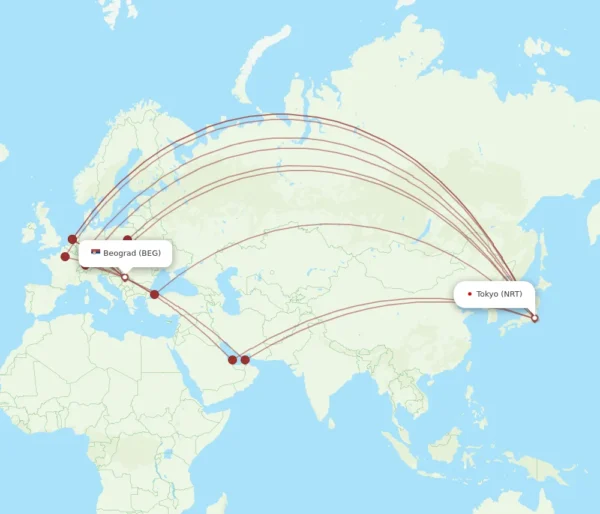
These closures are forcing airlines to reroute flights that would normally pass through these corridors. Long-haul routes connecting Europe with Asia-Pacific and Oceania are particularly affected, as they often rely on Middle Eastern airspace for efficient travel paths.
With airlines now diverting aircraft around restricted zones, flight durations are increasing, operational costs are rising, and scheduling complexities are becoming more difficult to manage.
Long-Haul Destinations Face Delays and Uncertainty
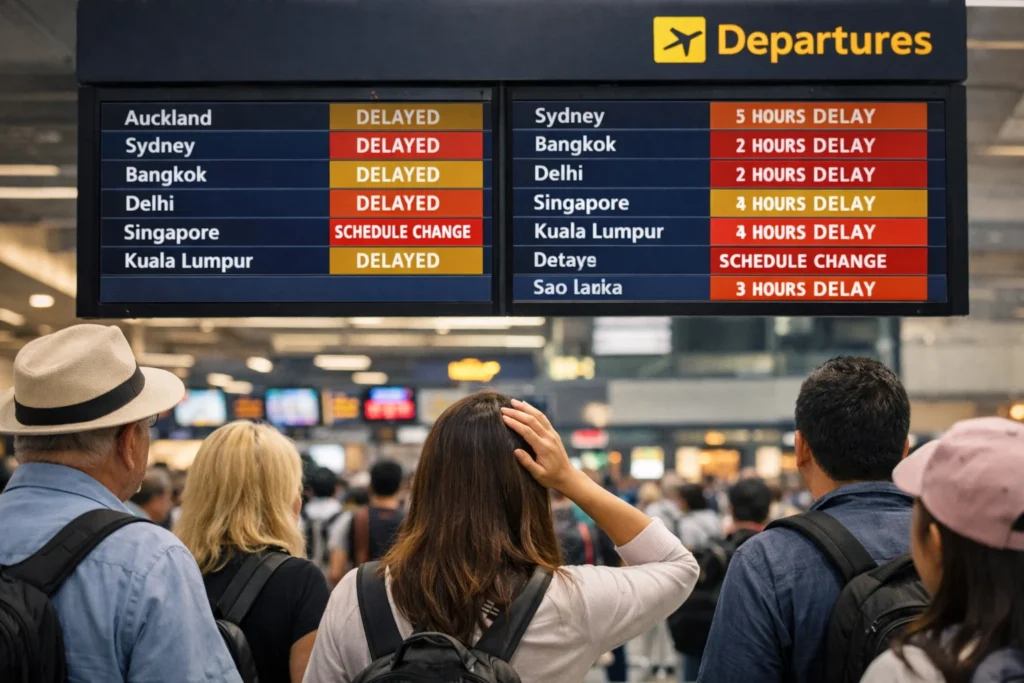
Travellers heading to destinations such as New Zealand, Australia, India, Thailand, and Singapore are experiencing the indirect consequences of these disruptions. Flights on these routes are being delayed, rescheduled, or, in some cases, cancelled altogether.
In addition to these major travel hubs, several other destinations across Asia, the Pacific, and parts of Eastern Europe are also affected. Countries including Japan, South Korea, Indonesia, Vietnam, the Maldives, Sri Lanka, and Fiji are seeing disruptions due to their reliance on international flight networks that pass through or near the affected airspace.
Even though these nations are not directly involved in the conflict, their connectivity to Europe and other regions is being impacted by the changing aviation landscape.
Airlines Struggle to Maintain Schedules
Airlines are under increasing pressure to adapt to the evolving situation. Rerouted flights often require additional fuel, longer flying times, and revised crew schedules. These adjustments are leading to operational strain and, in some cases, reduced flight frequencies.
Airports are also feeling the impact, as delays cascade across connecting flights and disrupt tightly coordinated schedules. Transit passengers are particularly vulnerable, as missed connections can lead to extended travel times and unexpected overnight stays.
The aviation industry is prioritizing safety, but the scale of the disruption is testing the resilience of global air travel systems.
Tourism Industry Braces for Impact
The tourism sector is beginning to feel the effects of these widespread disruptions. Popular destinations in Asia-Pacific, including Thailand, Singapore, and Australia, are reporting slower booking trends as travellers become cautious about long-haul journeys.
New Zealand, known for its remote location and reliance on international visitors, is particularly vulnerable to prolonged travel disruptions. Any increase in travel time or uncertainty can influence tourists’ decisions, especially for leisure trips that require significant planning and expense.
Travel agencies and tour operators are also adjusting their offerings, providing flexible booking options and alternative itineraries to accommodate changing flight schedules.
UK Advisory Highlights Need for Caution
The UK’s updated travel guidance emphasizes that disruptions are not limited to the Middle East but extend to global travel networks. Travellers are being advised to remain vigilant, even when flying to destinations far removed from the conflict zone.
The advisory underscores the importance of preparedness, as flight changes can occur with little notice. It also highlights the need for travellers to stay informed about evolving conditions that may affect their journeys.
Practical Advice for Travellers
Passengers planning international travel in the coming months should take proactive steps to minimize disruption. Checking flight status regularly is essential, as schedules may change due to rerouting or operational constraints.
Travel insurance has become increasingly important, offering coverage for delays, cancellations, and additional expenses. Travellers are encouraged to review their policies carefully to ensure adequate protection.
Signing up for airline alerts and maintaining communication with travel providers can help passengers stay updated on any changes. Flexibility in travel plans, including allowing extra transit time, can also reduce the stress associated with unexpected disruptions.
A New Reality for Global Aviation
The current situation highlights how geopolitical developments can have far-reaching consequences for global travel. Airspace closures in one region can disrupt flight networks across continents, affecting millions of passengers and reshaping travel patterns.
As airlines continue to adjust routes and schedules, the aviation industry is entering a period of heightened complexity. The long-term impact on tourism, business travel, and airline operations will depend on how quickly stability can be restored.
Outlook for Travellers and Industry
For now, uncertainty remains a defining feature of international travel. While airlines and governments are working to manage the situation, disruptions are expected to continue in the near term.
Travellers heading to destinations such as New Zealand, India, Australia, and across Asia-Pacific should remain flexible and well-informed. By staying updated and planning ahead, passengers can better navigate the challenges posed by this evolving global situation.
The coming months will be critical for the travel industry as it adapts to these disruptions and seeks to restore confidence among international travellers.
For more travel news like this, keep reading Global Travel Wire