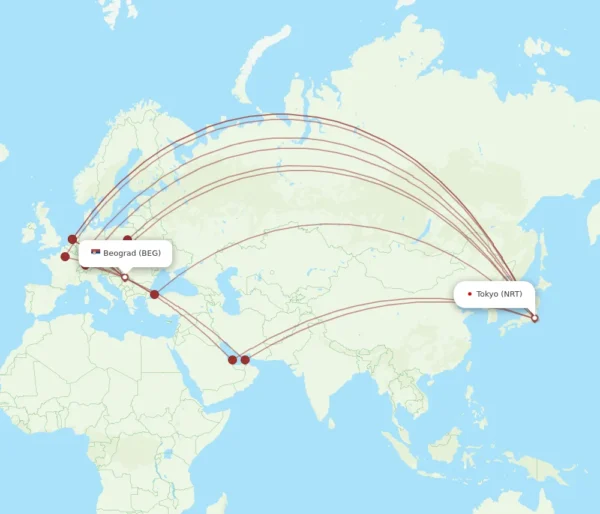
A March 2026 journey from Belgrade to Tokyo became a lesson in how ticketing problems can complicate an international connection. The traveller flew through Budapest and Shanghai before reaching Tokyo Narita, using services operated by Air Serbia, Shanghai Airlines and China Eastern Airlines.
The account describes two connected difficulties. In Budapest, a previous timetable change had not been reconfirmed correctly in the reservation system. Later, an unresolved onward booking sent the traveller through immigration at Shanghai Pudong instead of allowing an airside transfer.
The traveller ultimately reached Japan, but the experience shows why passengers should verify every flight after a schedule change. It also shows why transit plans need to account for the possibility of collecting baggage or visiting a landside airline desk.
The journey is one traveller’s account. Its airport processing times, seat changes and ticketing outcome should not be treated as guaranteed experiences on the same route.
A Short Flight Starts the Journey
The trip began on 16 March with an Air Serbia flight from Belgrade to Budapest. According to the account, the ATR 72-600 carried 48 passengers and arrived after roughly 50 minutes in the air.
The traveller described check-in and security at Belgrade as quick. Boarding took place through a bus gate, and the crew served water and a biscuit during the short flight. The reported £78 fare included checked baggage.
Budapest was more than an airport connection. The traveller spent an evening in the city before returning for the flight to China the next morning. That stop created time between flights, but it did not prevent a booking issue at check-in.
Staff initially could not find one passenger on the Budapest–Shanghai flight. The account attributes the problem to an earlier timetable change that had not been properly reconfirmed. After a call to customer service in Shanghai, the booking was manually updated and check-in proceeded.
Passport Questions Added Uncertainty
The traveller also reported difficulty obtaining clear transit information for a companion holding a Kosovan passport. That uncertainty became significant because the Shanghai connection eventually required the group to go landside.
China’s National Immigration Administration distinguishes between remaining in an airport’s restricted transit area and entering the country. Its 24-hour transit policy requires valid travel documents and confirmed onward tickets. A traveller who needs to leave the restricted area must first obtain a temporary entry permit from immigration officials.
Those general conditions do not confirm eligibility for every passport or itinerary. Nor does this account establish what permission each person received in Shanghai. Travellers facing similar circumstances should confirm requirements for their own documents and booking before departure.
Shanghai Transfer Takes an Unexpected Turn
The Budapest–Shanghai sector operated on a Boeing 787-9, according to the account. The traveller described the cabin as clean and reasonably comfortable, with two meal services and regular drink rounds.
The aircraft arrived at Shanghai Pudong shortly before dawn. The group expected an international transfer, but the unresolved onward ticket required a visit to an airline desk outside the transit area.
That change meant passing through immigration, collecting baggage and finding the appropriate counter. An agent then arranged a replacement itinerary to Tokyo, according to the traveller. The arrangement included a Premium Economy seat on the final flight.
The group spent less than an hour landside before completing departure procedures and returning airside. Other passengers should not rely on that timeframe. Entry decisions, baggage handling and airline assistance can differ between journeys.
Tokyo Arrival Ends the Outbound Trip
The final flight to Tokyo Narita operated on an Airbus A350-900. The traveller reported a full cabin and extra legroom in Premium Economy, although the seat layout felt relatively tight.
The aircraft landed at Narita at 12:45 local time, following a brief view of Mount Fuji during descent. The group then completed arrival formalities and reached the airport railway station within about an hour.
After ten days in Japan, the return journey followed another route. It began with a Japan Airlines domestic flight from Osaka Itami to Tokyo Haneda. China Southern services then took the traveller through Guangzhou to London Heathrow.
What Travellers Can Check Before Departure
The strongest lesson from the outbound journey concerns the booking record. After any airline timetable change, passengers should confirm that every flight appears as ticketed and ready for check-in. An updated itinerary message alone may not answer that question.
Travellers should also ask whether baggage can travel through to the final destination. If they must collect it during a connection, they may need permission to enter the transit country.
Finally, they should allow time to resolve problems at an airline desk. This journey ended with an arrival in Tokyo, but it shows how a workable flight schedule can become difficult when the ticket and transit plan do not align.
For more travel news like this, keep reading Global Travel Wire