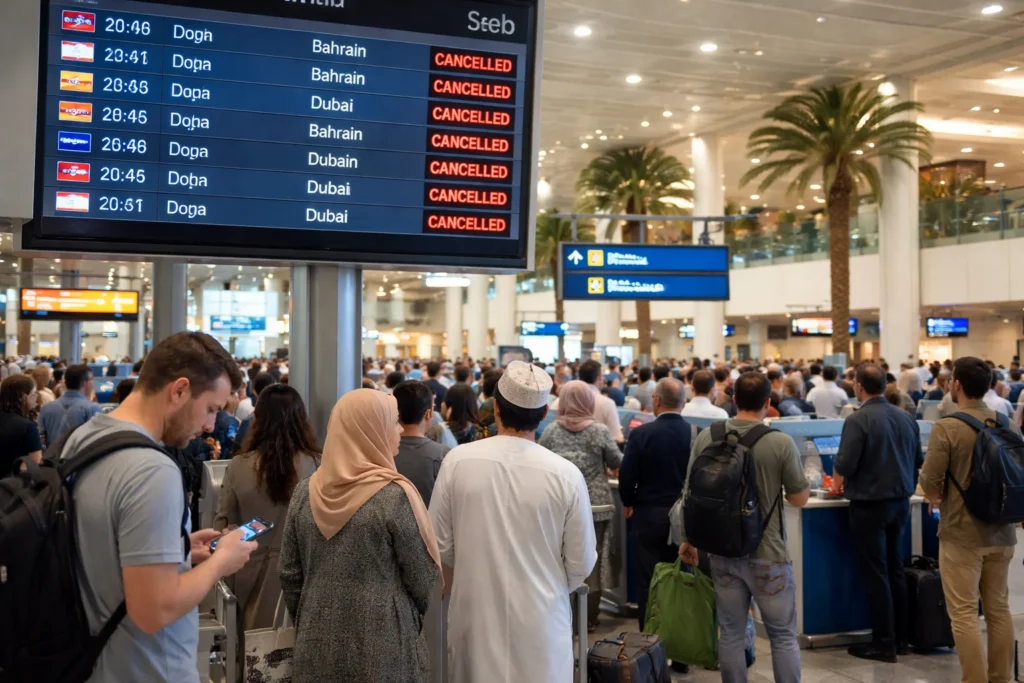
Air travel in Oman has recently faced disruption as several key flights were cancelled at Muscat’s main aviation hub, Seeb International Airport. The cancellations have affected important regional routes, particularly connections to Bahrain and Dubai, creating challenges for both business and leisure travellers moving across the Gulf.
A total of five flight cancellations were recorded over a short period, highlighting operational pressure at one of Oman’s busiest airports. While the number may appear limited, the impact has been significant due to the importance of the affected routes and the high volume of passengers relying on them.
Key Routes Disrupted
The majority of cancellations were concentrated on flights between Muscat and Bahrain, a route frequently used by business travellers and regional commuters. Multiple evening departures scheduled across consecutive days were suspended, leaving passengers scrambling for alternative travel options.
In addition, an early morning flight connecting Muscat to Dubai was also cancelled. This particular route is one of the busiest in the Gulf region, serving not only point-to-point travellers but also passengers connecting to long-haul international flights. The disruption of such a critical link has had a ripple effect on onward travel plans.
These cancellations have forced travellers to rebook flights, adjust itineraries, and in some cases delay their journeys entirely. For passengers with tight schedules or connecting flights, the inconvenience has been particularly acute.
Passenger Impact and Airport Congestion
At Muscat’s Seeb International Airport, the cancellations have contributed to increased congestion within terminals. Passengers seeking assistance from airline counters have faced longer queues, while rebooking requests have placed additional pressure on customer service teams.
Travellers with connecting flights have been among the most affected. Missed connections often lead to extended layovers or overnight stays, adding to both the cost and stress of travel. For business travellers, these delays can disrupt meetings and professional commitments, while leisure travellers may face changes to hotel bookings and planned activities.
The situation also highlights how even a small number of cancellations can create broader disruption within an interconnected aviation network. When key routes are affected, the impact quickly spreads across multiple destinations.
Possible Causes Behind the Disruptions
Although official reasons for the cancellations have not been fully detailed, several factors may be contributing to the situation. Operational challenges such as staffing constraints, aircraft availability, and maintenance requirements are common causes of flight disruptions.
Air traffic management and airport capacity during peak travel periods can also play a role. When combined with tight scheduling, even minor delays can escalate into cancellations.
Additionally, airlines often operate regional routes with limited flexibility, meaning that disruptions on one flight can affect subsequent services. This can lead to repeated cancellations on the same routes over multiple days.
Airline Response and Recovery Efforts
Airlines operating from Muscat are working to manage the situation by offering rebooking options and providing support to affected passengers. Communication through mobile apps, emails, and airport announcements has been a key part of these efforts.
In many cases, passengers have been accommodated on later flights or alternative routes. However, high demand on popular corridors such as Muscat to Bahrain and Muscat to Dubai has made it challenging to find immediate replacements.
Airlines are also reviewing schedules and adjusting operations to prevent further disruptions. These measures aim to restore stability and ensure that future flights operate as planned.
Broader Implications for Regional Travel
The disruptions at Muscat highlight the sensitivity of regional aviation networks in the Gulf. High-frequency routes between cities such as Muscat, Bahrain, and Dubai are essential for economic activity, tourism, and connectivity.
When these routes are interrupted, the effects extend beyond individual passengers. Businesses relying on quick travel between Gulf cities may face delays, while tourism flows can be temporarily affected.
Oman has been actively promoting tourism in recent years, with investments in infrastructure and travel experiences. Maintaining reliable air connectivity is crucial to supporting this growth and ensuring a positive experience for visitors.
What Travellers Should Do
Passengers planning to travel through Muscat are advised to take proactive steps to minimize inconvenience. Checking flight status before heading to the airport is essential, as schedules may change with little notice.
Arriving early can help travellers manage unexpected delays or rebooking procedures. Keeping travel documents and booking details easily accessible can also speed up interactions with airline staff.
Flexibility is another important factor. Considering alternative routes or travel times can increase the chances of reaching a destination without significant delays. Staying in contact with airlines through official channels ensures access to the latest updates and support options.
Looking Ahead
As airlines and airport authorities continue to address operational challenges, efforts are focused on restoring normal schedules and improving reliability. Enhanced coordination, resource allocation, and communication will be key to preventing further disruptions.
The recent cancellations serve as a reminder of the complexities involved in modern air travel. Even in well-developed aviation systems, unexpected challenges can arise, requiring quick responses from airlines and adaptability from passengers.
For now, travellers passing through Muscat should remain alert to updates and prepared for possible changes. With careful planning and flexibility, the impact of disruptions can be managed, allowing journeys to continue as smoothly as possible despite temporary setbacks.