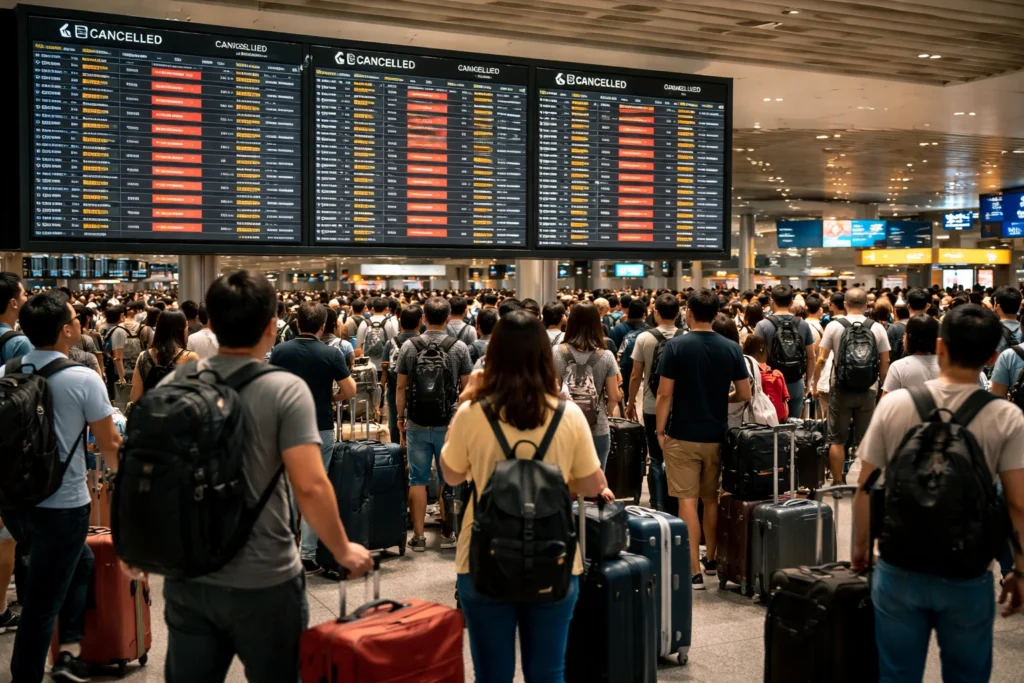
Saudi Arabia’s aviation sector faces major disruption as airlines cancel over 100 flights across key airports.
Airports in Riyadh, Jeddah, Dammam, Medina, and Abha report widespread cancellations. These disruptions affect both domestic and international routes.
Major airlines such as Saudia, Gulf Air, and EgyptAir cancel multiple services across several days. Travelers now face uncertainty and frequent schedule changes.
These cancellations reflect operational pressure across the region’s aviation network.
Riyadh Airport Sees the Highest Number of Cancellations
King Khalid International Airport in Riyadh experiences the most severe disruption. Airlines cancel flights to key destinations across Asia and the Middle East.
Flights to Karachi, Cairo, Bahrain, and Dhaka face repeated cancellations. Many early morning and late-night departures remain the most affected.
Passengers traveling through Riyadh now deal with delays, missed connections, and sudden schedule changes.
These disruptions create challenges for both business and leisure travelers.
Jeddah Airport Faces Delays on Domestic and International Routes
King Abdulaziz International Airport in Jeddah also reports widespread delays and cancellations. Airlines struggle to maintain schedules across multiple routes.
Flights to Dhaka, Kano, and Bahrain face repeated disruption. Domestic routes to al-Jouf and Gurayat also experience cancellations.
These changes reduce travel options and force passengers to reschedule plans.
Travelers must stay alert and monitor updates to avoid inconvenience.
Dammam Airport Disruptions Affect Gulf and Global Connections
King Fahd International Airport in Dammam sees cancellations across both regional and international routes. Flights to Bahrain and Cairo face the highest disruption levels.
International services, including flights to Amsterdam, also face cancellation. These changes impact long-haul travelers and connecting passengers.
Airlines adjust schedules frequently, which creates uncertainty for passengers.
Travelers should confirm flight status before heading to the airport.
Medina Airport Faces Repeated Cancellations on Key Routes
Prince Mohammad Bin Abdulaziz Airport in Medina also experiences significant disruption. Flights to Bahrain, Kuwait, Cairo, and Kuala Lumpur face repeated cancellations.
These cancellations affect both regional travel and long-distance journeys. Pilgrimage and tourism travel also face delays during this period.
Passengers must plan carefully and consider alternative routes when possible.
Abha Airport Sees Limited but Notable Disruptions
Abha Regional Airport reports fewer cancellations compared to larger hubs. However, disruptions still affect some regional routes.
Flights connecting Abha to Riyadh face cancellation, which impacts domestic travel plans.
Even smaller airports now experience operational challenges, showing the scale of disruption across the country.
Key Trends Behind the Flight Cancellations
Several patterns emerge across these disruptions. Flights to Bahrain and Cairo face the highest cancellation rates.
Early morning and late-night flights show higher cancellation risk. Airlines appear to adjust schedules during low-demand or operationally difficult periods.
Repeated cancellations by major airlines suggest ongoing operational or staffing challenges.
These trends highlight broader pressure on the aviation system.
Impact on Travelers Across Saudi Arabia
Passengers now face fewer travel options and longer waiting times. Flight cancellations disrupt both short trips and long-haul journeys.
Airlines require passengers to rebook or request refunds after cancellations. These processes may take time due to high demand.
Travelers must stay flexible and plan extra time for connections. Monitoring airline updates becomes essential during this period.
These disruptions affect tourism, business travel, and regional connectivity.
Travel Tips to Navigate the Disruptions
Travelers should take proactive steps to reduce inconvenience. Checking flight status regularly helps avoid surprises at the airport.
Booking flexible tickets allows easier changes if schedules shift. Planning alternative routes also improves travel flexibility.
Arriving early at the airport gives extra time to handle unexpected changes. Staying informed ensures smoother travel during disruption.
Conclusion: Travelers Must Stay Prepared Amid Ongoing Disruptions
Saudi Arabia’s aviation sector faces a challenging period with widespread cancellations across major airports. Airlines continue adjusting operations to manage ongoing pressures.
Travelers must stay informed, flexible, and prepared for sudden changes. Careful planning can reduce stress and improve travel experiences.
Despite disruptions, essential routes remain active, and airlines continue working to restore stability.