A newly released global cybersecurity assessment has revealed a sharp rise in artificial intelligence-driven cyber risks, raising fresh concerns for the travel and tourism sector. As countries rapidly adopt AI technologies, many are struggling to keep pace with the cybersecurity measures needed to protect digital infrastructure, creating vulnerabilities that could impact travelers worldwide.
The report highlights a widening gap between technological advancement and security preparedness, with several countries now facing increased exposure to cyber threats. This evolving situation is particularly significant for international tourism, where digital systems play a crucial role in bookings, payments, and border control operations.
Imbalance Between AI Growth and Cybersecurity
The rapid expansion of artificial intelligence across industries has transformed global economies, but it has also introduced new risks. While governments and businesses are investing heavily in AI-driven systems, cybersecurity frameworks have not always kept up.
This imbalance has created opportunities for cybercriminals to exploit weaknesses in digital infrastructure. From airline reservation systems to hotel databases and travel payment platforms, many aspects of the tourism industry rely on secure digital networks.
As AI becomes more sophisticated, so do cyberattacks. Experts warn that modern threats are faster, more automated, and more difficult to detect than ever before. This shift is forcing countries and industries to rethink their approach to cybersecurity.
Emerging High-Risk Regions
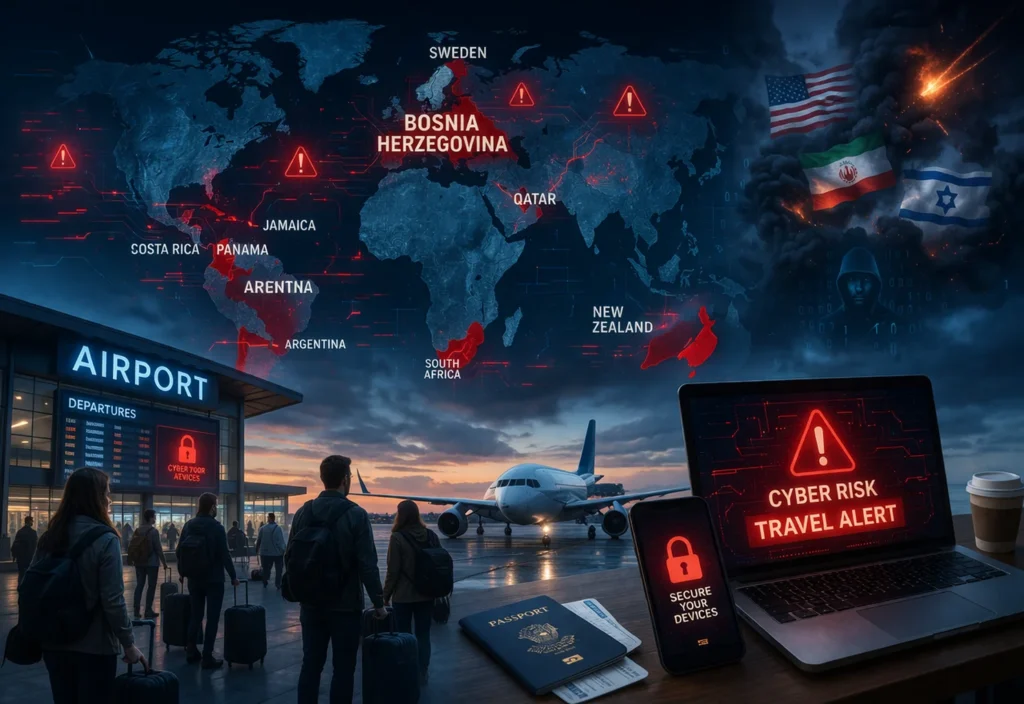
The report identifies several countries where the gap between AI adoption and cybersecurity readiness is particularly pronounced. In these regions, rapid technological growth is not matched by adequate regulatory frameworks or infrastructure protection.
Countries in parts of Europe, Latin America, Africa, and the Caribbean are among those highlighted as facing increasing exposure. In many cases, digital systems are expanding quickly, but policies for data protection, incident response, and infrastructure security remain underdeveloped.
This creates a challenging environment for travelers, as vulnerabilities in national systems can lead to disruptions in services such as airport operations, visa processing, and financial transactions.
Impact on the Travel and Tourism Industry
The tourism sector is especially sensitive to cybersecurity risks due to its reliance on interconnected systems. Airlines, airports, hotels, and travel agencies all depend on digital platforms to manage operations and customer interactions.
A rise in cyber threats could lead to several potential challenges, including:
- Disruptions to flight operations and booking systems
- Increased risk of data breaches affecting passenger information
- Payment fraud targeting travelers and tourism businesses
- Delays in immigration and border control systems
For international travelers, these risks highlight the importance of secure digital environments when planning and undertaking trips.
Geopolitical Tensions Adding to the Risk
The current global landscape, marked by geopolitical tensions, is further intensifying cybersecurity concerns. Conflicts between major nations are increasingly extending into the digital realm, with cyber warfare becoming a key element of modern security strategies.
This has implications for global travel, as critical infrastructure such as airports, airlines, and communication networks can become targets during periods of heightened tension. The combination of geopolitical instability and technological vulnerability creates a complex risk environment for travelers and tourism operators alike.
How AI is Changing Cyber Threats
Artificial intelligence is not only driving innovation but also transforming the nature of cyber threats. Modern cyberattacks can now be automated, allowing malicious actors to launch large-scale operations with minimal human intervention.
AI-powered threats can adapt in real time, identify vulnerabilities quickly, and execute attacks at unprecedented speed. This makes traditional cybersecurity measures less effective, requiring more advanced and proactive defence strategies.
For the travel industry, this means investing in stronger digital security systems and continuously updating protocols to counter evolving threats.
Lessons from More Prepared Nations
While some countries face rising risks, others demonstrate that it is possible to balance AI adoption with strong cybersecurity frameworks. Nations with robust policies, advanced infrastructure protection, and effective incident response systems are better equipped to manage digital threats.
These examples show that proactive investment in cybersecurity can significantly reduce vulnerability. Strong governance, collaboration between public and private sectors, and ongoing training of cybersecurity professionals are key factors in building resilience.
For the global travel industry, adopting best practices from these countries can help create safer and more reliable systems for passengers.
What Travelers Should Be Aware Of
As cyber risks continue to grow, travelers should take steps to protect themselves when planning and undertaking trips. Simple precautions can help reduce exposure to potential threats:
- Use secure networks when making bookings or payments
- Avoid sharing sensitive information on public Wi-Fi
- Enable two-factor authentication on travel-related accounts
- Monitor financial transactions regularly while traveling
- Keep digital devices updated with the latest security software
Being aware of potential risks can help travelers navigate the evolving digital landscape with greater confidence.
The Need for Global Coordination
Addressing the rise in AI-driven cyber risks requires coordinated action at both national and international levels. Governments, technology providers, and industry stakeholders must work together to establish stronger security standards and share information on emerging threats.
For the tourism sector, collaboration is particularly important, as travel involves multiple countries and interconnected systems. Strengthening cybersecurity across borders will be essential to maintaining trust and ensuring the smooth functioning of global travel networks.
Looking Ahead
The findings of the report highlight a critical moment for the intersection of technology and travel. As AI continues to shape the future, ensuring that innovation is matched by robust security measures will be key to protecting both economies and travelers.
While the risks are significant, they also present an opportunity for countries and industries to strengthen their systems and build more resilient digital infrastructures.
Conclusion
The rise of AI-driven cyber risks is reshaping the global travel landscape, introducing new challenges alongside technological progress. For travelers, governments, and industry players, the message is clear: security must evolve alongside innovation.
By investing in stronger cybersecurity frameworks and adopting proactive strategies, the travel industry can continue to grow while ensuring the safety and confidence of passengers worldwide.