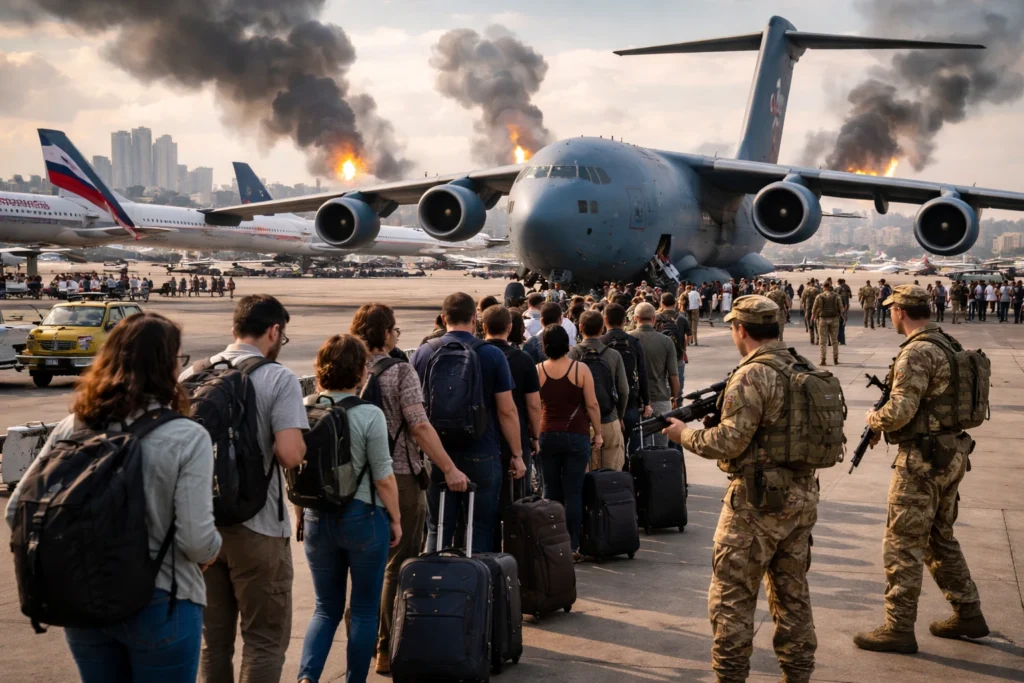
The United States has launched a coordinated evacuation strategy across the Middle East. Authorities aim to bring stranded Americans home safely.
Escalating conflict, drone threats, and airspace instability have created urgent risks. Travelers now face limited mobility and constant disruptions.
Officials have introduced flexible evacuation routes for April. These routes combine air travel, land corridors, and regional transit hubs.
Jordan Emerges as a Key Evacuation Hub
Jordan plays a central role in evacuation planning. The country continues to operate key infrastructure despite security threats.
Authorities have warned Americans to remain indoors during alerts. Missiles and drones have increased risks across the region.
Queen Alia International Airport remains operational. Travelers can depart through commercial flights when conditions allow.
Saudi Arabia Maintains Flights Amid Heightened Alerts
Saudi Arabia continues to support evacuation efforts. Major airports in Riyadh, Jeddah, and Dammam remain active.
However, officials have issued strict safety guidance. Travelers must stay indoors and avoid unnecessary movement during threats.
Airlines still operate flights, but disruptions remain frequent. Travelers must monitor schedules and stay in contact with carriers.
UAE Faces Travel Restrictions and Security Risks
The UAE continues to operate flights under tight conditions. Airports in Dubai, Abu Dhabi, and Sharjah remain key exit points.
However, drone and missile threats have increased uncertainty. Authorities advise travelers to remain alert at all times.
Land borders into Oman and Saudi Arabia offer alternative routes. These crossings often face heavy congestion and delays.
Iran Relies on Land Evacuation Routes Only
Iran presents one of the most complex evacuation challenges. Commercial flights remain suspended across the country.
Americans must rely on land routes to exit. Border crossings into Turkey, Armenia, Azerbaijan, and Iraq remain possible options.
Travelers must prepare for long journeys and logistical challenges. Constant monitoring of security updates remains essential.
Israel Prioritizes Land Based Evacuation
Israel has restricted outbound flights due to security concerns. Limited departures operate from major airports.
Land crossings into Jordan and Egypt now serve as primary exit routes. These options offer faster evacuation pathways.
Travelers must prepare for delays and strict border checks. Coordination with airlines remains critical for onward travel.
Lebanon Offers Limited but Active Flight Options
Lebanon continues to operate limited commercial flights. Beirut airport provides key departure opportunities.
Capacity remains restricted, so early booking becomes essential. Travelers must also assess local conditions before heading to the airport.
The US continues to advise citizens to leave when possible. This guidance reflects ongoing regional instability.
Qatar and Oman Provide Stable Transit Alternatives
Qatar and Oman offer relatively stable evacuation routes. Both countries maintain operational airports and flight connections.
Hamad International Airport and Muscat International Airport serve as key transit hubs. Travelers can access global destinations from these locations.
Authorities still advise vigilance due to regional risks. Conditions can change quickly without warning.
Multi Layered Evacuation Plan Supports Flexibility
The US evacuation strategy focuses on adaptability. Travelers can choose between air routes, land exits, or combined options.
Regional hubs play a vital role in this system. Airports in Saudi Arabia, UAE, Qatar, and Oman support international departures.
Land corridors connect high risk zones to safer transit points. This approach increases chances of successful evacuation.
Travel Disruptions Continue Across the Region
Airspace instability continues to affect flight operations. Delays and cancellations remain common across major hubs.
Border crossings face heavy congestion due to increased demand. Travelers must prepare for long wait times.
Authorities urge constant monitoring of official updates. Flexibility remains essential for safe travel planning.
Travelers Must Stay Alert and Prepared
Travelers in the region must act quickly and carefully. They should register with authorities and follow safety instructions.
Communication with airlines and embassies remains critical. Real time updates help travelers make informed decisions.
Preparation and awareness can reduce risks significantly. Travelers must remain ready to adjust plans at any time.
Global Travel Faces Continued Uncertainty
The Middle East crisis continues to impact global travel networks. Airlines, governments, and travelers must adapt to changing conditions.
Evacuation efforts highlight the importance of coordination and flexibility. They also show the complexity of modern travel systems.
The situation remains fluid, with no clear timeline for stability. Until then, caution and preparation will guide travel decisions worldwide.
For more travel news like this, keep reading Global Travel Wire