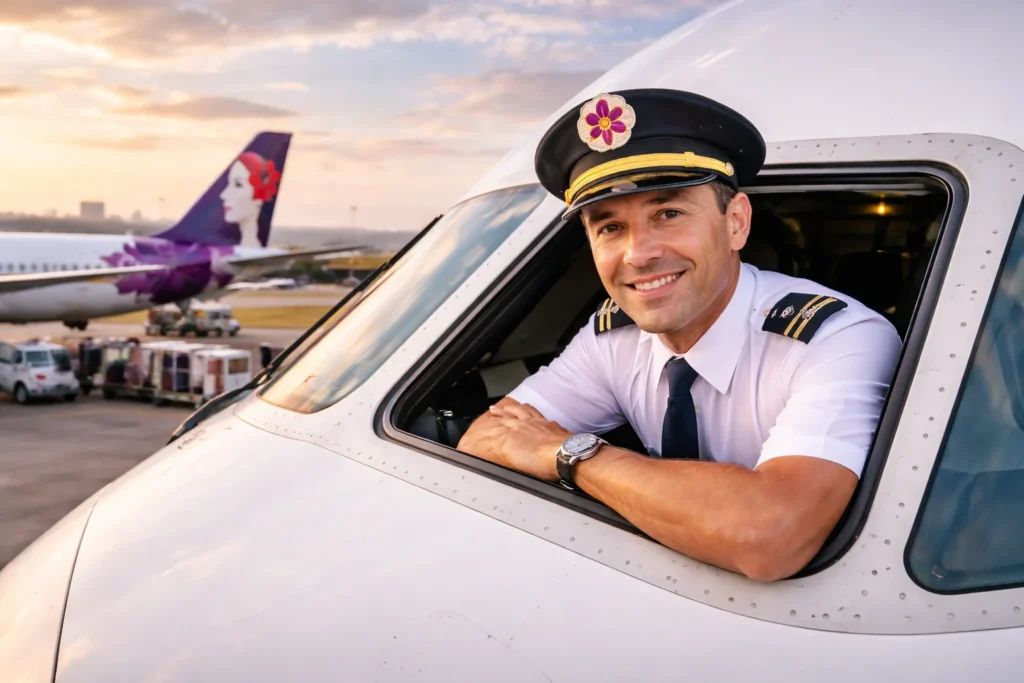
The integration of Hawaiian Airlines into a broader airline group structure is bringing notable operational and policy changes, including updated grooming standards for pilots. This development is drawing attention across the aviation and tourism sectors, as it highlights the balance between safety regulations, cultural identity, and the evolving expectations of global airline operations.
As part of a unified operational framework, pilots transitioning into the integrated airline system are now required to follow standardized appearance guidelines. One of the most discussed changes is the requirement for pilots to maintain a clean-shaven look while on duty. While mustaches remain permissible under specific guidelines, beards are no longer allowed in the cockpit.
Airline officials have clarified that the decision is rooted in safety compliance. Aviation authorities have long maintained guidance on pilot grooming, particularly concerning the use of oxygen masks during emergencies. According to regulatory frameworks issued by civil aviation authorities, a proper seal between the mask and the pilot’s face is critical to ensure effective oxygen delivery in high-altitude or decompression scenarios.
Safety equipment manufacturers have also emphasized that facial hair can potentially interfere with the fit of oxygen masks. Even minor gaps in the seal may reduce the effectiveness of the equipment, which is designed to function reliably under extreme conditions. These considerations have been central to aviation safety policies worldwide.
The implementation of standardized grooming rules is part of a broader integration process aimed at aligning operational procedures, training protocols, and safety standards across the airline group. Aviation authorities often encourage such standardization to ensure consistency, reduce operational risks, and enhance overall safety performance.
However, the policy shift has also sparked conversations about cultural identity within the aviation workforce. Hawaiian Airlines has historically maintained a strong connection to local traditions and cultural expression. In some cases, grooming practices, including facial hair, have been viewed as part of personal and cultural identity.
Tourism boards and cultural organizations in Hawaii have consistently emphasized the importance of preserving local heritage and identity, especially in industries closely tied to visitor experience. Airlines operating in tourism-driven regions often serve as ambassadors of local culture, shaping how destinations are perceived by travelers.
The new grooming policy reflects the challenge of balancing these cultural considerations with the demands of global aviation standards. As airlines expand and integrate operations, they must navigate the complexities of maintaining brand identity while adhering to uniform safety and operational requirements.
From a tourism perspective, airline policies play an important role in shaping passenger experience and confidence. Travelers often associate airlines with safety, professionalism, and reliability. Clear and consistent standards contribute to building trust, particularly on long-haul and international routes where safety is a top priority.
Government aviation authorities have consistently highlighted the importance of maintaining rigorous safety standards across all aspects of airline operations. This includes not only technical and operational procedures but also factors such as crew readiness and equipment reliability. The adoption of standardized grooming policies is one of many measures aimed at ensuring compliance with these guidelines.
The discussion around pilot grooming is not unique to a single airline. Across the global aviation industry, there has been ongoing debate about the necessity and relevance of such policies. Some studies and industry discussions have explored whether modern equipment design could accommodate a wider range of grooming styles without compromising safety.
At the same time, many airlines continue to follow established guidelines, prioritizing a precautionary approach. Aviation is a highly regulated industry where safety considerations often take precedence over other factors. As a result, policies tend to err on the side of caution, especially when there is any potential impact on critical safety equipment.
The integration process also involves aligning branding and operational identity. Airlines undergoing mergers or partnerships often introduce changes to uniforms, procedures, and visual elements to create a cohesive brand image. These changes are designed to enhance operational efficiency and provide a consistent experience for passengers.
For Hawaiian Airlines, the transition represents a new phase in its journey. While the airline continues to celebrate its cultural heritage through various aspects of its service, it is also adapting to the requirements of a larger operational framework. This dual approach reflects the broader trend in the aviation industry, where regional identity and global standards must coexist.
Tourism stakeholders are closely observing these developments, as airline operations are closely linked to destination accessibility and visitor experience. Reliable and safe air travel is a cornerstone of tourism growth, particularly for island destinations that depend heavily on aviation connectivity.
Official tourism statistics have shown that Hawaii remains a popular destination for international and domestic travelers. Maintaining strong air connectivity and high safety standards is essential to sustaining this demand. Airlines play a critical role in ensuring that visitors can travel to and from the islands with confidence.
Looking ahead, the conversation around pilot grooming policies is likely to continue as the aviation industry evolves. Advances in technology, changes in regulatory frameworks, and shifting societal expectations may influence how airlines approach such issues in the future.
For now, the focus remains on ensuring safety, consistency, and operational excellence. The implementation of standardized grooming rules is one example of how airlines are adapting to meet these priorities while navigating the complexities of integration and cultural identity.
As the aviation sector continues to grow and transform, policies like these will remain an important part of the broader discussion on how airlines balance tradition, safety, and the expectations of a global travel industry.
For more travel news like this, keep reading Global Travel Wire