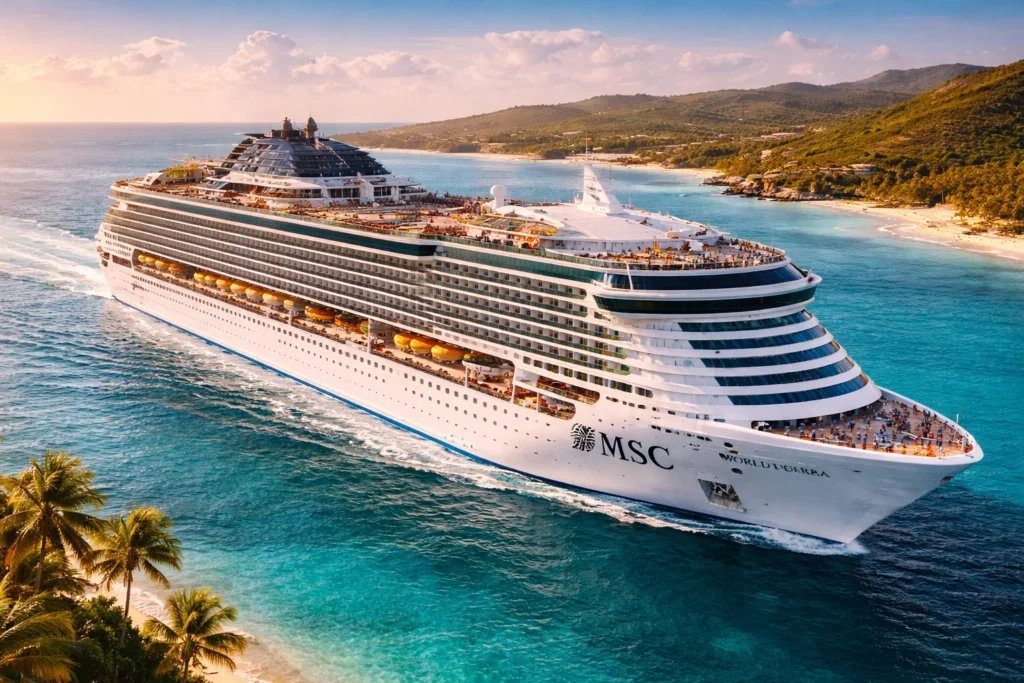
MSC Cruises has announced a major deployment change for winter 2026, moving MSC World Europa from planned Gulf itineraries to the Caribbean. The flagship vessel will now sail in warm-weather routes centered on destinations such as Martinique, Guadeloupe, and Barbados from November 2026 through April 2027.
The shift represents one of the most notable cruise redeployments of the season and reflects how quickly operators adjust fleets to match traveler demand. For guests seeking sunshine escapes, the change adds one of the world’s most advanced ships to one of the world’s most popular winter cruise regions.
For the Gulf market, the decision reshapes expected capacity. For the Caribbean, it brings a high-profile ship capable of carrying thousands of guests each voyage.
Why the Deployment Changed
Cruise lines regularly reposition ships based on booking trends, seasonal demand, and network strategy. In this case, MSC Cruises has chosen to place its flagship where winter sun demand remains exceptionally strong.
The Caribbean consistently ranks among the most sought-after cold-season cruise destinations thanks to reliable weather, short island-hopping distances, and broad appeal across families, couples, and multigenerational travelers.
By contrast, redeploying a large vessel into a higher-demand market can help maximize occupancy while offering guests more itinerary choice.
This decision also shows how global cruise planning remains highly dynamic. Fleet schedules often evolve long before departure dates as companies respond to changing traveler preferences.
A Flagship Built for High Demand
MSC World Europa is one of the largest and most innovative ships in the cruise market. Known for its modern design, expansive outdoor areas, and next-generation environmental technology, the vessel has become a central part of MSC’s global brand strategy.
The ship offers multiple pools, entertainment venues, family attractions, dining concepts, and wide promenade spaces designed for resort-style holidays at sea.
That product fits particularly well with Caribbean cruising, where outdoor decks, sunshine, and sea-view experiences form a major part of the guest appeal.
As a result, travelers booking winter Caribbean sailings gain access to one of the industry’s most high-profile ships in a region built for open-air vacations.
Caribbean Islands Gain Stronger Visibility
The revised program places destinations such as Martinique, Guadeloupe, and Barbados in the spotlight.
Martinique blends French-Caribbean culture with rainforest landscapes, volcanic scenery, and vibrant culinary traditions. Guadeloupe attracts travelers with beaches, snorkeling, waterfalls, and a distinctive island identity spread across multiple islands. Barbados remains one of the Caribbean’s best-known winter destinations, famous for white-sand beaches, turquoise waters, and a strong hospitality reputation.
For these islands, flagship cruise calls can increase visitor flows, shore excursion demand, and spending in transport, retail, food, and tourism services.
High-capacity ships also help raise destination visibility among future repeat travelers who may later return for longer land-based holidays.
Winter Travel Demand Continues to Rise
The move highlights a broader tourism trend: winter sun demand remains one of the strongest drivers in global leisure travel.
Travelers from colder regions increasingly prioritize warm-weather escapes between late autumn and spring. Cruise holidays offer a particularly attractive format because guests can visit multiple destinations in one trip without repeated flights or hotel changes.
With temperatures often ideal for beach time, outdoor dining, and sightseeing, the Caribbean remains a natural winner during the northern winter season.
That sustained demand explains why cruise lines continue to expand Caribbean capacity during peak months.
What Happens to Existing Bookings
Guests previously booked on Gulf sailings are expected to receive alternative options through the cruise line’s rebooking process.
These may include transferring to the new Caribbean itineraries, selecting other MSC ships in different regions, or choosing comparable future sailings depending on availability and fare conditions.
Flexible rebooking options have become increasingly important in modern travel planning. Travelers now expect cruise companies to offer clear communication and practical alternatives when schedules change.
For guests, acting early often provides the widest range of cabin and date choices.
Why This Matters for Global Cruise Tourism
Fleet redeployments often reveal where momentum is strongest in the travel market. When a flagship ship changes regions, it usually reflects confidence in demand and revenue opportunity.
In this case, the Caribbean gains extra capacity and a premium product during peak season, while MSC Cruises demonstrates the flexibility to move quickly across global markets.
That agility has become essential in the cruise sector, where demand patterns can shift based on seasonality, airfare trends, economic conditions, and traveler sentiment.
What Travelers Can Expect
Passengers sailing MSC World Europa in the Caribbean can expect a resort-style holiday that combines sea days, tropical ports, family entertainment, and multiple destination experiences in one journey.
Seven-night and longer sailings are expected to appeal to guests seeking both convenience and variety during the winter months.
For travelers considering a sunshine getaway in 2026, the ship’s new Caribbean season could become one of the standout options in the market.
A New Winter Story at Sea
MSC World Europa’s move from the Gulf to the Caribbean is more than a schedule adjustment. It is a clear sign of where winter travel demand is heading.
For Barbados, Martinique, Guadeloupe, and the wider Caribbean, the arrival of a flagship vessel promises a high-profile season.
For travelers, it means one thing: more sunshine, more choice, and one of cruising’s biggest ships chasing winter where it shines brightest.
For more travel news like this, keep reading Global Travel Wire