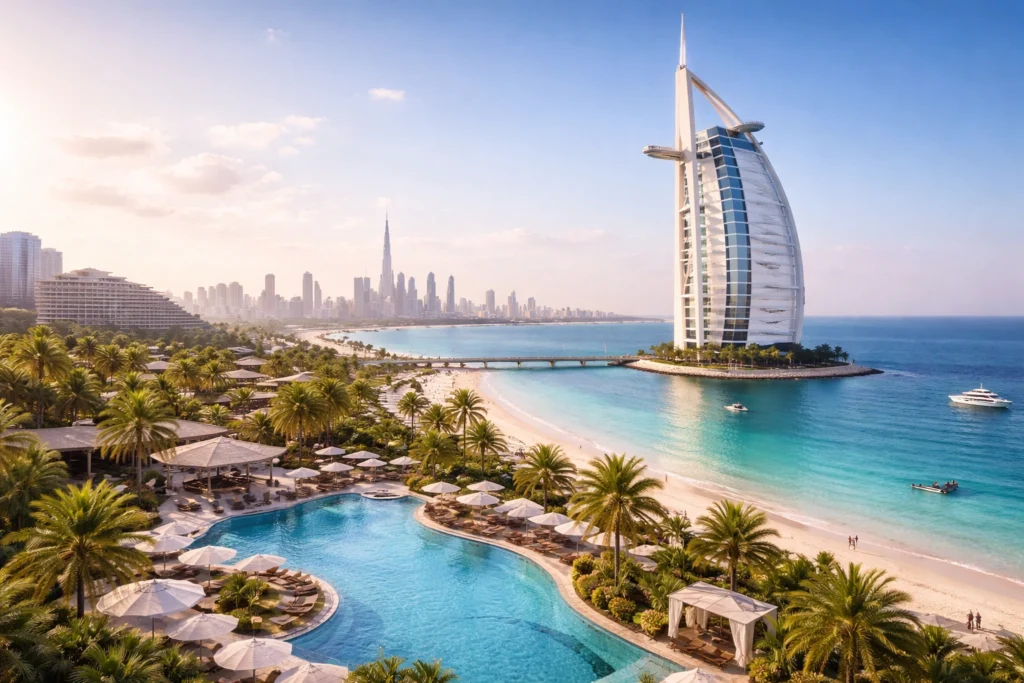
Dubai has launched a new chapter in its premium tourism story after Jumeirah announced a phased restoration programme for the Jumeirah Burj Al Arab. The carefully planned project aims to preserve one of the world’s most recognizable hospitality landmarks while enhancing guest spaces for the future.
The move comes as Dubai continues to strengthen its position as a leading global destination for luxury travel, business events, and high-end hospitality. By investing in one of its most famous tourism assets, the city signals long-term confidence in premium visitor demand and destination quality.
For travelers, the restoration means one of the world’s best-known hotels will continue to evolve while protecting the design identity that made it a global symbol of modern Dubai.
A Landmark That Shaped Dubai’s Global Image
Since opening in 1999, Jumeirah Burj Al Arab has played a defining role in Dubai’s tourism rise. Its sail-inspired silhouette quickly became an international emblem of the city and helped place Dubai at the center of global luxury travel conversations.
The hotel introduced new standards in personalized hospitality, including its signature butler service, private experiences, and highly tailored guest care. Over time, it attracted celebrities, business leaders, leisure travelers, and event guests from every region.
That global recognition carries real tourism value. Iconic landmarks often drive destination awareness, inspire first-time visits, and strengthen a city’s brand identity across international markets.
Restoration to Blend Heritage with Modern Elegance
The restoration programme will run in phases over an estimated 18 months. Jumeirah has appointed acclaimed interior architect Tristan Auer to lead the project.
Auer is known for combining heritage preservation with contemporary design. His previous work includes some of the world’s most prestigious hospitality and cultural addresses. That background makes him a strategic choice for a project that requires precision, restraint, and creative renewal.
The plan focuses on enhancing interiors while respecting the craftsmanship, details, and atmosphere that define the property. Rather than replacing the hotel’s identity, the programme aims to refine it for a new generation of luxury travelers.
That approach reflects a wider trend in premium hospitality. Guests increasingly value authenticity and legacy, but they also expect modern comfort, intuitive design, and seamless service.
Suites and Public Spaces Set for Upgrades
The Burj Al Arab features 198 duplex suites known for dramatic interiors, expansive layouts, and panoramic views over the Arabian Gulf. The restoration will focus on suites, public areas, and selected guest spaces while maintaining the hotel’s signature visual language.
Materials and finishes associated with the property’s grand style will remain central to the experience. However, design updates are expected to improve comfort, functionality, and contemporary appeal.
For repeat visitors, that balance matters. Many luxury guests want familiar prestige with refreshed surroundings. For new travelers, the project can deliver a legendary stay that feels current rather than historical.
Strong Tourism Impact for Dubai’s Premium Market
The Burj Al Arab remains far more than a hotel. It is a destination attraction in its own right and a major contributor to Dubai’s high-value tourism ecosystem.
Luxury hotels help cities attract affluent visitors who typically spend more on dining, retail, experiences, chauffeur services, wellness, and private excursions. As a result, investment in flagship hospitality assets often creates benefits across the wider visitor economy.
For Dubai, the continued strength of iconic properties supports demand for premium airline cabins, upscale shopping districts, fine dining venues, and exclusive entertainment experiences.
The restoration may also boost renewed global interest in the hotel, drawing returning guests and first-time travelers eager to experience the landmark in its next era.
Events and Business Travel Stand to Benefit
Dubai remains one of the world’s leading hubs for conferences, exhibitions, and executive travel. Premium accommodation plays an important role in that success, especially for senior delegates, VIP guests, and incentive groups.
A refreshed Burj Al Arab strengthens Dubai’s appeal in that segment. Corporate travelers often choose destinations that combine efficient infrastructure with aspirational hospitality. Few properties carry the same level of prestige or recognition.
As Dubai continues to host major global events, the restored hotel is likely to remain a preferred address for elite business and diplomatic travel.
Service Excellence Remains Central
While design upgrades will draw attention, service remains the true foundation of the Burj Al Arab brand. Personalized hospitality, privacy, and curated experiences have defined the hotel for more than two decades.
Jumeirah has made clear that the restoration will preserve that legacy. Guests can continue to expect signature experiences such as tailored stays, elevated dining, and exclusive access to one of Dubai’s most celebrated settings.
That consistency is essential in luxury travel, where reputation often depends as much on service memory as physical design.
Dubai Sends a Message of Long-Term Ambition
The decision to restore rather than simply replace underscores Dubai’s maturing tourism strategy. The city is no longer focused only on new openings. It is also investing in the long-term relevance of established icons.
That signals confidence, sophistication, and ambition. Destinations that sustain landmark assets often remain competitive for decades because they combine innovation with continuity.
For global travelers, the message is clear: Dubai intends to protect the experiences that made it famous while continuing to raise standards.
When the restoration completes, Jumeirah Burj Al Arab will not just reopen refreshed spaces. It will reinforce its role as one of the world’s most enduring symbols of luxury hospitality and a cornerstone of Dubai’s tourism future.
For more travel news like this, keep reading Global Travel Wire