A new era of air travel is taking shape across Southeast Asia as major gateways in Thailand, Malaysia and Cambodia introduce biometric screening, digital immigration systems and large-scale terminal expansions designed to make journeys faster and easier. From Bangkok’s Suvarnabhumi and Don Mueang airports to Kuala Lumpur International Airport, Phuket’s planned Andaman Airport and Cambodia’s Techo International Airport, the region is investing heavily in seamless travel as tourism demand accelerates.
For travelers, the message is clear: airport experiences across ASEAN are being redesigned around speed, convenience and capacity. For governments, the upgrades support a bigger goal—capturing rising visitor flows, strengthening aviation competitiveness and boosting tourism-led economic growth.
Smart Airports Become the New Standard
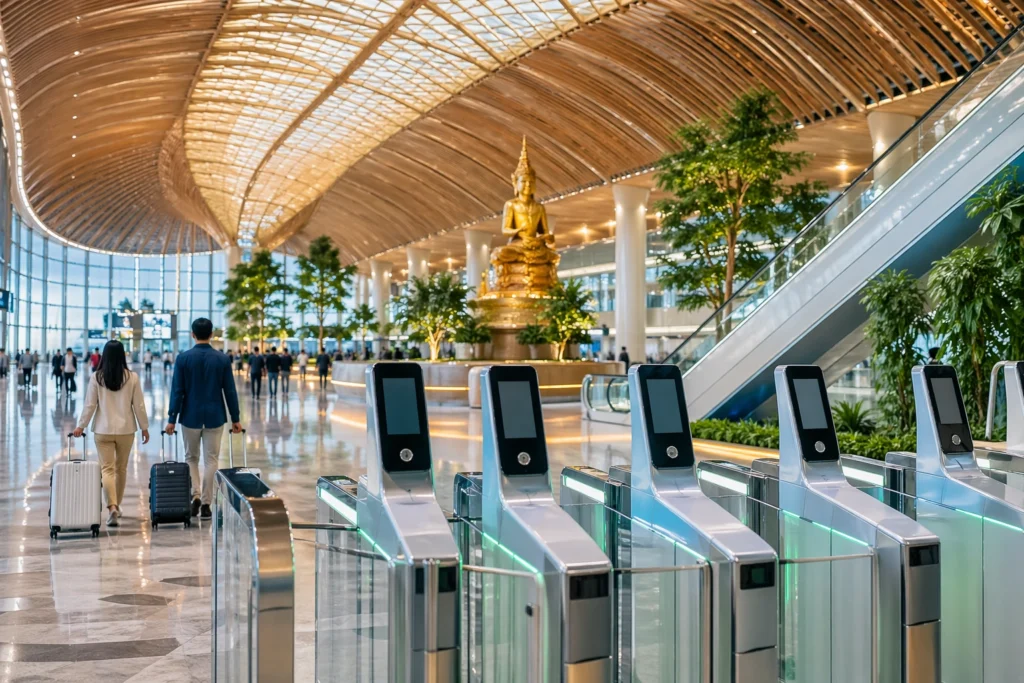
Airports across the region are moving beyond traditional check-in counters and manual immigration desks. Instead, passengers can expect self-service systems, biometric identity checks, automated border control and digital forms that reduce paperwork and waiting times.
This shift comes as Southeast Asia remains one of the world’s most dynamic tourism regions. Popular destinations such as Bangkok, Phuket, Kuala Lumpur and Phnom Penh depend on efficient airport infrastructure to support airlines, hotels, attractions and local businesses. Faster processing can help airports handle more travelers while improving satisfaction levels.
Cambodia’s Techo International Airport Sets a New Benchmark
Cambodia’s Techo International Airport is emerging as one of the region’s most ambitious aviation projects. Built as a new gateway for Phnom Penh, the airport combines major capacity growth with advanced digital travel systems.
Passengers are expected to benefit from smart gates at arrivals and departures, digital immigration processing and a v-Pass system that replaces traditional passport stamping. Travelers can complete immigration, health and customs declarations online before arrival, allowing smoother entry procedures and less time spent in queues.
The airport also aims to make a strong first impression through architecture inspired by Khmer heritage. That blend of technology and cultural identity is increasingly important as destinations compete for international visitors seeking memorable arrivals as well as efficient service.
For Cambodia’s tourism economy, the project could help attract new airline routes, long-haul traffic and higher visitor spending.
Thailand Expands Suvarnabhumi and Don Mueang
Thailand is accelerating one of the region’s largest airport growth plans as it prepares for rising passenger numbers. Airports of Thailand has outlined major investments at Suvarnabhumi and Don Mueang, two of the country’s most important gateways.
At Suvarnabhumi, expansion plans include terminal growth, additional satellite facilities and a fourth runway to significantly raise capacity. The broader objective is to transform the airport into a higher-volume hub able to manage growing demand from leisure travelers, business visitors and connecting passengers.
Don Mueang is also being upgraded through a new international terminal and expanded facilities. Once completed, the airport is expected to handle substantially more passengers while improving traffic flow and traveler comfort.
Crucially, Thailand’s projects are not only about physical expansion. They are also expected to include biometric checkpoints, automated baggage systems and smarter terminal operations that reduce congestion.
That matters for tourism. Easier arrivals can support Bangkok’s hotels, shopping districts, events sector and domestic connections to beach and cultural destinations nationwide.
Phuket’s Andaman Airport Targets Resort Growth
Thailand’s tourism ambitions extend beyond Bangkok. The planned Andaman Airport in Phuket is designed to support one of Asia’s most popular resort markets.
With major passenger capacity and smart systems built into the project, the new airport is expected to strengthen access to Phuket’s beaches, luxury resorts, wellness retreats and island-hopping experiences. Integrated road and transport links are also intended to improve onward travel from airport to hotel zones.
For travelers, that could mean smoother arrivals during peak holiday periods. For tourism businesses, expanded air access may create fresh opportunities for international growth.
Kuala Lumpur International Airport Goes Digital
Malaysia is pursuing its own transformation through a national aviation digitalisation strategy. Kuala Lumpur International Airport stands at the center of that push, with technology focused on security, efficiency and sustainability.
Among the standout developments are iris recognition systems, smart gates and advanced analytics that help manage passenger flows. These tools can shorten processing times, improve identity verification and optimize airport resources during busy travel periods.
Malaysia’s broader strategy also highlights environmental performance, showing how digital innovation can support both operational efficiency and long-term sustainability.
For airlines and passengers, a more responsive airport can mean fewer delays, smoother transfers and a stronger travel experience.
What Travelers Should Know Now
As these projects roll out, travelers heading to Southeast Asia should be prepared for more digital journeys. Electronic passports, biometric checks, online declarations and self-service processing are becoming increasingly common.
That means passengers should allow time to understand airport requirements, keep travel documents updated and complete digital forms before departure when available.
The payoff is significant: shorter queues, quicker border checks and less friction from check-in to arrival.
A Powerful Tourism Signal for ASEAN
Together, these airport investments send a strong message about Southeast Asia’s future. The region is not only welcoming more visitors—it is modernizing how they arrive.
For tourism boards, airlines, hotels and attractions, smarter gateways can unlock new growth. For travelers, they promise a more seamless trip across multiple countries. And for ASEAN as a whole, they mark the rise of a connected travel corridor built for the next generation of global tourism.