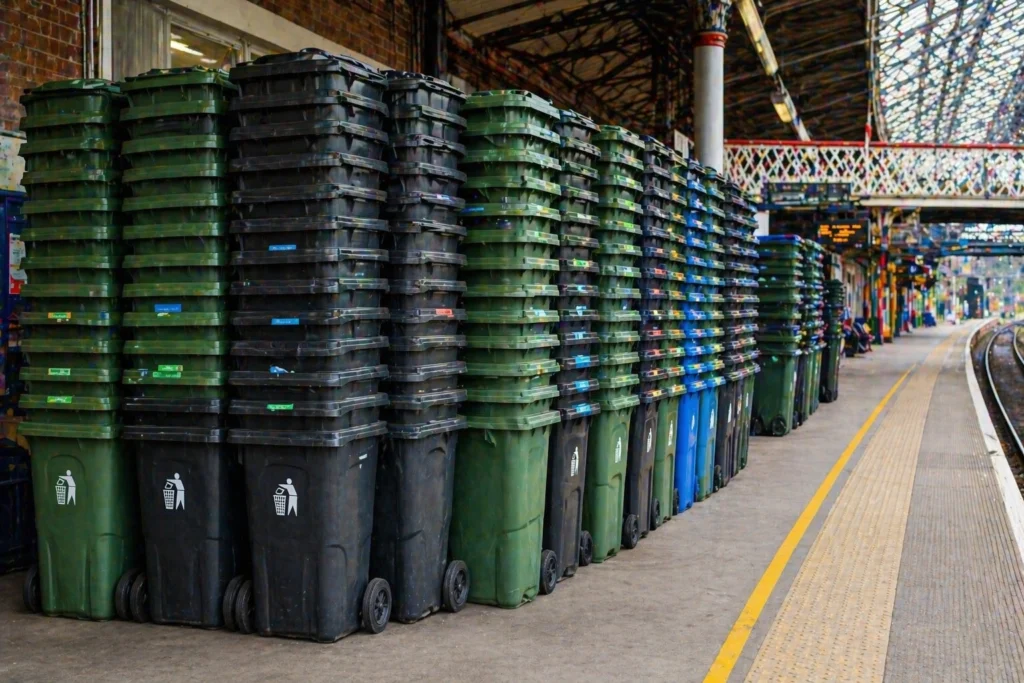
Unusual scenes of thousands of bins stacked at UK railway stations are drawing attention to a growing operational issue behind the platforms: how to manage waste efficiently in some of the country’s busiest public transport spaces. While the sight may appear chaotic, it reflects wider pressures linked to collection logistics, passenger volumes, safety rules and new recycling requirements reshaping station operations nationwide.
For travelers, cleanliness and convenience are key parts of the station experience. For operators, keeping waste systems running smoothly has become an increasingly complex challenge.
Why So Many Bins Are Appearing
Railway stations generate significant volumes of daily waste, from food packaging and drink containers to newspapers, coffee cups and general litter.
At high-footfall stations, bins can fill rapidly during commuting peaks, holiday rushes or special events. If collection schedules are disrupted or infrastructure is being reorganized, spare or replacement containers may be temporarily stored in visible holding areas near platforms or service zones.
What looks like disorder can often be a sign of back-end logistics under pressure rather than neglect.
The Importance of Clean Stations for Travel
Station cleanliness has a direct effect on passenger perception. Travelers often judge public transport quality not only by punctuality but by how clean, safe and well-managed the environment feels.
Overflowing bins or cluttered spaces can create frustration, while well-maintained stations improve comfort and confidence, especially for tourists and occasional users unfamiliar with the network.
That makes waste collection more than a maintenance issue. It is part of the wider passenger experience and the reputation of rail travel itself.
Safety Rules Shape Where Bins Can Go
Railway environments operate under strict safety standards. Bins cannot obstruct evacuation routes, platform movement or operational areas near tracks.
When stations become busy or layouts change during works, containers may need to be relocated quickly to secure zones until collection teams arrive.
This can create temporary stacks behind platforms or in staff areas as operators prioritize passenger flow and emergency access.
In transport hubs where every metre of space matters, waste storage must constantly balance convenience with safety.
Recycling Reforms Add New Complexity
The issue also comes as the UK rolls out clearer and more standardized recycling systems.
Updated waste separation policies are driving changes in how public spaces categorize and collect rubbish. Instead of one general bin, stations may need multiple streams for recyclable materials, food waste and residual waste.
That can require new containers, updated signage and revised collection contracts.
During transition periods, older bins may be removed, additional units delivered or stock held temporarily while new systems are installed.
Coordination Between Rail and Local Authorities
Waste management at stations often depends on cooperation between rail operators, councils, contractors and cleaning teams.
Schedules must align with passenger traffic, staffing levels, vehicle availability and disposal capacity. If one part of the chain changes—such as contractor availability or collection timing—backlogs can appear quickly.
This is particularly challenging at major urban stations where waste volumes are high and service windows may be limited.
The visibility of stacked bins can therefore reveal how tightly coordinated modern station operations need to be.
Passenger Behavior Also Plays a Role
Travelers themselves influence how fast bins fill and how easily waste can be processed.
Heavy seasonal demand, takeaway food consumption and incorrect disposal can all increase pressure on station systems. Mixed waste placed in recycling bins can slow sorting processes and reduce efficiency.
Public awareness campaigns and clear signage can help, but behavior change takes time.
For stations handling millions of journeys, even small improvements in disposal habits can make a noticeable difference.
Why It Matters for Tourism
Railway stations are often the first and last impression of a destination. For international visitors and domestic tourists, clean, organized terminals help shape perceptions of the wider city.
Well-managed stations can encourage greater use of rail for city breaks, events and regional tourism. Poor conditions may have the opposite effect.
That is why waste systems matter beyond operations—they influence traveler confidence, destination image and the attractiveness of public transport as a sustainable travel option.
What Happens Next
As recycling reforms mature and operational systems adjust, visible stockpiles of bins are likely to reduce.
Longer term, stations may adopt smarter waste monitoring, more efficient container design, clearer recycling guidance and tighter collection scheduling to keep pace with demand.
Investment in cleaner, better-organized transport hubs is increasingly important as rail networks compete for passengers and support greener mobility goals.
The Bottom Line
Thousands of stacked bins at UK railway stations may look unusual, but they highlight a deeper story about modern transport management.
Behind the scenes, operators are balancing cleanliness, safety, recycling targets and heavy passenger demand in some of the country’s most complex public spaces.
For travelers, the message is simple: efficient waste management is now an essential part of the journey.
For more travel news like this, keep reading Global Travel Wire