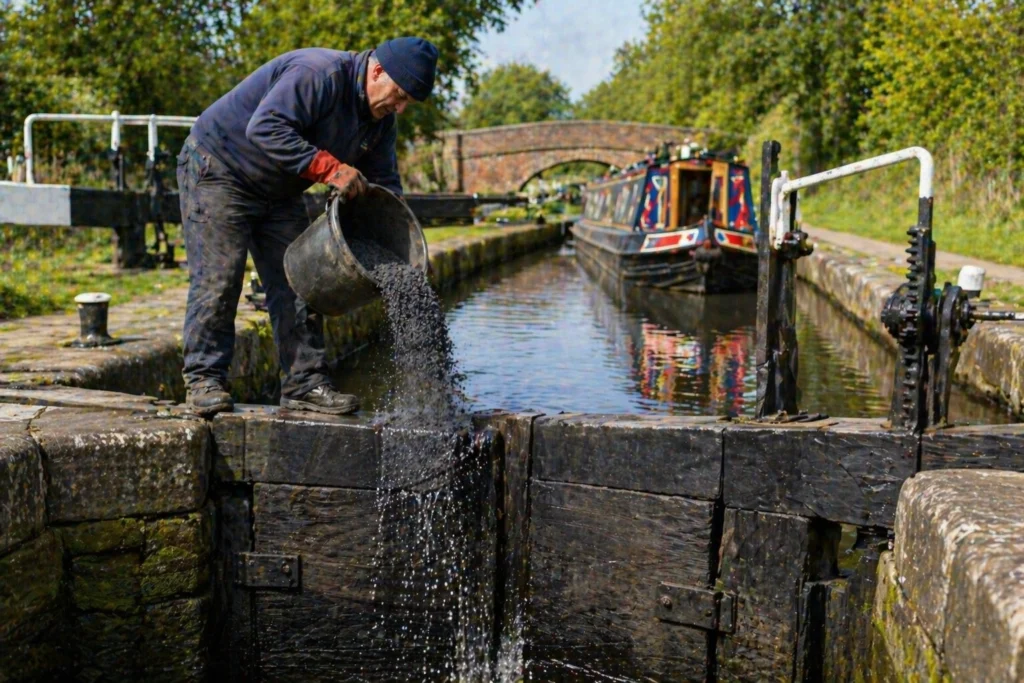
The United Kingdom is turning to a time-tested engineering method to help preserve its historic canal network, using train ash canal lock sealing to reduce leaks, save water and support tourism across inland waterways. The heritage technique, known as “ashing-up,” remains part of maintenance strategies used to keep locks operating efficiently while protecting more than 2,000 miles of canals and rivers across England and Wales.
For travelers, boaters and local communities, the approach highlights how traditional know-how can still play a valuable role in modern infrastructure management.
Why Canal Leaks Matter
Locks are essential to canal travel because they allow boats to move between different water levels. When lock gates leak, even through small gaps, significant amounts of water can be lost over time.
That can create operational challenges, slow navigation and increase maintenance pressure across wider water systems.
In busy visitor regions, poorly functioning locks can also affect leisure cruising, canal holidays and waterside tourism businesses that depend on reliable navigation routes.
Reducing leaks is therefore not only an engineering issue but also an economic and tourism priority.
What Is Train Ash Canal Lock Sealing?
The technique uses fine ash, historically sourced from coal or steam railway operations, to fill small gaps between wooden lock gate boards.
When ash is introduced above a leaking gate, water pressure pushes the material into the seams. It compacts into a dense barrier, helping stem the leak while the timber naturally swells when wet and tightens the seal further.
Simple in concept but highly effective in practice, the method has roots in the 19th century when canals and railways operated side by side.
It remains valued because it works with traditional timber gate construction rather than against it.
Heritage Engineering Meets Modern Stewardship
Today, the UK’s inland waterways are cared for by the Canal & River Trust, which manages locks, bridges, aqueducts, reservoirs and towpaths across a vast network.
While modern sealants and engineered materials are available, traditional methods such as ashing-up can still perform exceptionally well in specific circumstances, particularly on historic structures where sympathetic maintenance is important.
This reflects a wider principle in heritage infrastructure management: newer is not always better, especially when original materials and historic design need to be respected.
Supporting Sustainable Water Management
Water conservation is becoming increasingly important as climate pressures grow and freshwater systems face greater demand.
Keeping locks sealed helps canals retain water more effectively, reduces unnecessary losses and lowers the need for reactive repairs.
The reuse of heritage by-product materials also aligns with sustainability goals by limiting reliance on manufactured alternatives where suitable.
For destinations built around waterways, stable water levels help maintain scenic quality, biodiversity habitats and visitor confidence.
Why Canals Matter for Tourism
Britain’s canals have evolved far beyond their industrial origins. Many are now leisure corridors supporting boating holidays, cycling routes, walking trails, cafés, heritage attractions and waterside accommodation.
Popular canal towns and urban waterfronts attract domestic and international visitors looking for slower, experience-led travel.
Reliable locks and navigable routes are fundamental to that visitor economy. When infrastructure performs well, travelers can enjoy uninterrupted journeys, scenic cruises and better access to local businesses along the route.
That means maintenance techniques like ashing-up can have visible downstream benefits for tourism revenue and community vitality.
How the Process Is Used Today
The technique is generally applied selectively rather than as a universal fix.
Engineers first identify manageable leaks, then introduce measured amounts of ash in controlled conditions. It is often most suitable during quieter maintenance periods when water levels and traffic can be managed more easily.
Where locks are severely worn or damaged, full gate replacements and larger structural works remain necessary.
Ashing-up is best understood as one practical tool within a wider maintenance toolkit, not a substitute for major renewal projects.
Protecting Communities and Nature
Healthy waterways deliver broader public benefits beyond tourism.
Canals create green-blue corridors for wildlife, help connect neighborhoods, support active lifestyles through walking and cycling, and contribute to local identity.
Maintaining them efficiently helps charitable and public resources go further while preserving spaces that millions of people enjoy every year.
That makes practical, low-cost solutions especially valuable when combined with long-term investment and professional engineering oversight.
A Lesson in Timeless Innovation
The continued use of train ash canal lock sealing shows that innovation is not always about new technology. Sometimes the smartest solution is one refined over generations and still effective today.
For the UK, it is another example of how heritage assets can be preserved through thoughtful adaptation rather than replacement.
For travelers exploring Britain’s waterways, it helps ensure that historic canals remain living routes—not just museum pieces.
For more travel news like this, keep reading Global Travel Wire