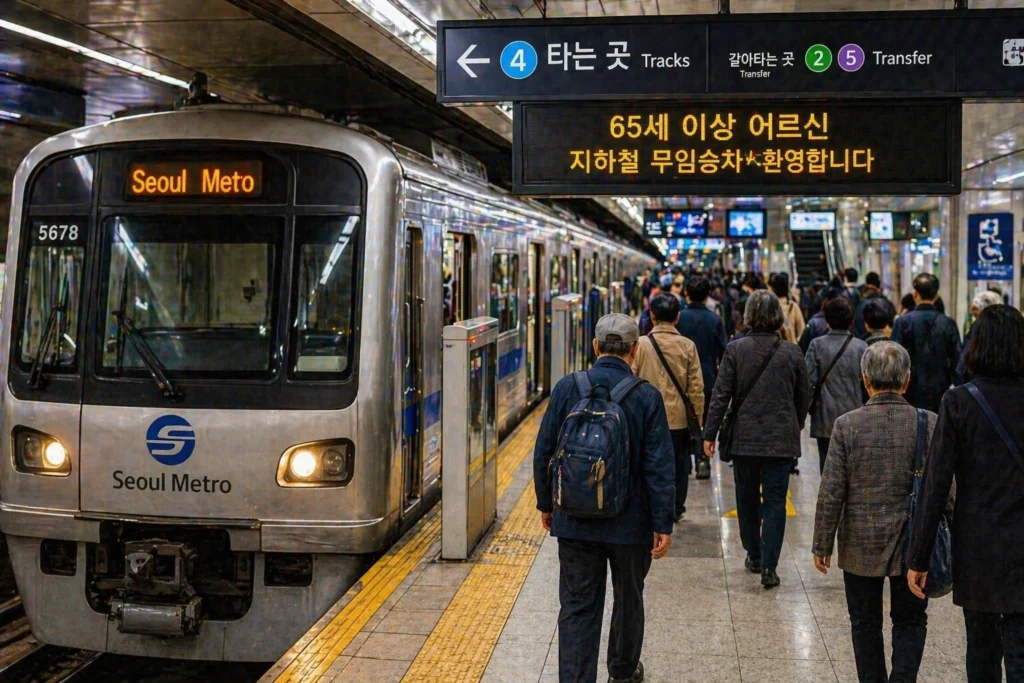
Seoul Metro has formally called on the South Korean government to compensate mounting losses caused by free ride policies for seniors and veterans, warning that the current funding model is putting one of the world’s busiest subway systems under growing financial strain. The operator is urging ministries and lawmakers to create a long-term framework that protects social mobility benefits while securing the future of urban transport services.
The move marks a major moment in South Korea’s public transport debate as ageing demographics and rising operating costs intensify pressure on city transit networks.
Why Seoul Metro Is Sounding the Alarm
Seoul Metro forms the backbone of mobility in the capital region, carrying millions of passengers daily across a vast subway network that supports commuting, tourism and economic activity.
Like most metro systems, its financial health depends heavily on fare revenue to fund daily operations, maintenance, upgrades and capacity improvements.
However, mandatory free fare programs for older citizens, veterans and eligible groups have created a widening gap between operating costs and collected revenue. According to the figures cited in the request, Seoul Metro’s annual free ride losses reached approximately 448.8 billion won last year.
The operator argues these costs stem from national welfare policy and should not be borne solely by a city transport company.
Free Travel Policy Rooted in Social Welfare
South Korea’s free fare system was introduced decades ago to support mobility, dignity and access for senior citizens and veterans.
Under the current structure, citizens aged 65 and older are eligible for free subway travel, helping many older residents remain socially active and connected.
The policy has long been viewed as an important welfare benefit. But the scale of the program has changed dramatically as the population has aged.
What was once a manageable subsidy is now becoming a major structural funding issue for urban transit systems.
Demographic Change Is Reshaping the Debate
South Korea is ageing rapidly, and that demographic shift sits at the heart of the current crisis.
As the share of older residents rises, more passengers qualify for fare exemptions while operating costs continue to increase through energy prices, staffing needs and infrastructure maintenance.
This means metro operators face a growing mismatch: higher demand for services but less proportional fare income.
The challenge is not unique to Seoul, but the capital’s network scale makes the financial impact especially visible.
Why It Matters for Travelers
For residents, the issue affects the long-term reliability and quality of everyday transport.
For visitors, Seoul Metro is one of Asia’s most efficient and affordable urban transit systems, providing easy access to major neighborhoods, airports, shopping districts, cultural sites and business zones.
If deficits limit investment, future impacts could include slower modernization, delayed upgrades or increased pressure for fare rises elsewhere in the system.
A financially sustainable metro network is therefore important not only for local commuters but also for Seoul’s tourism competitiveness and visitor experience.
Government Ministries Now in Focus
Seoul Metro has directed its appeal to multiple ministries, including transport, finance, welfare and veterans affairs bodies, requesting direct budget support and legislative reform.
The request reportedly includes 576.1 billion won in compensation funding for this year alongside structural policy changes.
Officials have acknowledged the need to review how welfare transport benefits are funded, while stressing that any reforms must preserve mobility access and social fairness.
That signals growing recognition that the current model may no longer be sustainable.
Possible Outcomes Ahead
Several paths could emerge from the debate.
The government could introduce direct reimbursements to urban rail operators, share costs with local authorities, adjust eligibility criteria over time or create broader public service obligation funding mechanisms.
Any solution is likely to require political consensus, public consultation and careful balancing between welfare protections and fiscal responsibility.
Because senior mobility is socially sensitive, rapid unilateral changes are unlikely.
A Wider Test for Urban Transport Policy
The Seoul Metro case reflects a global challenge facing many cities: how to fund affordable public transport in ageing societies while maintaining high service standards.
As populations grow older, transport systems may increasingly be asked to deliver social policy goals without corresponding revenue support.
How South Korea responds could become a reference point for other major cities confronting similar pressures.
The Bottom Line
Seoul Metro’s demand for compensation is more than a budget dispute—it is a warning about the future cost of urban mobility.
With millions depending on the subway every day, the outcome of this policy debate could shape fares, service quality and transport funding across South Korea for years to come.
For more travel news like this, keep reading Global Travel Wire